Sleep Regressions Are Not Random. There Are 5 Predictable Ones, and Each Has a Different Fix.
The 4 month regression, the 8 month regression, the 12, 18, and 2 year regressions. Each one is tied to a specific developmental leap. When you know which one you are in, you know exactly how to respond. Here is the complete map.

Avery Hayes
Mom Of Two
April 20, 2026 · 12 min read

I woke up for the fourth time on a Tuesday night and stood in the hallway trying to remember what year it was. My baby, who had been sleeping through the night for two glorious months, was now waking every 90 minutes. I was convinced I had broken her somehow. Or that she was sick. Or that we had permanently destroyed the sleep training we had worked so hard on.
None of those things were true. She was four months old. Which, I learned the next morning, is the most predictable sleep regression of the entire first year. And once I knew what it was, I knew what to do. And what to stop doing. The difference between a regression you understand and one you don't is enormous.
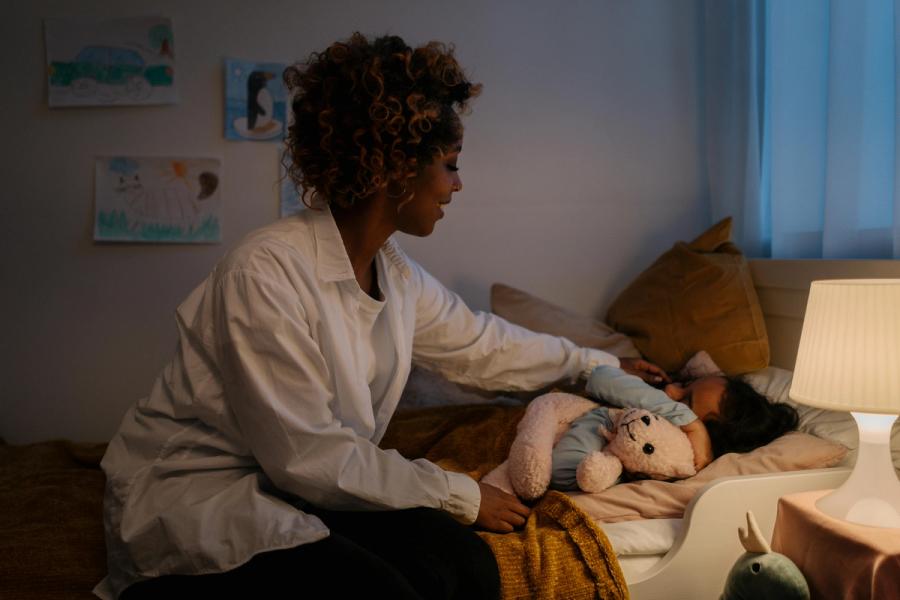
Are sleep regressions real?
Yes, with one important caveat. What parents call "sleep regressions" are real patterns of disrupted sleep, but they are not random. They cluster at predictable ages because they are tied to specific developmental transitions. The brain is rewiring, the body is learning a new skill, and sleep temporarily pays the price.
The 4 month regression, specifically, is not really a regression at all. It is a permanent reorganisation of the baby's sleep cycles to become more adult-like. As the Sleep Foundation explains, before 4 months babies sleep in two stages. After 4 months, they sleep in four stages, with more wakings between cycles. That is a developmental upgrade, not a problem. But it feels like catastrophe if you don't know it is coming.
The other regressions are tied to specific milestones: separation anxiety, walking, language explosions, and the cognitive leap into toddlerhood. Each one disrupts sleep differently, and each one needs a different response.
The 5 predictable regressions
4 months
The permanent sleep reorganisation
8 to 10 months
The separation anxiety regression
12 months
The walking and milestone regression
18 months
The toddler assertion regression
2 years
The cognitive leap regression
The 5 rules for surviving any regression
At 3am in a regression, you will do anything that works. But whatever you do, you are teaching a pattern. If you don't want to be feeding to sleep in three months, don't start now. Short-term rescue becomes long-term habit faster than you think.
Wake time, meal times, nap times, bedtime. These circadian anchors are the most powerful tool you have. Even when night sleep is chaos, keeping the daytime rhythm consistent protects the underlying sleep drive.
This is not the week to host dinner parties or start sleep training a second child. When you are in a regression, strip everything non-essential out of your week. Regressions are survival weeks. Protect yourself.
Most wakings during regressions are brief sleep cycle transitions, not real wakings. If you rush in at the first sound, you turn a 30 second stir into a full waking. Pause. Breathe. Count to 60. Often they resettle before you even get to the door.
It feels endless in the middle. It almost always resolves within 6 weeks if you hold your ground. Tracking night wakings in a simple diary (not obsessively, just notes) can show you that the worst night you thought was the current night was actually four nights ago. Progress hides in the middle of crisis.
When it is not a regression: If sleep disruption lasts more than 6 weeks, is accompanied by snoring or mouth breathing, includes fever or visible pain, or starts after age 3 with no obvious trigger, it is worth talking to your paediatrician. Sleep apnoea, ear infections, and food sensitivities can all present as "sleep regressions" that don't pass.
Frequently asked questions
My baby never slept well. Is this still a regression?
Not exactly. If your baby has never slept long stretches, what you are experiencing is more likely ongoing sleep challenges rather than a regression from a baseline. The fundamental approach (consistent routines, sleep associations, age-appropriate nap schedules) applies either way, but you may benefit from a paediatric sleep consultant if you have been struggling for months.
Does every baby go through every regression?
No. Some babies sail through one or more of these stages without visible sleep disruption. The regressions are tied to developmental leaps that all babies go through, but how visible they are varies enormously by temperament and circumstance. Your neighbour's easy sleeper is not a failure on your part.
Should I sleep train during a regression?
Most sleep consultants recommend against starting formal sleep training during a regression, because the chaos makes it hard to tell what is working. Wait until the regression has passed (or you are past the peak) and things feel stable, then introduce new routines.
What about the 3-year regression? I keep hearing about this.
The 3-year "regression" is often actually a nap transition (dropping the nap) combined with new fears, imagination, and resistance to bedtime. It is real, but less universal than the earlier ones. If your 3 year old's sleep is suddenly disrupted, look at whether naps are still age-appropriate and whether new fears have come up.
The long view
I remember standing in that hallway at 3am, exhausted, convinced I had failed. I hadn't. My baby was four months old, and her brain was doing something extraordinary. That knowledge did not make me less tired. But it made me less panicked. And less panicked parents make better decisions at 3am than panicked ones.
Sleep regressions pass. Every single one of them. You just have to know which one you are in, and what not to break while you wait.
Which regression are you in right now? Tell me in the comments. I have been in all of them.
Read next
Community Discussion
Join 0 parents sharing their thoughts
Loading conversation...
Save this article for later?
We'll send a beautiful copy straight to your inbox so you never lose it.

Avery Hayes
Mom Of Two
Avery Hayes is a mother of two and a parenting writer passionate about helping families through honest, relatable content.
Related Articles
The Feeding Method With 40 Years of Research Behind It That Most Parents Have Never Heard Of.
Ellyn Satter's Division of Responsibility was developed in the 1980s, has 40+ years of peer-reviewed research behind it, is endorsed by the American Academy of Pediatrics, and produces children who eat a wide variety of foods, self-regulate their intake.
The Reason Your Toddler "Doesn't Play With Anything" Is Probably Sitting in Your Living Room.
A 2018 University of Toledo study showed children given fewer toys played longer, deeper, and more creatively than those given many. The cluttered playroom you are working so hard to maintain is actually the problem. Here is the research, and the 4-bin reset that fixes it in a weekend.

The Fail-Safe School Lunch Formula That Stopped the Wednesday Night Meltdowns in My House.
A simple four-component lunch formula that works for picky kids, balanced nutrition, and your sanity. Stop reinventing the wheel every morning. Twenty rotating combos that use the same formula, so you never think about lunch again.