The Most Important Skill You Can Build in Your Child This Year Happens When You Leave the Room.
Independent play is one of the strongest research-backed predictors of executive function, emotional regulation, creativity, and long-term wellbeing. It is also, for most modern children, a skill that has to be actively built rather than assumed. Here is how, age by age.

Avery Hayes
Mom Of Two
April 20, 2026 · 12 min read
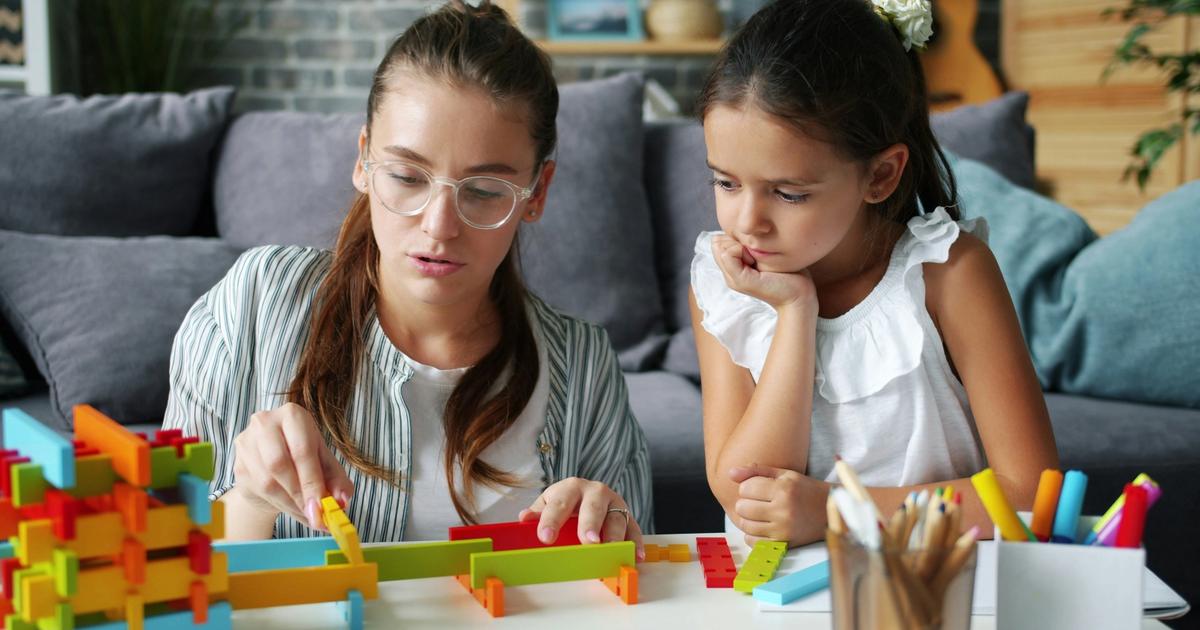
My 4 year old used to follow me around the house asking me to play with her every moment I was not actively cooking or on a work call. If I tried to sit on the sofa for five minutes, she was there. If I went to the bathroom, she was outside the door. I loved her desperately. I was also losing my mind.
I thought it was a phase. It wasn't. It was a skill she hadn't built yet. And once I understood that independent play is a specific, teachable skill rather than a personality trait, everything changed. Within about six weeks, she was playing alone for 30 to 45 minutes at a stretch. Happily. And I got my mornings back.
Why independent play actually matters
The research on independent play is surprisingly robust. Studies on executive function development, emotional regulation, and creativity all point in the same direction. Children who have regular opportunities for sustained, self-directed, uninterrupted play develop skills that children with heavily scheduled or constantly supervised play often do not.
Specifically, independent play builds:
Executive function. The ability to plan, switch attention, and inhibit impulses. Independent play requires all three constantly. Children have to decide what to do, follow through, and adjust when things don't work.
Emotional self-regulation. When no adult is available to mediate every small frustration, children learn to handle disappointment, problem-solve, and recover from setbacks on their own.
Creativity and divergent thinking. Drawing on the UVA research from Professor Jamie Jirout on curiosity and creativity, sustained unstructured time is where novel thinking actually develops. Supervised play with adult direction produces different outcomes.
Focus and sustained attention. In a world that trains children for distraction from toddlerhood onwards, the ability to hold focus on a self-chosen activity is genuinely rare and genuinely valuable.
When kids have the agency to do what they want to do, they're going to be motivated to get into activities in a deep way. That motivation will then provide a lot of experience and opportunities for them to develop different skills. Professor Jamie Jirout, University of Virginia School of Education and Human Development, UVA Today, 2024
Independent play by age
9 to 18
months Foundation stage
Realistic expectation: 5 to 10 minutes of solo focus, with you in the same room.
18 months to 2 years
Proximity stage
Realistic expectation: 10 to 20 minutes of solo play while you're visible nearby.
2 to 3 years
The turning point
Realistic expectation: 20 to 30 minutes of solo play, possibly in another room with occasional check-ins.
3 to 5 years
The imaginative expansion
Realistic expectation: 30 to 45 minutes of deep play, often in their own room.
5 to 8 years
Deep focus years
Realistic expectation: 60 to 90 minutes of focused solo activity, especially on weekends and holidays.
How to actually build it (5 steps)
If your child currently cannot play alone and you want to change that, here is what actually works, based on what therapists and developmental researchers recommend.
1. Start from a secure base. Begin a stretch of independent play with 10 to 15 minutes of focused connection with you. Then gently transition them into independent play. A connected child separates more easily than a disconnected one reaching for connection.
2. Set up the environment, then step back. Put the toys out, suggest a starting idea ("what if your teddies were opening a shop?"), and then physically move away. Do not hover. Do not suggest improvements. Do not watch for thirty seconds and then go back in.
3. Start short and build. Five minutes the first week. Ten the next. Twenty after that. You are training a muscle. It will not grow by being asked to do an hour from day one.
4. Tolerate their protest. The first week of building independent play is genuinely hard. Your child will complain, follow you around, claim they are bored. This is the muscle building. Stay warm but firm. "I can see you're bored. That's okay. You'll find something."
5. Remove the easy alternatives. If the tablet is available, they will choose it over the harder work of independent play. You have to close the easy door before the harder door gets used. This often means screens live in a cupboard, not on the coffee table.
The counter intuitive truth: Less is more. Fewer toys, simpler toys, and more open-ended materials produce deeper independent play than cluttered rooms with battery-powered options. If your child's room looks like a toy shop, try a toy rotation. Put 80% away. Rotate what is out every two to three weeks. Watch what happens.
Frequently asked questions
Is it bad if my child prefers to play with me?
Of course not. Playing with you is valuable and important. The issue is when a child cannot play alone at all. Both need to exist. Connected play with you plus regular stretches of solo play is the balance most researchers recommend.
What toys actually support independent play?
Open-ended materials. Blocks, Lego, figurines, plain paper and art supplies, dress-up clothes, kitchen items, cardboard boxes, dolls, and loose parts (sticks, pebbles, buttons). Avoid toys with single purposes or batteries that do the playing for the child.
My child has ADHD. Does this still work?
It can, but often needs more scaffolding. Shorter stretches. More defined activities to begin with. Clear start and end signals. Remove distractors aggressively. An occupational therapist or specialist in ADHD can often suggest specific strategies that fit your child.
How do I start if my child won't play alone at all?
Start in the same room with you. You sit on the sofa with a book. They play on the floor near you. You are not available for interaction, but you are present. Build from there over weeks, not days. Do not start by leaving the room entirely.
The room you walk out of
The single most important thing you can do for your child's independent play muscle is to walk out of the room and trust them to be okay. Not to abandon them. To trust them. They are more capable than you think. They will figure it out if you let them.
And you get your sofa back. Which matters too.
How long can your child currently play alone? Tell me in the comments. We can work out the next realistic step together.
Read next
Community Discussion
Join 0 parents sharing their thoughts
Loading conversation...
Save this article for later?
We'll send a beautiful copy straight to your inbox so you never lose it.

Avery Hayes
Mom Of Two
Avery Hayes is a mother of two and a parenting writer passionate about helping families through honest, relatable content.
Related Articles

Kids Are Spending More Time Indoors Than Ever. Here's the Outdoor Fix That Actually Sticks.
The average child now spends less time outdoors than a maximum-security prisoner on yard time. The research on nature exposure in childhood is dramatic. Here are the 5 habits families are using to reverse the pattern, without needing to move to the countryside.
25 Arts & Crafts for Kids That Won't Ruin Your Kitchen (By Age)
No glitter. No paint everywhere. No hour of setup for five minutes of engagement. Twenty-five genuinely low-mess, high-engagement art and craft ideas for kids, organised by age, using things you probably already have at home.

Scientists Say “I’m Bored” Helps Kids Grow, Inspiring 30 Rainy Day Activities for Parents
A study on mind-wandering in children, published in PMC / NIH, found that boredom coupled with attentiveness and persistence led to positive creative learning outcomes.