Sibling Rivalry Doesn’t Mean Kids Don’t Love Each Other — Here’s What It Really Means
Sibling conflict is developmentally normal and even useful. Here is what researchers actually know about sibling relationships, why the worst years are predictable, and the four simple rules that genuinely reduce fighting in real households.

Avery Hayes
Mom Of Two
April 20, 2026 · 10 min read

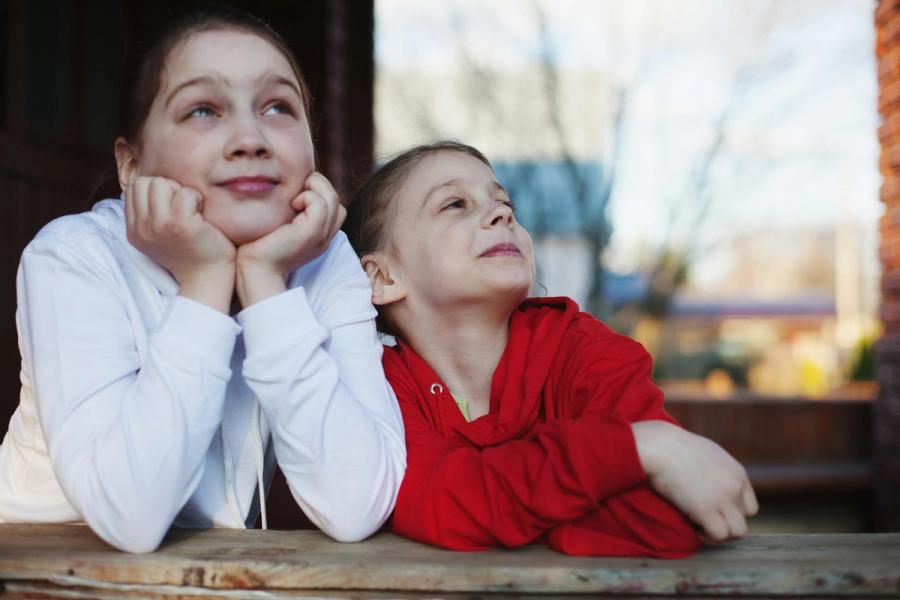
I stood in the kitchen last week listening to my two daughters have the 14th argument of the morning. This one was about which of them had been born first (the older one was winning the argument, factually, but losing it emotionally). I had spent an hour making a special breakfast to enjoy together as a family. I was sitting alone at the kitchen island eating cold pancakes.
It is easy, in moments like this, to think you have failed at the "give them a sibling so they have a best friend for life" promise. You have not. Sibling rivalry is not a bug. It is a feature. And the research on sibling relationships is weirdly reassuring once you know what it says.
What the research actually shows
Developmental psychologist Judy Dunn's decades of work on sibling relationships has shown something counterintuitive: sibling conflict is one of the most important sites of social and emotional learning in childhood. Her research observed young sibling pairs and found that the same siblings who fight intensely also share deep warmth, cooperation, and attachment. The two are not opposites. They coexist.
In Dunn's work, young siblings averaged about 3.5 conflicts per hour in observed play. That is not a sign of dysfunction. That is the developmental norm. Siblings close in age are learning negotiation, frustration tolerance, perspective-taking, repair, and how to coexist with someone who is not quite like them, at a density no other relationship offers.
The payoff comes later. Long-term studies of sibling relationships consistently find that around 80% of adult siblings report close or very close relationships with at least one sibling. The conflict of childhood does not usually predict estrangement in adulthood. It is a phase, and in many cases, a phase that builds the relationship rather than erodes it.
Sibling relationships offer a unique arena for learning the skills of conflict, negotiation, and repair. Children with siblings tend to develop more advanced social cognition than only children of the same age, in part because sibling conflict is unavoidable. Based on Judy Dunn's longitudinal research on sibling relationships, King's College London / University of Cambridge
Why the worst years are predictable
The most intense rivalry typically falls between ages 3 and 7, when both siblings are verbal enough to argue but not yet mature enough to regulate. If your kids are in that range right now, you are not in a uniquely bad situation. You are in the predicted peak.
It tends to calm down between 8 and 10 as older children develop more regulation, and often settles significantly by early teens. There is usually another period of friction in mid-adolescence as identities separate. Adult closeness often emerges in the 20s and beyond.
Age gap matters, but less than most parents think. Very close age gaps (under 2 years) and larger gaps (over 5 years) both produce different dynamics, but neither is "better" for sibling relationships in the long term. What matters more is how parents respond to conflict, not the gap.
The 4 rules that actually reduce fighting
1. Stop being the judge. The moment you declare "she started it," you have lost. Every single time. Because now the other child has a new grievance (unfair parenting) on top of the original grievance. Instead, treat most conflicts as problems to solve jointly. "You are both upset. What should we do about this?" You do not have to take sides. You are not actually the supreme court.
2. Do not force sharing. Forced sharing teaches children that whoever cries loudest wins, and that their possessions are not actually theirs. Instead, support turn-taking with a time structure. "She has it now. When she is finished, it will be your turn." Let the current owner decide when they are finished. This models respect for both children and actually produces more willing sharing over time.
3. Refuse to compare. "Why can't you be more like your sister?" is the phrase most likely to predict poor sibling relationships in adulthood. Siblings are different people. The comparison game, even positive comparisons ("you're the smart one, she's the creative one") damages both children and the relationship between them. Describe each child individually. Stop measuring them against each other.
4. One-on-one time with each child. This is the single most effective intervention I have tried in my own home. Fifteen minutes of undivided attention per child per day changes everything. The child who feels seen individually fights less for attention collectively. This is not optional time. It is the most productive time in your whole week.
When to actually intervene
Not all sibling conflict is equal. Here is the rough guide to when to step in and when to let it play out.
Let it run: Verbal disagreements where both children are roughly matched. Arguments over toys or territory that have not escalated to physical conflict. Eye rolls, huffs, dramatic "I never want to play with her again" declarations. These are practice.
Step in calmly: When escalation is happening (voices rising, bodies tensing). When a younger or smaller child is being overwhelmed. When the conflict has been going for more than a few minutes without resolution. When words are becoming mean in ways that will leave marks ("I wish you were never born" etc).
Stop immediately: Physical aggression that could genuinely hurt. Name-calling that attacks identity rather than the specific issue. Repeated patterns of one child bullying the other. These are not "normal sibling rivalry." These require adult intervention and sometimes professional support if they persist.
Frequently asked questions
My kids genuinely seem to hate each other. Is that normal?
Surprisingly often, yes, especially during peak rivalry years. What you observe in fights is not the whole relationship. Watch them when they do not think you are watching. Most children who "hate" their sibling will also check on that sibling when they are hurt, laugh at their jokes, and miss them when they are apart. The hate is on the surface. The attachment is underneath. Both are real.
Is it okay to have a "favourite" even if I don't show it?
Many parents feel closer to different children at different stages, and that is human. The goal is not having no preferences. It is not letting those preferences turn into unequal treatment. Be honest with yourself about which child is currently easier for you, and deliberately invest more one-on-one time with the one you feel less connected to in this phase. It shifts over time.
How do I handle it when one child is much harder than the other?
Be careful about the dynamic where the "easy" child gets neglected because the "harder" child takes most of your energy. This is a very common pattern and is harmful to both children long term. Protect dedicated time with the easier child specifically. They notice when they are the invisible one, even if they do not say so.
Should I worry about their relationship as adults?
Mostly no, provided you are not comparing them, scapegoating one, or ignoring one while the other dominates. The research strongly suggests that how parents treat children in childhood predicts adult sibling relationships more than how the children treat each other. Treat them as equally loved individuals with different strengths, and the adult relationship usually works out.
The long game
The kitchen scene I described at the start happens in my house probably 50 times a year. Probably yours too. It will not be this way forever. Eventually my daughters will be in their 20s, calling each other to complain about us, their parents, and laughing about which of them had a harder childhood.
The fighting is not a sign they do not love each other. It is not a sign of your parenting failure. It is the messy, daily work of learning how to be in relationship with another person. It is loud and exhausting. It is also exactly what is supposed to be happening.
Go eat your pancakes. Cold or not.
What is the most ridiculous fight your children have had this week? Tell me in the comments. Let's normalise this together.
Read next
Community Discussion
Join 0 parents sharing their thoughts
Loading conversation...
Save this article for later?
We'll send a beautiful copy straight to your inbox so you never lose it.

Avery Hayes
Mom Of Two
Avery Hayes is a mother of two and a parenting writer passionate about helping families through honest, relatable content.
Related Articles
School Refusal Has Doubled Since the Pandemic. Here's Why Punishment Is the Worst Thing You Can Do.
Before the pandemic, 14% of children were at high risk of school avoidance. By the 2021-22 school year, that figure had jumped to 22%, and severe school refusal has more than tripled. 80% of cases are anxiety-driven.
35 States Banned Phones in Schools. After One Full Year, the Data Is in. Here's What It Says.
35 US states and Washington D.C. have now signed laws or policies restricting student phone use in K-12 classrooms. The 2024-2025 school year was the first with most of those laws in effect. The early data is mixed, surprising, and clearer than anyone expected.
TikTok Calls It the "Nap Trap." Infant Sleep Researchers Quietly Call It "Biology."
The "nap trap" shaming is one of the quieter cruelties of modern new-motherhood content. The research says contact naps are completely developmentally normal, do not create bad sleep habits, and are not a trap at all.