The AAP Just Quietly Rewrote the Screen Time Rulebook. Most Parents Have No Idea.
The old "one hour a day" rule is officially out. The American Academy of Paediatrics has replaced it with something called the 5 Cs framework.

Avery Hayes
Mom Of Two
April 21, 2026 · 16 min read
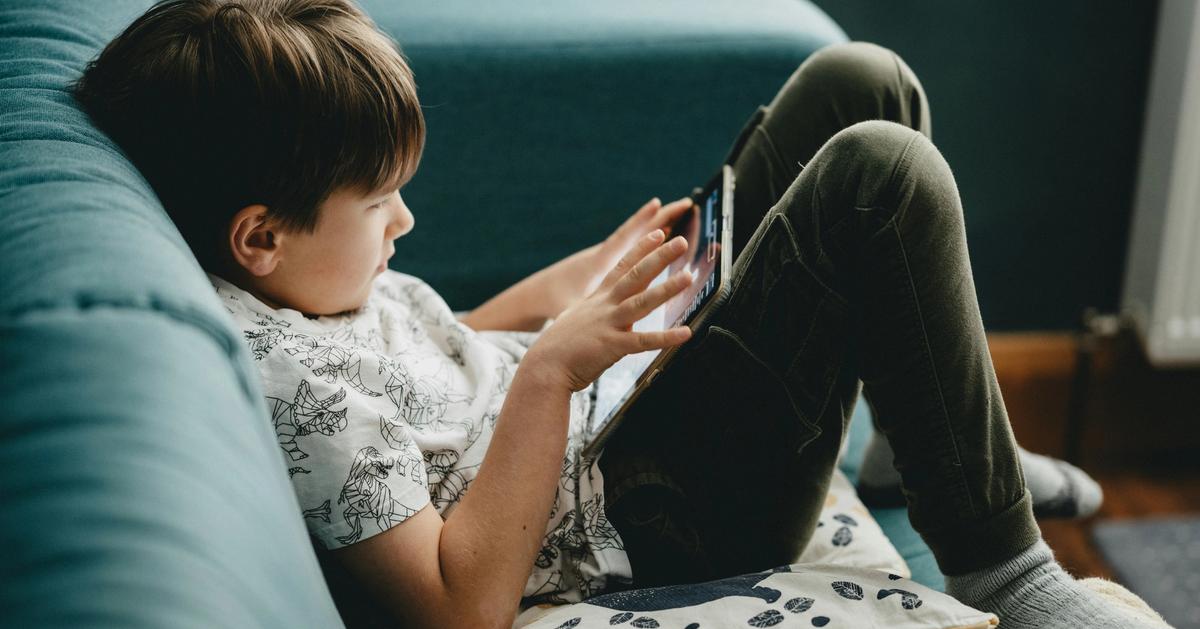
Last Tuesday, I handed my four year old my phone so I could get a twenty minute work call done. When I hung up, she had been watching a YouTube Kids video called "Surprise Eggs Learn Colours." She was glassy eyed. I felt a small hot shame in my stomach. Which I suspect is a feeling most parents reading this blog will recognise.
Here is what I did next. I googled "how much screen time is okay for a 4 year old." And the first result told me one hour maximum per day, which meant I had officially ruined her week by Tuesday afternoon.
Except that guidance is outdated. The AAP quietly replaced it with something more useful, and more honest, in 2024. Most parents, including me until recently, are still operating from an old playbook that was written for a world where screens were television sets and tablets did not exist in pockets.
So let me give you the current version. What the research actually says, what the AAP actually recommends now, and what works in a real home where mum has deadlines, kids have meltdowns, and screens are the path of least resistance at 5:47 pm on a Wednesday.
Let me start with the stats that woke me up
Before the new guidelines, here is the reality of how much time children are actually spending on screens. These numbers come from the 2025 Common Sense Media Census and the AAP's published averages.
Average daily screen time for children under 2. Which is striking because the previous AAP recommendation was literally zero screen time for this age group, except video calls with grandparents.
Average daily screen time for kids aged 2 to 4. Double the old "one hour maximum" recommendation.
Average daily screen time for kids aged 5 to 8.
Average daily entertainment screen time for tweens aged 8 to 12.
Average daily screen time for US teenagers. Which is genuinely almost half their waking hours.
Percentage of children under 13 who have their own device, according to a 2025 Lurie Children's Hospital survey. The majority started using screens by age three.
Percentage of parents who rely on screen time every single day to manage parenting responsibilities. The same Lurie survey found 28% of parents use screens to avoid a meltdown or tantrum multiple times a week.
I want to name this before we go further. If you are reading that last statistic and feeling seen, I am too. Forty nine percent is not a few overwhelmed parents. That is half of us. This is not a personal failure story. This is a cultural reality that a lot of parents are quietly navigating without a current map.
Let me give you the new map.
What actually changed: the 5 Cs framework
In 2024, the AAP released a major update to their screen time guidance. Instead of fixed hour limits, they now recommend a framework called the 5 Cs, which is how paediatricians are being trained to talk about screen time with parents in 2026.
The 5 Cs stand for Child, Content, Calm, Crowding Out, and Communication. According to the updated AAP guidance published via CHOC Children's Hospital, the framework "prioritises quality, context, and conversation over strict time limits."
Here is what each one actually means at home.
Child
Content
Calm
Crowding Out
Communication
The AAP still publishes age based time recommendations as baseline guardrails. Under 18 months, video chatting only. 18 to 24 months, high quality co viewed content only. Ages 2 to 5, about one hour of high quality content per day. Ages 6+, a balance framework rather than a time limit. But the time limit is no longer the main message. The 5 Cs are.
What the latest brain research actually shows
The shift in guidance did not happen in a vacuum. It happened because the research on screens and child brains got significantly more precise over the last few years, and the nuance matters.
One study that keeps coming up is the 2019 Cincinnati Children's Hospital study led by Dr. John Hutton, which used MRI scans to examine the brains of 47 preschoolers. The researchers found that higher screen exposure was associated with lower white matter integrity in regions of the brain supporting language and emergent literacy. White matter is the part of the brain that allows different regions to communicate with each other quickly. Lower integrity in language regions, in early childhood, is a meaningful concern.
A more recent 2025 systematic review published in PMC looked at studies from 2014 to 2024 and found that excessive screen time in toddlers was linked to reduced vocabulary growth, fewer adult to child conversational exchanges (one of the strongest predictors of language outcomes), and measurably delayed milestone achievement in children with more than two hours a day of screen exposure.
Another 2025 clinical review in Clinical and Experimental Paediatrics summarised the evidence plainly: parental mediation matters more than the raw number of minutes. Children who used screens with an engaged adult, talking about content and co viewing, showed significantly different outcomes from those using screens alone.
Screen use can become problematic if it replaces other important activities in the lives of kids and families, such as quality sleep, physical activity, emotional regulation, and social connection. Dr. Alyssa Cohen, paediatrician at Lurie Children's Hospital, via their 2025 screen time research report
The research is not saying screens are evil. It is saying three specific things, consistently, across every major study.
One. Children under two should have minimal to no screen exposure, because that is a rapid brain development window and screens displace the interactions that build it.
Two. For children two and up, content quality and co viewing matter more than raw time, as long as screens are not displacing sleep, physical activity, and social interaction.
Three. The thing that consistently predicts poorer outcomes is not screens in general. It is screens replacing conversation. Specifically, the "conversational turns" between parent and child that are one of the strongest predictors of language development in the first five years of life.
So what does this actually mean on a Tuesday afternoon?
Here is what the 5 Cs framework looks like translated into real decisions.
"Bluey" is high quality content. Twenty minutes is not excessive. You are present in the same room. This fits every criterion. Stop feeling guilty about it.
YouTube's algorithm is designed to maximise engagement, not support child development. Adverts appear unpredictably. Content can shift into age inappropriate territory in three clicks. This is the category where the research concern is most clear.
Even for babies under 18 months. Video chatting is considered relationship building and is specifically excluded from screen time concerns. It counts as connection, not consumption.
Not because of the minutes, but because of the conversational turns you are losing. Mealtimes are one of the most predictable daily windows for family conversation, and language research consistently identifies them as significant for language and social development. The AAP specifically recommends keeping mealtimes device free.
Blue light disrupts sleep. Unsupervised bedroom screens are also where most problematic content exposure happens. The single highest impact change most families can make is getting screens out of bedrooms overnight.
These are not extreme measures. This is not "you must get rid of the tablet." This is how to use screens in a way that is aligned with what the research actually shows, without performing any particular parenting philosophy.
My personal rule of thumb since switching to the 5 Cs framework: If I can answer all of these with yes, I stop feeling guilty.
1) Do I know what she is watching?
2) Would I happily sit and watch it with her?
3) Did she have outdoor movement, conversation, and connection today too?
4) Is she watching this instead of sleeping, eating, or connecting with us?
If the answers are yes, yes, yes, no, we are fine. That is the whole test.
The signs that screens have become a problem (and what to do)
The research is consistent on which patterns warrant genuine concern. These are the red flags, not the minor worries.
Your child cannot regulate without a screen. If the tablet is the only way to calm a meltdown, the screen has become a pharmacological substitute for skills your child should be developing. This is the "Calm" C. Start introducing other regulation tools, even imperfectly.
Sleep is being disrupted. Kids who use screens before bed, particularly in bedrooms, sleep less and wake more. Sleep during childhood is when most physical growth, memory consolidation, and emotional processing actually happens. If screens are stealing sleep, that is a concrete developmental cost.
Physical activity has collapsed. Young children need hours of movement daily. If your child is sedentary for most of their waking hours, screens have crowded out the physical development they need.
Conversational turns have dropped. If mealtimes, car rides, and wind down time used to involve talk and now involve silent scrolling, you have lost the single most important input for language development. The research on this is extremely clear.
You don't know what they are watching. This one applies more to older children. If you cannot describe what your child has spent the last hour doing on their device, the "Communication" C has collapsed, and that is where most content risk lives.
If any of these are true, here is the honest, research backed thing to do: do not panic, do not do a dramatic detox, and do not give your child a lecture. Start with one small change. Remove the screen from the bedroom. Put it away at mealtimes. Swap one thirty minute solo tablet session per day for thirty minutes of reading together. The research on behaviour change is clear that small sustainable changes outperform dramatic ones, every single time.
Frequently asked questions
Is the "one hour a day" rule for kids 2 to 5 still current?
Yes, as a baseline guardrail, the AAP still recommends about one hour of high quality screen content per day for ages 2 to 5. But under the new 5 Cs framework, the quality of that hour and whether it is replacing sleep, movement, or conversation matters more than the exact minute count. An hour of co viewed "Sesame Street" is categorically different from an hour of autoplay YouTube. Both technically "one hour." Not the same thing.
What about video calls with family?
Video calling family members is specifically excluded from screen time concerns by the AAP, at any age, including under 18 months. It is considered a relationship activity rather than a media consumption activity. Call your mother and your sister without any guilt whatsoever.
What if my child uses screens to self regulate when they are overwhelmed?
Occasional use is fine. The research concern is when screens become the only way your child knows how to come down from big emotions. If that is the case, the goal is not to remove the tool immediately but to gradually introduce others (deep breathing, physical comfort, quiet corners, and co regulation with you) so your child has a wider toolkit. Think of it as expansion rather than removal.
Is educational content actually good, or is that just what app makers say?
High quality, well researched educational content (like "Sesame Street," "Bluey," "Daniel Tiger's Neighbourhood," or PBS Kids programming) does have demonstrated educational benefits, especially when watched with an engaged adult. The research is much more cautious about apps and platforms that claim to be educational but are primarily designed to maximise engagement. Stick to well reviewed programming rather than random educational apps, and co view when you can.
What about schools using tablets and laptops? Is that on the screen time budget?
The AAP's recommendations are specifically about recreational screen time, not educational. Schoolwork done on a device is not counted as "screen time" in the concerning sense, though there are separate conversations to be had about whether digital schoolwork is appropriate for very young children. For the purposes of this framework, do not panic if your seven year old has to do a literacy app for homework. That is different from three hours of TikTok.
My child is a teenager and I think I have already lost this battle. What now?
You have not lost anything. The research on adolescent screen time suggests that even modest changes, like phones out of bedrooms at night and one device free family meal per day, produce measurable improvements in sleep and mood within weeks. You cannot undo the past and you do not need to. Start where you are, with one change, and build from there. Teenagers respond to consistent structure even when they appear to resist it.
The permission I needed, and maybe you do too
When I started writing this post, I had the guilty shame stomach I described at the beginning. Like I was about to confess my parenting failures in public.
What I realised, going through all this research, is that most of us are not actually failing. We are parenting in a cultural moment that did not exist five years ago, with old rules that were written before the current devices existed, against a backdrop of algorithms explicitly designed to hold our children's attention longer than is good for them.
The new framework is not permissive. It is precise. It is saying: stop counting minutes. Start asking the real questions. Is your child sleeping enough, moving enough, talking to you enough, and watching things you would be comfortable watching with them? If yes, you are doing well. If one or two of those have slipped, you know where to work.
That is a much better map than the one I grew up with as a parent. It assumes I am a thoughtful adult making real choices for a real child, rather than a failure every time I hand over the tablet. I will take it.
What is your one small screen time change going to be this week? Share it in the comments. Mine is getting my phone out of our bedroom at night.
READ NEXT
Community Discussion
Join 0 parents sharing their thoughts
Loading conversation...
Save this article for later?
We'll send a beautiful copy straight to your inbox so you never lose it.

Avery Hayes
Mom Of Two
Avery Hayes is a mother of two and a parenting writer passionate about helping families through honest, relatable content.
Related Articles
A $100 Phone for Kids With No Apps Has 100,000 Parents on a Waiting List. Here's What's Going On.
The Tin Can phone has no screen, no apps, no internet, no texting, and no games. It is, quite literally, just a phone. It costs $100. The waiting list is over 100,000. It has gone viral on TikTok, been profiled by Bloomberg and WIRED, and is now appearing in homes from California to Connecticut.

Australia Removed 4.7 Million Teen Accounts in 30 Days. Here's What Every Parent Needs to Know Now.
On 10 December 2025, Australia became the first country in the world to ban social media for everyone under 16. In the first month, 4.7 million teen accounts were removed. France, the UK, Denmark and Malaysia are watching.

Everyone's Suddenly Carrying an "Analogue Bag" Instead of Scrolling. Here's What's Actually Inside.
A physical tote bag full of screen-free activities you reach for instead of your phone. The "analogue bag" trend is Pinterest's biggest 2026 movement, part of the bigger backlash to doomscrolling. Here is exactly what people are putting in theirs, and how to build yours this weekend.