Everyone's Suddenly Carrying an "Analogue Bag" Instead of Scrolling. Here's What's Actually Inside.
A physical tote bag full of screen-free activities you reach for instead of your phone. The "analogue bag" trend is Pinterest's biggest 2026 movement, part of the bigger backlash to doomscrolling. Here is exactly what people are putting in theirs, and how to build yours this weekend.

Avery Hayes
Mom Of Two
April 24, 2026 · 10 min read
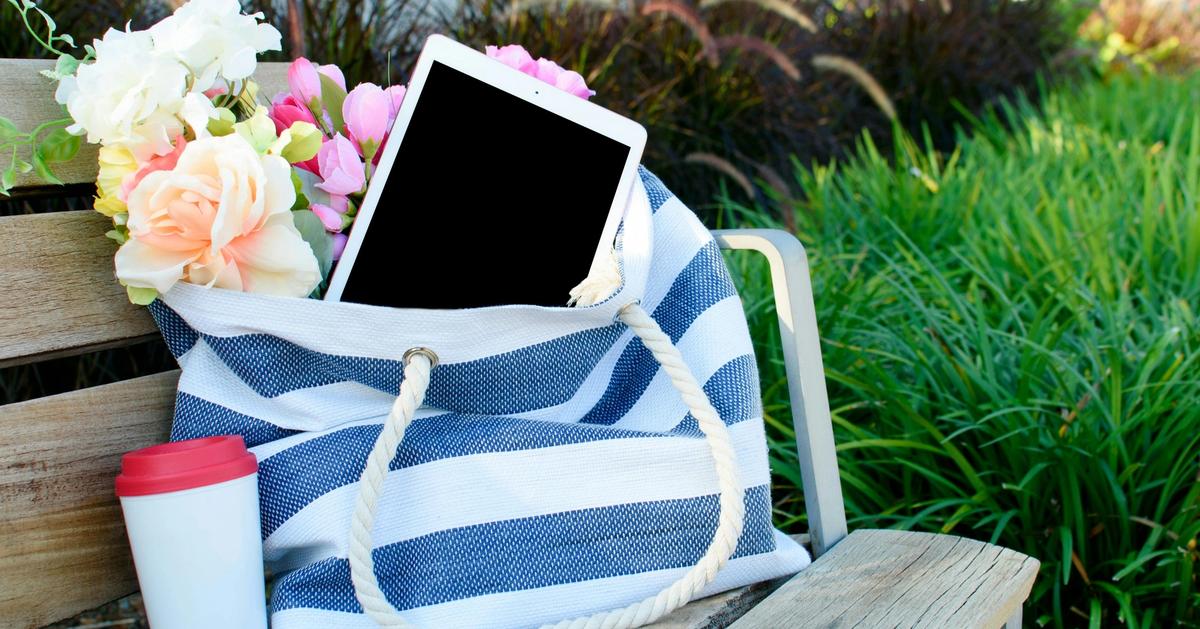
I first heard about the analogue bag from my sister-in-law. She pulled out an embroidered tote bag at a café while we waited for food, and from it came a paperback novel, a tiny sketchbook, a pencil case, and a deck of playing cards. My 4 year old stared at the cards. My sister-in-law said, "shall we play snap?" and that was the end of the scrolling for the next 25 minutes.
I asked what it was. She said, "it's my analogue bag." I said, "your what?"
Two weeks later it was everywhere. Pinterest boards. TikTok videos. A Guardian article. The concept is quietly taking over because it solves a specific problem almost everyone has right now: the gap between wanting to be off your phone and actually having something to do instead.
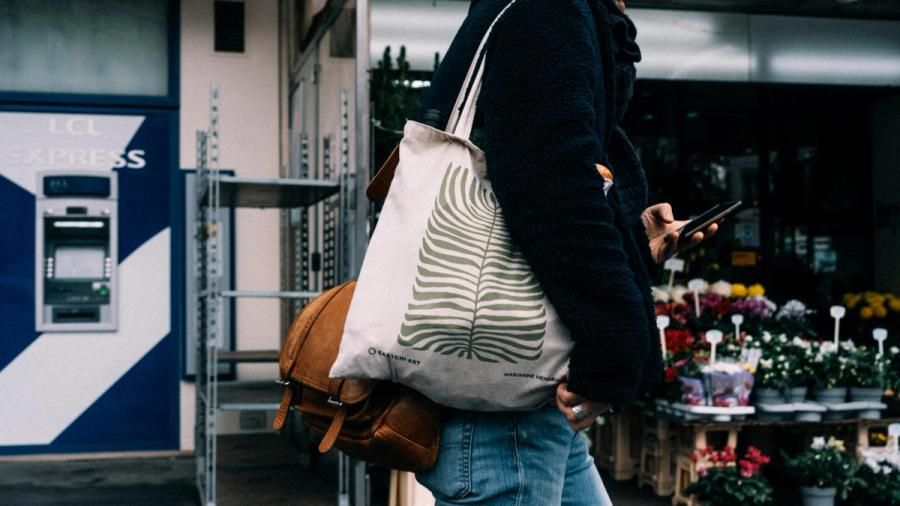
Why everyone is suddenly carrying one
The analogue bag is a response to a feeling most adults now share. We want to be off our phones more. We know the phone is draining us. But when we try to put it down, we do not know what to do with our hands, our eyes, or the space it leaves. The bag is the solution to that vacuum. It pre-solves the question "what do I do instead."
You are waiting for a train. In the old pattern, you scroll. In the analogue version, you reach into the bag and pull out a book. You are at a café waiting for food. In the old pattern, you scroll. In the new version, you pull out a sketchbook. You are on a long car journey. In the old pattern, kids get the tablet. In the new version, you hand them the bag.
The bag works because it removes the decision fatigue. You do not have to think of the alternative in the moment. The alternative is already in your bag.
We are seeing a genuine appetite for offline ideas. A recent TikTok trend for the 'analogue bag', a physical bag full of screen-free activities such as books, craft activities or colouring to turn to instead of scrolling, shows the growing move toward a post-smartphone lifestyle. Vitabiotics, "Five New Parenting Trends for 2026"
The 10 items that belong in a good analogue bag
These are the items that keep showing up across well-made analogue bags. Mix and match based on what you genuinely use, not what looks pretty on Pinterest.
A paperback book (not an e-reader)
For waiting
small notebook or journal
For your own brain
Two nice pens
Always
A small sketchbook
For longer waits
A deck of playing cards
For waiting with kids or a partner
A small crossword or puzzle booklet
For solo waits
A few postcards and stamps
For quiet moments
A book of poetry
For short waits
A travel-size craft (knitting, cross-stitch, embroidery)
For longer waits
A physical watch
Always on your wrist
The bag matters too: A cloth tote, a small backpack, or a structured canvas bag. Something you actually like carrying, that holds up in the weather, and that lives by the front door so you do not forget it. The bag you never pick up is not a bag. It is a Pinterest screenshot.
The kids' version
This is the version that has saved me on road trips, long meals, and waiting rooms more times than I can count. The kids' analogue bag lives in the car. It comes with us when we know there will be waiting.
Sticker book and fresh sticker sheets. Peelable, reusable. Good for ages 2 to 7.
Small colouring book and twistable crayons. Crayons that twist up (rather than needing sharpening) are the only ones that survive a kids' bag.
A deck of picture cards. Uno, Snap, or a child-friendly memory-match deck. Keeps them occupied in pairs or solo.
Two books they have not seen in a while. I rotate them out every few weeks. "New to you" books in the bag are a small event.
A Rubik's-cube-style fidget or fiddle toy. Something satisfying to hold and manipulate. Not loud. Not squeaky.
A tiny notebook with a pencil on a string. For them to draw, write lists, or play paper games with you. Works from about age 4 upwards.
A small snack. Not the point of the bag, but surprisingly important. A child is not going to engage with anything if they are hungry. Pack the snack.
How to build yours this weekend
Pick something you already own or spend under £15. A cloth tote with a flat bottom works best. It must be something you genuinely like picking up. If it is not, the bag stays home, and the bag stays home is not a bag.
Do not try to build the "perfect" bag. Start with three things. A book, a notebook, a good pen. That is enough for week one. Add as you discover what you actually reach for.
This is the operational key. The bag must live where you will grab it automatically when leaving. If it is in a cupboard, you will forget. If it is next to your keys, you will bring it. This sounds trivial and is, in fact, the whole thing.
You will notice what you actually use and what sits there untouched. Drop what you do not use. Add what you keep wishing you had. By month two, you have a bag that fits your specific life.
Frequently asked questions
Isn't this just a "quirky" version of carrying a book?
Kind of, yes. That is the honest answer. The "analogue bag" is mostly a re-branding of a thing people used to do automatically: carry something analogue to fill waiting time. The reason it has become a trend is that most of us stopped doing it when phones arrived. Naming it as a specific concept gives us permission and a blueprint to restart.
What about podcasts and audiobooks?
Those are screen-free-ish and fine, but they still require the phone. The point of the analogue bag is to let you put the phone in your pocket (or at home) and have real alternatives. If you are going to listen to a podcast, use a dedicated audio device, or accept that you are not doing analogue in that moment. Both are valid. Just be honest about what you are doing.
My commute is 90 minutes. Is a book enough?
For a long commute, a book plus one other thing (a crossword book, a sketchbook, or a small craft) is usually the sweet spot. Your brain wants variety across 90 minutes. Rotate between two activities during the journey rather than staying on one.
Do I have to give up my phone entirely?
No. The bag is not anti-phone. It is pro-alternatives. Your phone still has its uses: maps, calls, emergencies, your calendar. What the bag does is reduce the default reach for the phone when you are simply waiting or bored. That accounts for the vast majority of scrolling, and it is the part most people want to reduce.
Is there research on whether this works?
There is no specific research on "analogue bags," but there is extensive research on the benefits of reducing smartphone use and increasing offline engagement. The bag is just one method of making the switch easier. The research on the outcome (less scrolling = better mood, better attention, better sleep) is robust. The bag is a tool, not a theory.
The quiet rebellion
The analogue bag is not a dramatic protest against technology. It is a small daily act of deciding that your attention is worth something, and that the moments of waiting in your life deserve better than being filled with an algorithm. You are not unplugging. You are picking up something real.
The book. The pen. The cards. The small notebook with your list of things you noticed today. These are not hacks. These are just how humans used to fill the pauses in their lives. The bag is your way of remembering how.
Try it for two weeks. You will be surprised how much of your day improves.
What would you put in yours? Tell me in the comments. I am always collecting ideas.
Read next
Community Discussion
Join 0 parents sharing their thoughts
Loading conversation...
Save this article for later?
We'll send a beautiful copy straight to your inbox so you never lose it.

Avery Hayes
Mom Of Two
Avery Hayes is a mother of two and a parenting writer passionate about helping families through honest, relatable content.
Related Articles

A $100 Phone for Kids With No Apps Has 100,000 Parents on a Waiting List. Here's What's Going On.
The Tin Can phone has no screen, no apps, no internet, no texting, and no games. It is, quite literally, just a phone. It costs $100. The waiting list is over 100,000. It has gone viral on TikTok, been profiled by Bloomberg and WIRED, and is now appearing in homes from California to Connecticut.

Australia Removed 4.7 Million Teen Accounts in 30 Days. Here's What Every Parent Needs to Know Now.
On 10 December 2025, Australia became the first country in the world to ban social media for everyone under 16. In the first month, 4.7 million teen accounts were removed. France, the UK, Denmark and Malaysia are watching.
Every Photo You Post of Your Kid Ends Up Somewhere. Sometimes It's Not Where You Expected.
The Journal of Pediatrics has documented hundreds of thousands of innocent photos of children, originally posted by loving parents, that have resurfaced on predator platforms. Here is what sharenting actually does, what the research shows, and how to still share what matters safely.