Your Toddler’s Yoghurt Meltdown Isn’t Random — Neuroscientists Explain Why
Your 3 year old is not being bad, manipulative, or spoiled. Their brain is literally incapable of what you are asking them to do. Here is what neuroscience shows is actually happening during a tantrum, and the three word response that stops most of them in their tracks.

Avery Hayes
Mom Of Two
April 20, 2026 · 14 min read
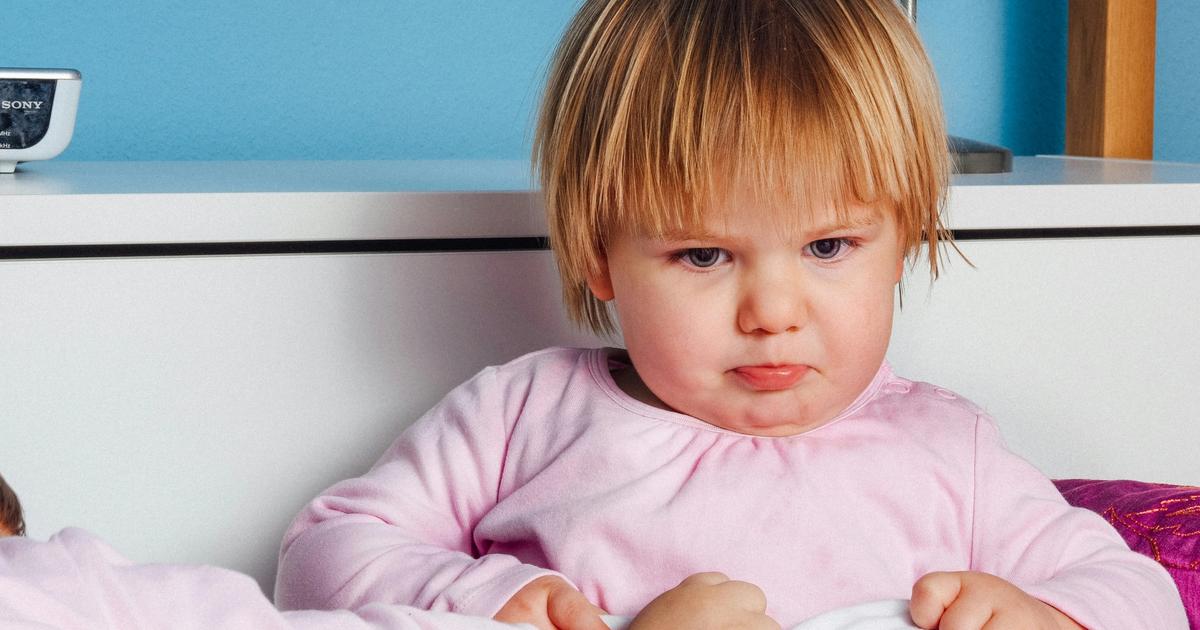
My daughter sat down on the floor of our kitchen last Tuesday and started screaming because I had peeled her banana. She wanted to peel it herself. Except when I handed her the unpeeled banana, she screamed harder, because now it was broken. My four year old, who had just watched this entire scene unfold, looked at me with genuine sympathy and said, "mummy, she is being crazy."
Reader, I laughed. Then I sat down on the floor next to my toddler and waited. And while I was waiting, I thought about something I had read the week before, from a paediatric psychologist called Dr. Mona Delahooke. She argues that toddlers do not "throw" tantrums. Their brains cannot physically help it.
I want to walk you through what the brain science actually says. Because once you understand what is happening in your toddler's head during a meltdown, everything about how you respond changes. You stop seeing bad behaviour and start seeing a 3 year old whose brain is doing exactly what a 3 year old brain is supposed to do.

First, the relief: this is not you
If you have been quietly wondering whether your toddler is harder than everyone else's, or whether you have somehow raised a difficult child, or whether you are failing because you cannot seem to stop the meltdowns through any amount of firm consequences or gentle explanation, I want to give you the most important piece of information in this whole post first.
Tantrums between roughly 18 months and 4 years old are a normal, predictable, biological feature of human brain development. Dr. Michael Potegal, a paediatric neuroscientist at the University of Minnesota who has spent decades studying tantrums, concluded that they are so consistent you can actually predict their progression down to the second. He compared them to yawning as a response to tiredness. An involuntary biological response to a specific stimulus.
This is not a parenting problem. This is a brain development stage. You did not cause it and you cannot make it stop by being a better parent. But you can absolutely respond to it in ways that either make it worse or help your child come out of it faster, and that difference matters enormously.
What is actually happening in their brain
Dr. Daniel Siegel, a paediatric psychiatrist at UCLA, developed what I think is the single most useful explanation of the toddler brain for tired parents. He calls it the upstairs brain and the downstairs brain.
The toddler brain, simplified
🔥
Downstairs Brain
Emotions, survival responses, fight / flight / freeze. Contains the amygdala. Takes over during meltdowns.
🧠
Upstairs Brain
Logic, reasoning, impulse control, planning ahead. Contains the prefrontal cortex. Barely online in toddlers.
Here is the critical thing. In a toddler, the downstairs brain is fully built and working. The upstairs brain is under construction and will not be properly finished until they are in their mid twenties. This is not a metaphor. The prefrontal cortex, which is the part that regulates emotion and controls social behaviour, only begins to mature at age four. In a two or three year old, it is genuinely not capable of doing what we keep asking it to do.
When something triggers a toddler (they wanted the red cup and you gave them the blue one), the amygdala in their downstairs brain fires off a threat signal. The hypothalamus pumps stress hormones into their body. Their muscles tense. Their heart races. They feel a survival level panic that an adult brain would easily regulate, but a toddler brain simply cannot.
Dr. Mary Margaret Gleason, a child psychiatrist, describes it perfectly. She compares a tantrum to a pot of boiling water with the prefrontal cortex as the lid. In adults, the lid holds. In toddlers, the feelings get bigger than the lid, and the lid pops off. That is the tantrum. It is not naughtiness. It is a brain that cannot yet contain its own feelings.
Children are not always being consciously difficult when they throw tantrums. The amygdala has detected a threat and the hypothalamus sent the message that causes your child to react. Without quite understanding why, she might experience tense muscles, a racing heartbeat, sweaty hands, and the urge to kick or throw herself to the floor. Though you try as you might to reason with her, she likely won't listen.
Dr. Majid Fotuhi, neuroscientist, NeuroGrow Brain Fitness Center
The "prediction error" theory: why the yoghurt broke them
The brain science gets more specific and more useful. Dr. Mona Delahooke, a paediatric psychologist, explains tantrums using something called prediction error, which is based on contemporary neuroscience from researchers like Lisa Feldman Barrett.
The theory goes like this. Human brains are prediction machines. At every moment, your brain is running subconscious predictions about what is about to happen next, based on past experience. When reality matches the prediction, your brain feels calm. When reality does NOT match the prediction (the star shaped nuggets got replaced with round ones, the banana got peeled when your child wanted to peel it), your brain registers a prediction error.
For an adult, prediction errors are mildly irritating at worst. "Oh, they changed the menu. Fine." For a toddler, whose brain has limited experience, fewer backup plans, and almost no prefrontal cortex to help contextualise the surprise, a prediction error can feel catastrophic. Not because they are being dramatic. Because their brain genuinely has fewer tools to put the error in perspective.
This reframe changed my entire approach. When my daughter loses it because I peeled the banana, I now think: "her brain expected to peel it and reality did not match. That is a prediction error, and her brain does not yet have the tools to recover quickly." This does not fix the tantrum. But it radically changes what I do in response, and how I feel about it.
Delahooke argues that we should stop using the word "tantrum" altogether and replace it with "stress response" or even "prediction error." Because that is what it is. And the language matters, because language shapes how we respond.
What tantrums look like at each age
Tantrums are normal across toddlerhood, but their character shifts as the upstairs brain slowly comes online. Here is roughly what to expect by age. These are not rigid stages. Every child is different.
18 months to 2 years
Peak "body tantrum" age
What is happening: Self awareness is emerging. They know they are a separate person from you, and they want to prove it constantly. Every mismatch between their will and the world becomes a potential meltdown.
2 to 3 years
The "terrible twos" (which are actually about autonomy)
What is happening: Self awareness is emerging. They know they are a separate person from you, and they want to prove it constantly. Every mismatch between their will and the world becomes a potential meltdown.
3 to 4 years
The "threenager" phase (often harder than 2)
What is happening: Their upstairs brain is starting to come online just enough to know what they want and recognise when they are not getting it, but nowhere near enough to regulate the frustration. The gap is painful for them and exhausting for you.
4 to 5 years
Transitional age - things get easier (slowly)
What is happening: The upstairs brain is finally online enough to participate in emotional regulation. Not reliably. Not always. But enough that you can sometimes reason with them without triggering a bigger meltdown.
One thing to watch for: if tantrums at any age are causing your child to hurt themselves, hurt others significantly, last longer than 25 to 30 minutes regularly, happen 10+ times a day, or persist past age 5 with the same intensity, it is worth talking to your paediatrician. Very intense or prolonged tantrums can sometimes signal sensory processing differences, as new 2025 research from UC San Francisco suggests, or other underlying needs worth exploring.
The 3 Rs: what actually works in the moment
Dr. Bruce Perry, a child psychiatrist and neuroscientist, developed a framework that has become the gold standard for responding to tantrums in a way that the research actually supports. He calls it Regulate, Relate, Reason. And the order matters, because the order is biological.
Regulate (first, always)
What this looks like: Sit down. Lower your voice. Breathe slowly. Do not try to talk them out of it. Your calm is regulating them even when it does not look like anything is happening.
Relate (once the storm eases)
What this looks like: "That was really hard." "You really wanted to peel the banana yourself." "I get it. That was disappointing." You are helping them build the vocabulary for what they just went through.
Reason (only after 1 and 2)
What this looks like: "Earlier when the banana broke, that felt really bad. Next time that happens, what could we try?" Keep it very brief. Toddlers and preschoolers do not need lectures. They need a simple, calm pattern.
The reason most of us get this wrong: we jump straight to step 3. We reason, explain, lecture, and set consequences while the child is still fully in their downstairs brain. Nothing lands. Everyone feels worse. Skipping Regulate and Relate means nothing we say in Reason will stick. The research on this is remarkably clear. Order of operations matters.
What to say, and what to never say
Language during tantrums is like medicine. The right words can calm a child's nervous system. The wrong words can escalate it. Here are the swaps I have personally found to work, based on what the research recommends.
❌ Calm down!
✅ I'm here. You're safe. I've got you.
❌ Stop crying.
✅ It's okay to be upset.
❌ If you don't stop I'm taking the toy.
✅ I see you're really frustrated.
❌ You're being a big boy, act like it.
✅ This is really hard. I get it.
❌ Why are you crying about this?
✅ You wanted it to be different. That's so disappointing.
❌ You're embarrassing me.
✅ Let's step outside together for a minute.
The pattern is simple. Dismissive and directive language activates the downstairs brain further. Validating and present language calms it. You are not rewarding the behaviour by being kind. You are giving their brain what it needs to come back online.
And if you are wondering about the three word response that stops most tantrums, for me it has been this: "I'm right here." Not cheerful. Not pleading. Just steady. Three words that tell their nervous system the threat has passed because I am here and everything is okay. It does not always work. Nothing always works. But it works more than anything else I have tried.
A note for working mums running out of patience
I want to name something the brain science articles tend to gloss over. All of this takes energy you might not have. Regulating your own nervous system to calm your toddler's is a lot to ask of a tired mother at 6pm after a full day of work and feeding and cleaning. I know this. You know this.
Some days I do not have it. Some days I hear myself saying "stop crying" and I know it is the wrong thing in the moment I am saying it. And then I have to go repair afterwards, which is its own whole thing.
Here is what has helped me, genuinely, more than any parenting technique: before you can regulate your toddler, you have to know when you yourself are dysregulated. Tight jaw. Hot face. Hands clenched. Voice rising. Those are signs your own downstairs brain is taking over. And a dysregulated mother cannot regulate a dysregulated toddler. You just cannot.
When I notice I am there, I now say out loud to my kids: "mummy needs one minute. I am going to take a deep breath and come back." And I walk to the kitchen, breathe, sometimes cry a bit, and come back. Not perfect. Not always. But it teaches my children something I was never taught as a child myself. That grown ups have feelings too, and handle them in healthy ways, and come back.
Frequently asked questions
Isn't this just permissive parenting by another name?
No. Understanding that a tantrum is neurological does not mean abandoning limits. You can absolutely say "we are not buying that toy" and hold the limit. What brain science adds is the how. You hold the limit without shame, without lectures during the meltdown, and without trying to reason with a downstairs brain. Warm connection plus clear limits is exactly what authoritative or hybrid parenting looks like in practice, and the research consistently supports it as the most effective approach.
What if my child's tantrums are getting worse with age, not better?
Tantrums often peak at ages 2 to 3 and can briefly intensify at age 3 before getting easier at 4. If your child is older than 5 and tantrums are still frequent, intense, or causing harm, it is worth talking to your paediatrician. Persistent tantrums past age 5 can sometimes indicate sensory processing differences, anxiety, or other underlying needs. This is not a parenting failure to address. It is information.
Do I have to respond to every single tantrum?
No. You will not always have the bandwidth. Good enough parenting is a real research concept. Your child does not need you to be perfect every time. They need you to be calm and connected often enough that their nervous system learns the pattern. If you lose it sometimes and repair afterwards ("I got frustrated earlier. That was not fair to you. I'm sorry"), you are actually teaching them something valuable about being human.
What if I'm in public and feel judged by other people?
The strangers judging you at the supermarket do not know what you know about brain development. You do. Your child is going through a prediction error, not being a brat. Other parents watching are probably silently sympathising. And the people who are silently judging have either forgotten what toddlerhood is like or have not had a 3 year old yet. Their opinion is not relevant to what your child actually needs right now. Focus on the child. Ignore the audience.
Is it ever okay to use a screen to stop a meltdown?
Occasionally, in survival moments, yes. I have done it. Most parents have. What the research cautions against is screens becoming the primary regulation tool, because then your child never gets to practise regulating in other ways. I wrote more about this in the screen time post. A screen once or twice a week in a crisis is different from a screen every time they feel upset. Both things can be true.
My toddler hits me during tantrums. How do I handle that?
Hitting during a meltdown is still a downstairs brain behaviour. You can (and should) hold their hands calmly and say "I won't let you hit me. I am going to hold your hands." You are not punishing. You are providing the structure their brain cannot yet provide for itself. Stay calm. Do not hit back or yell. Once they are regulated, you can talk later about what to do with the feelings instead. "Next time when you feel that angry, you can stomp your feet, or squeeze my hand hard, or come find me for a big hug."
The permission you needed
Your toddler is not broken. Your toddler is not spoiled. You are not failing. What is happening in your kitchen at 6pm when your child screams for 20 minutes because the banana broke is their brain doing exactly what 2 year old brains are supposed to do. Experiencing a prediction error. Flooding with stress hormones. Coming undone because the lid is not built yet.
Your job is not to stop the tantrum. It is to be the calm adult nervous system they borrow while their own is under construction. Not every time. Not perfectly. But often enough, and with repair when you miss it, that your child learns over years what it looks like to feel a huge feeling and come back from it intact.
That is the work of these years. It is exhausting. It is holy. And you are doing it.
What sets off the biggest meltdowns in your house? Tell me in the comments. I guarantee I will recognise every single one.
Read next
Community Discussion
Join 0 parents sharing their thoughts
Loading conversation...
Save this article for later?
We'll send a beautiful copy straight to your inbox so you never lose it.

Avery Hayes
Mom Of Two
Avery Hayes is a mother of two and a parenting writer passionate about helping families through honest, relatable content.
Related Articles

School Refusal Has Doubled Since the Pandemic. Here's Why Punishment Is the Worst Thing You Can Do.
Before the pandemic, 14% of children were at high risk of school avoidance. By the 2021-22 school year, that figure had jumped to 22%, and severe school refusal has more than tripled. 80% of cases are anxiety-driven.

35 States Banned Phones in Schools. After One Full Year, the Data Is in. Here's What It Says.
35 US states and Washington D.C. have now signed laws or policies restricting student phone use in K-12 classrooms. The 2024-2025 school year was the first with most of those laws in effect. The early data is mixed, surprising, and clearer than anyone expected.
TikTok Calls It the "Nap Trap." Infant Sleep Researchers Quietly Call It "Biology."
The "nap trap" shaming is one of the quieter cruelties of modern new-motherhood content. The research says contact naps are completely developmentally normal, do not create bad sleep habits, and are not a trap at all.