TikTok Calls It the "Nap Trap." Infant Sleep Researchers Quietly Call It "Biology."
The "nap trap" shaming is one of the quieter cruelties of modern new-motherhood content. The research says contact naps are completely developmentally normal, do not create bad sleep habits, and are not a trap at all.

Avery Hayes
Mom Of Two
April 24, 2026 · 9 min read

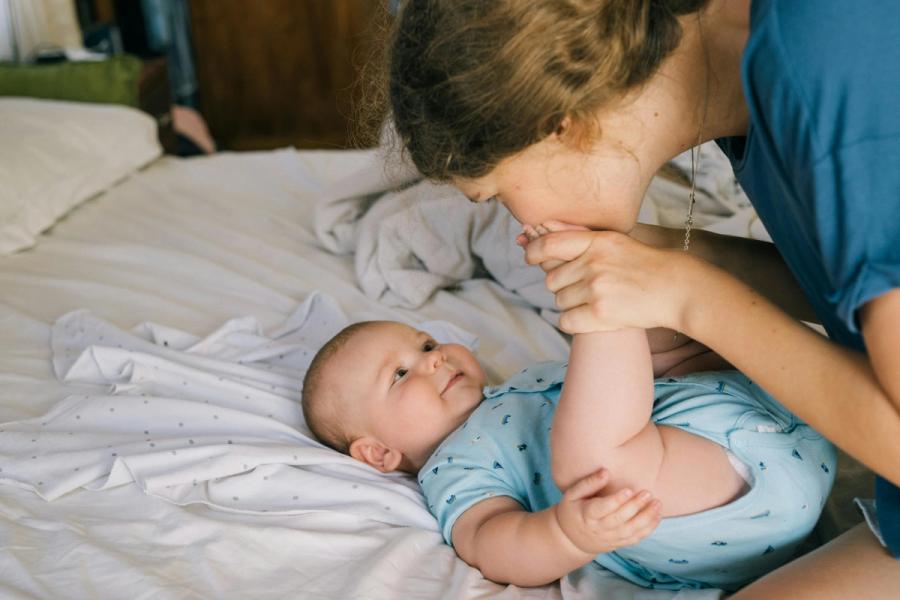
My first baby would only nap if she was on my chest. For about 10 weeks, I carried her from morning to evening, feeling like I was doing something wrong. I had been told, by Instagram accounts and WhatsApp messages from well-meaning relatives, that I was creating a "rod for my own back." That she would never learn to sleep alone. That I was trapped.
Nobody told me that what I was doing was how humans have slept for approximately all of history. Nobody told me that contact naps are not a character flaw in your parenting. They are a feature of newborn biology.
If you are in the 3am phase of this and panicking, this post is for you.
Why contact naps are not a "bad habit"
Here is what newborn sleep research has been saying for decades, often drowned out by the louder voices of sleep-training marketing. A newborn's nervous system is not yet self-regulating. Temperature, heart rate, breathing, and stress hormones are all regulated (in part) by contact with the primary caregiver. This is not sentimentality. It is measurable physiology.
When a newborn sleeps in contact with you, their body is doing its regulation work with your body helping. When they sleep alone, they are doing it on their own. For a brand-new human with an underdeveloped autonomic nervous system, contact is the developmentally expected default, not a problem to solve.
Newborns are not supposed to self-soothe, self-regulate, or sleep alone in a cot. The cultural expectation that they should has no basis in infant development. It is a relatively recent invention, and it runs against how the species evolved. Summary of decades of infant sleep research by Dr. James McKenna at the Notre Dame Mother-Baby Behavioral Sleep Laboratory, Helen Ball, and other researchers working on evolutionary infant sleep biology
4 things the research actually shows about contact naps
Multiple studies have failed to find evidence that frequent contact napping in the newborn period predicts worse sleep later. The babies who napped on their parents in the fourth trimester do not become worse sleepers than those who did not. This is one of the most persistent myths in parenting and it is not supported by the evidence.
Babies in contact with a caregiver show measurably lower cortisol (stress hormone) levels than babies sleeping separately at the same age. This matters because chronic cortisol elevation in infancy has been linked to later regulation issues. Contact naps are not neutral. They are actively protective.
They support feeding, especially breastfeeding. Helen Ball's research at the Durham Infancy & Sleep Centre shows that proximity to the baby supports milk supply, feeding frequency, and maternal milk hormone cycling. For breastfeeding mothers specifically, contact time in the fourth trimester is directly tied to establishment and continuation of feeding.
The Western expectation that newborns sleep alone in a separate space is a cultural minority position globally. Most cultures, most of history, have practised some form of proximity sleep for infants. The "trap" framing is a very local, very recent way of viewing something that is, biologically and historically, normal.
The safety note that matters: Contact naps are safe when the adult is awake and monitoring the baby. The Lullaby Trust's safer sleep guidance is clear that falling asleep with a baby on you, especially on a couch or armchair, is a known SIDS risk factor. If you are going to rest with your baby on you, do it awake. If you feel yourself getting drowsy, move the baby to a safe sleep surface. This is non-negotiable and the only meaningful risk around contact napping.
How to survive the contact-nap phase without losing yourself
None of this means contact napping is effortless. Holding a sleeping baby for 4 hours a day is genuinely hard on your back, your bladder, your attention, and your ability to get anything else done. Here is what actually helps.
Baby carrier from day one. A structured carrier or a wrap lets you contact-nap hands-free. You can sit, walk, or do light tasks while baby sleeps on you. This is not cheating. It is the exact thing humans have been doing with babies since before writing.
Set up one chair as your base. Water, phone charger, snacks, book, remote, tissues within arm's reach. You will spend hours in this chair. Make it work for you.
Rotate adults if possible. Partner does the evening contact nap. Grandparent does the afternoon. You are not the only person qualified to hold this baby. Share the load where you can.
Know the phase ends. Most babies move off exclusive contact napping somewhere between 8 and 16 weeks. Some take longer. All do eventually. You are not stuck here forever. You are in a short, biologically intense window. Let it be what it is.
Frequently asked questions
Will my baby ever sleep in the cot?
Almost certainly yes. The transition from contact napping to cot napping usually happens gradually between 8 and 16 weeks as the nervous system matures. A small number of babies take longer. Very few never get there. The contact phase does not predict the cot phase.
Is this the same as co-sleeping?
No. Contact napping is when you are awake and holding the baby. Co-sleeping is when you are asleep in the same surface. The safety rules are completely different and this post is only about contact napping with an awake adult.
What about night sleep? Can baby sleep in a cot at night but contact nap during the day?
Yes, many babies do exactly this. Night sleep is developmentally different from day naps. Following safe sleep guidelines (back, firm surface, empty space) at night is essential. Contact naps during the day, while the adult is awake, is a separate, safe, and developmentally normal practice.
People say I am spoiling my baby. What do I say?
You cannot spoil a newborn. Spoiling, as a concept, requires a child capable of manipulation. Newborns are not. Their only tool for communication is proximity-seeking, and responding to it builds the secure attachment that is foundational to good emotional development. The "spoiling" warning is a cultural leftover. Ignore it.
You are doing it right
If you are reading this with a small person asleep on you, right now, you are not failing. You are doing the most biologically expected thing a new mother can do. The "nap trap" framing is cultural shaming dressed up as advice. It is not science.
Drink water. Put on a show you actually like. Set the timer on your phone. Breathe. This phase is short. You are not stuck. You are exactly where you are supposed to be.
How old is your baby and how are contact naps going? Tell me in the comments.
Read next
Community Discussion
Join 0 parents sharing their thoughts
Loading conversation...
Save this article for later?
We'll send a beautiful copy straight to your inbox so you never lose it.

Avery Hayes
Mom Of Two
Avery Hayes is a mother of two and a parenting writer passionate about helping families through honest, relatable content.
Related Articles

School Refusal Has Doubled Since the Pandemic. Here's Why Punishment Is the Worst Thing You Can Do.
Before the pandemic, 14% of children were at high risk of school avoidance. By the 2021-22 school year, that figure had jumped to 22%, and severe school refusal has more than tripled. 80% of cases are anxiety-driven.
35 States Banned Phones in Schools. After One Full Year, the Data Is in. Here's What It Says.
35 US states and Washington D.C. have now signed laws or policies restricting student phone use in K-12 classrooms. The 2024-2025 school year was the first with most of those laws in effect. The early data is mixed, surprising, and clearer than anyone expected.
Giving Your Tween a Smartphone Before 14 Is One of the Most Consequential Calls You'll Make
The research on smartphones and adolescent mental health has moved from "possibly linked" to "robustly established" in the last five years. Here is what Jonathan Haidt and the wider evidence actually show, what is rewiring your tween's brain, and the four norms that are reversing the pattern.