School Refusal Has Doubled Since the Pandemic. Here's Why Punishment Is the Worst Thing You Can Do.
Before the pandemic, 14% of children were at high risk of school avoidance. By the 2021-22 school year, that figure had jumped to 22%, and severe school refusal has more than tripled. 80% of cases are anxiety-driven.

Avery Hayes
Mom Of Two
May 6, 2026 · 15 min read

One of the hardest mornings of my friend's parenting life happened on a Tuesday in October. Her 8-year-old, a child who had loved school the previous year, who had been excited about Year 4, who had picked out her uniform with care, was lying on the bathroom floor at 7:45am, sobbing, refusing to put on her shoes.
It had started two weeks before. Stomach aches in the mornings. A sudden quietness on the school run. Once or twice, a fully fledged meltdown at the gate. Her teachers said she was "fine once she settled." Her friends were the same as always. Nothing, on the surface, had changed.
And then, that Tuesday, she said the words that broke my friend's heart. "I just can't go in. I can't. Please don't make me."
What my friend did not yet know was that her daughter had become part of one of the largest, most under-discussed mental health stories of the post-pandemic era. According to Columbia University's research summary, "rates of school absenteeism have doubled to approximately 20% since the pandemic." Johns Hopkins Pediatric Psychiatry data shows that students at "extreme risk" of school avoidance jumped from 14% pre-pandemic to 43% in the 2021-22 school year. And 80% of cases, the same research confirms, are driven by anxiety.
This post is for parents who are in this right now, or starting to see the early signs. It is the careful, research-grounded version of what is actually happening, and what to do, written without the judgement that this conversation usually carries.
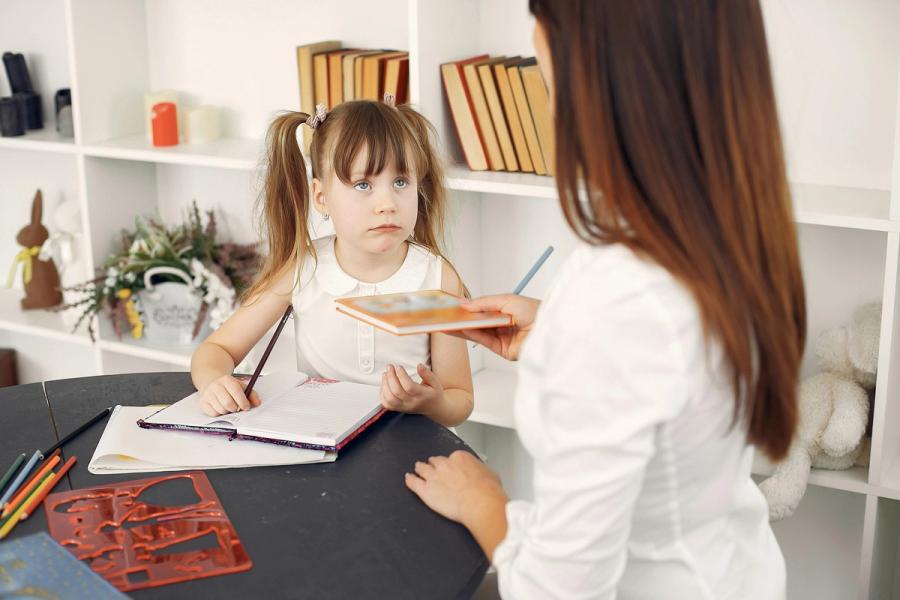
What school refusal actually is (and isn't)
The first thing worth understanding is that school refusal is not the same as truancy, laziness, defiance, or "wanting to stay home from school" the way most of us did occasionally as kids. It is a specific, anxiety-driven pattern that has been recognised in child psychology for decades and has now exploded in prevalence.
School refusal, as defined clinically, refers to a child's refusal to attend school due to emotional distress. The child usually wants to want to go. They are not, in most cases, calculating or manipulating. They are overwhelmed by an anxiety that their nervous system cannot yet manage.
School avoidance is a broader umbrella that includes school refusal but also captures less acute patterns: chronic somatic complaints (stomach aches, headaches), repeated nurse-office visits, leaving class to "regulate," excessive school absences without obvious cause.
What it is not: truancy (skipping school for fun without parental knowledge), school withdrawal (kept home by parents), or the occasional "I don't want to go" complaint that most children make. The defining feature of school refusal is that the child is in genuine distress and the parents are aware of it.
The clinical picture, especially in the post-pandemic period, has shifted in two ways. First, it is appearing earlier, with peak first onset now around ages 7 to 9, often coinciding with social and academic transitions in early elementary school. Second, the severity has increased: "the severity of school avoidance is much worse now since COVID" as Lisa Beauvois, FNP, of Johns Hopkins Pediatric Psychiatry, told The Clinical Advisor in 2024.
Why it has doubled since the pandemic
This is not a mystery. The mechanisms have been well studied. Six factors, working together, explain almost all of the increase.
Children develop the skills of group functioning (handling small social slights, navigating playground politics, tolerating boredom in a classroom, managing peer-driven anxiety) through years of daily exposure. Many children lost 12 to 24 months of that exposure during 2020-2022. Particularly for children whose pre-pandemic school years had been the early ones (Reception, Year 1, Year 2), the foundation simply did not get fully built.
For neurodivergent children, anxious children, and children who already found school socially difficult, lockdown was, in some ways, a relief. Bullying paused. Sensory overload eased. The pressure to perform socially every day disappeared. As clinicians have observed, this was particularly relevant to children with autism, ADHD, and other neurodivergent conditions. When school resumed, returning to that environment felt unbearable rather than just hard. The avoidance behaviour now had a felt-sense memory of what staying home was like.
As reported by TIME, "the number of kids experiencing high rates of clinical anxiety nearly doubled during the pandemic." This is not opinion; it is consistent across multiple national datasets. A child who would have managed school anxiety pre-2020 may simply not have the regulation reserves now.
Children pick up on stressed, depressed, or anxious parents. Cross-national research documents how parental pandemic-era mental health changes are correlated with child outcomes including school avoidance. A child whose parents were going through their own anxiety crisis during 2020-2022 absorbed some of that as a baseline state.
Two years of irregular wake times, screen time at night, and unstructured days disrupted children's sleep architecture in ways that have been hard to fully restore. Sleep problems are independently associated with school refusal, separately from anxiety. Many of the children showing up at clinics for school refusal also have measurable sleep deficits, often unrecognised.
This is the most important and least discussed factor. When a child shows distress about school, a caring parent's natural response is to ease the pressure: let them stay home today, call the school, drop them off late, fetch them early. Each accommodation, on its own, is reasonable. But when accommodations stack up across weeks, the brain learns: avoiding school is what makes the bad feeling go away. The anxiety, paradoxically, grows. Yale's research on family accommodation in childhood anxiety, led by Dr. Eli Lebowitz, has demonstrated this mechanism repeatedly. The accommodation, not the original anxiety, is what makes the pattern entrench.
Even though we know the numbers have gone up, the severity of school avoidance is much worse now since COVID. School avoidance is associated with anxiety in about 80% of the cases.
Lisa Beauvois, FNP, PMHNP, Johns Hopkins Pediatric Psychiatry, in The Clinical Advisor, 2024
The early signs to look for
School refusal usually does not appear as a sudden, dramatic refusal. It builds slowly over weeks or months, often with signs that are easy to miss or rationalise. If you are reading this because you are wondering whether what you are seeing in your child is the start of school refusal, here are the early signals.
A child who is mostly fine during the school week but reliably has stomach aches, tears, or behavioural changes the night before school or in the early morning. Especially after holidays.
Repeated headaches, stomach aches, or vague unwellness that show up on school days but not weekends. This is one of the most common and most overlooked early signals. The pain is real, even when there is no medical cause.
A pattern where the child is leaving class repeatedly, often for vague reasons. May be reported as "she's doing fine, she just spent a lot of time in the nurse's office today."
A normal back-to-school adjustment usually fades within 1-2 weeks. School refusal does not fade; it intensifies. If three or four weeks in, the morning protests are getting worse rather than better, that is the marker.
Difficulty falling asleep on school nights, early waking with anxiety, or a clear pattern of sleeping much better on Friday and Saturday nights. Sleep is often the first system to break.
The child no longer wants to talk about school, friends, or extracurriculars. This can be subtle: less mention of friends at dinner, no longer wanting to invite people over.
These statements, said quietly, are often the most diagnostic. Children rarely say them lightly. A child who tells you, even softly, that they cannot do school is communicating something serious.
One signal that is NOT diagnostic: a child saying "I don't want to go to school" once or twice, especially in the morning rush. Most children say this. The pattern that signals real refusal is the consistency, the duration, and the somatic component (tears, stomach aches, real distress), not any single complaint.
Why punishment makes it dramatically worse
This is the section I most want parents to read carefully, because the natural instinct (especially under the pressure of school attendance officers, judgemental relatives, and our own panic) is to push harder. To threaten consequences. To be firm. To "show them they cannot get away with this."
The research is unusually clear that this approach makes things worse. Here is why.
School refusal is not a behaviour problem; it is an anxiety response. Punishment is designed to motivate behavioural change in a child who can choose differently. A child in genuine anxiety distress cannot, in that moment, choose differently. Their nervous system is in fight-flight-freeze, and what looks like "refusal" is often a child whose body has decided for them. Punishing them does not give them new choices. It adds shame and fear to an already-overwhelmed system, which makes the anxiety worse, not better.
Threats and consequences entrench the avoidance association. Anxiety is fundamentally about prediction: the brain has decided that school is dangerous, and is acting accordingly. When you add threats ("if you don't go, you'll lose your iPad"), you are reinforcing the brain's prediction that school is dangerous, because now there are scary things attached to school in two directions. The child's anxiety system, trying to keep them safe, escalates further.
Dragging a child to school physically usually backfires. Many parents, in desperation, have ended up physically forcing a child into the car or into the school building. Even when this technically gets the child to school, it often shatters the trust relationship the child needs to feel safe enough to eventually return. Practitioners working with school refusal cases almost universally describe physical force as counterproductive in the long run, even if the short-term goal of attendance is briefly achieved.
Shaming the child intensifies the spiral. "Other children manage." "You're being ridiculous." "What is wrong with you?" These statements, said even out of frustration, do real damage. A child experiencing school refusal already feels like there is something wrong with them. Confirming it from the parent who is supposed to be their safe base accelerates the depression and isolation that often co-occur.
The hardest truth: the parental instinct that this is a battle of wills, and that giving in "teaches them they can manipulate you," is almost always wrong in the case of genuine school refusal. The child is not manipulating. They are overwhelmed. The fight you are picking is not with their will; it is with their nervous system. And nervous systems do not respond to discipline. They respond to safety.
The 5 things that actually help
This is what does work, drawn from the best research on childhood anxiety treatment, including Yale's SPACE programme, AACAP's clinical guidance, and the consensus of practitioners working with school refusal cases.
This is the most counterintuitive skill. You acknowledge what the child is feeling without changing the underlying expectation. "I can see you're really worried about school today. That's a hard feeling. I'm here with you. And we're going to school." The validation regulates the nervous system. The continued expectation prevents the avoidance loop. Doing only one without the other is what does not work. Validation alone teaches the child that the feeling is too big to manage. Expectation without validation feels like punishment. Both, together, is the technique.
The single most important behavioural intervention is to keep the child in contact with school in some form, every day. If full days are impossible, an hour. If an hour is impossible, walking up to the gate. The principle, drawn from anxiety treatment generally, is that avoidance feeds anxiety; partial exposure shrinks it. A child who has not been to school for two weeks finds the prospect of return exponentially harder than one who has been each day, however briefly. Whatever counts as "going" can be small. The smallness is fine. The continuity is what matters.
"I don't want to go to school" is rarely the actual fear. Underneath it, with patient exploration, is usually something specific: a particular teacher, a specific lesson, lunchtime, the changing room, a friendship, the morning bus, a maths group, the noise of the hallway. Once you can name the specific trigger, you can work on it directly with the school. School refusal generalised feels enormous. School refusal localised to "the changing room before PE" is often solvable with one accommodation. Many cases turn around at this step.
Most schools have, by 2026, encountered school refusal repeatedly and have developed protocols. Find the right person (often a SENCO, school counsellor, head of pastoral care, or school nurse) and have a calm, factual meeting about your child. Bring observations, not blame. Ask what flexibility is possible (gradual reintegration, a "safe person" the child can go to, a quiet room for difficult moments). Most schools will work with you if you come as a partner. The parents who go in adversarial usually get adversarial responses. The ones who go in collaborative usually get real help.
School refusal is a symptom of underlying anxiety, and the underlying anxiety needs treating. For many children, structured cognitive behavioural therapy (CBT), the SPACE programme (which works with parents on accommodation patterns), or a combination of both, produce dramatic improvement within weeks. For more severe cases, paediatric psychiatry input may be needed. Treating only the school attendance without treating the anxiety is like treating a fever without treating the infection. AACAP's clinical guide specifically recommends combined therapy approaches for cases lasting more than 2-3 weeks.
The pattern that works: warm, validating, persistent, structured. Not pushing harder. Not giving up. The middle path is uncomfortable for parents because it requires holding a difficult line with empathy, every morning, often for weeks. But it is, by every measure of long-term outcome, what produces recovery.
When you need professional support
This is one of those situations where waiting too long for professional input is one of the most common mistakes. School refusal that has been entrenched for months is dramatically harder to treat than school refusal caught at week 3. Here are the markers that mean it is time to escalate.
Pattern lasting more than 2 weeks despite consistent effort. If you have been doing the things in the previous section for two full weeks and the morning distress is not improving, get professional input. This is not a failure. It is the appropriate next step.
Any mention of self-harm, suicidal thinking, or "I want to disappear." Stop reading parenting blogs and contact a mental health professional or your GP same-day. School refusal sometimes co-occurs with depression and crisis-level distress. This warrants urgent specialist input.
The child has not attended at all for one week. Even partial attendance is a critical anchor. Once a child has missed a full week with no contact, the anxiety hardens substantially. Get help before the second week begins.
You are recognising signs of clinical anxiety. Persistent worry, panic attacks, intrusive thoughts, sleep disturbance, loss of appetite, withdrawal from previously-loved activities. Childhood anxiety, like adult anxiety, responds extremely well to treatment but rarely resolves on its own.
The household is becoming dysfunctional around it. When school refusal is consuming the entire family's energy, when other children are being affected, when parents are at war with each other about how to handle it: this is a sign the load needs sharing with a professional, even if for the parents' own benefit.
The right starting points: your GP, your school's SENCO or counsellor, your local CAMHS service (UK) or paediatric psychiatry referral (US). The American Academy of Child & Adolescent Psychiatry and the UK's YoungMinds both have resources for finding qualified practitioners.
Frequently asked questions
My child says they're being bullied. Is school refusal sometimes the right response?
Yes, sometimes. If there is genuine bullying, harassment, or unsafe conditions at school, removing the child from that environment is appropriate. But this is different from school refusal. The right response in that case is to address the bullying urgently with the school, then work on return. Permanent removal is sometimes the right call but is usually a last resort. Most children who report bullying as the trigger for refusal are not making it up, but the bullying is also often not the only factor. Take it seriously, address it, and do not stop the return-to-school work in parallel.
My child is neurodivergent (autism, ADHD). Is school refusal different for them?
Yes, and this is critical. For neurodivergent children, school refusal is more common, more severe, and often more about sensory overload, social demand, or unmet support needs than pure anxiety. The same principles apply (validate, partial exposure, identify specific triggers, coordinate with school) but the school-side accommodations are usually more important. A neurodivergent child whose support needs are being met at school usually returns. One whose needs are not being met often does not. As clinicians have noted, the neurodivergent child population was particularly affected by pandemic disruptions and is overrepresented in current school refusal cases.
Should I let my child stay home occasionally as a reset?
This is one of the most contested questions. Brief planned days off (a "mental health day," a Friday after a bad week) can sometimes help in early-stage refusal. But unplanned days off, given in response to morning distress, almost always make the pattern worse, because the brain learns "if I get distressed enough, I get to stay home." The principle: planned, predictable rest can be helpful. Reactive accommodation usually is not.
My child manages once they're at school but the morning is hell. Is that still school refusal?
Yes, and this is actually one of the more hopeful versions. A child who can settle once at school but cannot get there is showing you that the barrier is the transition, not the school environment itself. This usually responds well to morning routines built around predictability and regulation, paired with continued school attendance. If once they're in, they're fine, you have a much better prognosis than the version where they cannot tolerate being at school at all.
Will this affect my child's long-term mental health?
Treated, it usually does not. The research on outcomes is broadly reassuring: children whose school refusal is treated effectively show no long-term elevated risk of adult mental health problems compared to peers. The risk comes from prolonged untreated school refusal, which can become a marker for entrenched anxiety, depression, and social isolation that persists into adolescence. The take-home: caught early and treated, this is recoverable. Left untreated for many months, it gets harder.
My partner thinks we should "stop coddling them." How do I respond?
This is a common parental disagreement. The framing "coddling" usually misunderstands the mechanism. The research is genuinely clear that punitive approaches do not work for genuine school refusal and often make it worse. A useful response: "We both want her back at school. The research is unambiguous that the firm-without-warmth approach extends the problem rather than solving it. The middle path, which is hard for me too, is what actually works. Let me share what the data shows, and let's try it for two weeks together." If your partner refuses to engage with this, family or couples counselling that includes the school refusal as a topic is sometimes the most useful next step.
The line worth holding
If you are reading this in the middle of it, with a child who is, right now, refusing to go in, I want to leave you with this.
You are not failing. Your child is not broken. The doubling of school refusal since the pandemic is, by every measure, a population-level phenomenon that has very little to do with individual parenting and very much to do with what an entire generation of children was asked to absorb between 2020 and 2022. You are dealing with an aftershock that millions of households are dealing with at the same time.
What works is not what feels intuitive. The instinct to push harder, to threaten more, to be firmer, to "stop being soft": all of this, the research is clear, makes the problem worse. The middle path, warm and persistent, validating and structured, is harder for parents than either pure permissiveness or pure firmness. That is why most families, left alone, drift to one of the easier extremes.
If you can hold the middle, with help where needed, your child returns. Most do. The journey may take weeks or months. But the destination, in the data, is a child who is back at school, with stronger emotional regulation skills than they had before, and a relationship with you that survived the hardest morning of both of your lives.
That, in the end, is the real outcome. Not the attendance record. The relationship and the regulation. Both rebuild.
Are you in this right now? Tell me in the comments. The parents going through this often think they are the only ones. They are not, by a very long way.
Read next
Community Discussion
Join 0 parents sharing their thoughts
Loading conversation...
Save this article for later?
We'll send a beautiful copy straight to your inbox so you never lose it.

Avery Hayes
Mom Of Two
Avery Hayes is a mother of two and a parenting writer passionate about helping families through honest, relatable content.
Related Articles
35 States Banned Phones in Schools. After One Full Year, the Data Is in. Here's What It Says.
35 US states and Washington D.C. have now signed laws or policies restricting student phone use in K-12 classrooms. The 2024-2025 school year was the first with most of those laws in effect. The early data is mixed, surprising, and clearer than anyone expected.
TikTok Calls It the "Nap Trap." Infant Sleep Researchers Quietly Call It "Biology."
The "nap trap" shaming is one of the quieter cruelties of modern new-motherhood content. The research says contact naps are completely developmentally normal, do not create bad sleep habits, and are not a trap at all.
Giving Your Tween a Smartphone Before 14 Is One of the Most Consequential Calls You'll Make
The research on smartphones and adolescent mental health has moved from "possibly linked" to "robustly established" in the last five years. Here is what Jonathan Haidt and the wider evidence actually show, what is rewiring your tween's brain, and the four norms that are reversing the pattern.