35 States Banned Phones in Schools. After One Full Year, the Data Is in. Here's What It Says.
35 US states and Washington D.C. have now signed laws or policies restricting student phone use in K-12 classrooms. The 2024-2025 school year was the first with most of those laws in effect. The early data is mixed, surprising, and clearer than anyone expected.

Avery Hayes
Mom Of Two
April 26, 2026 · 12 min read
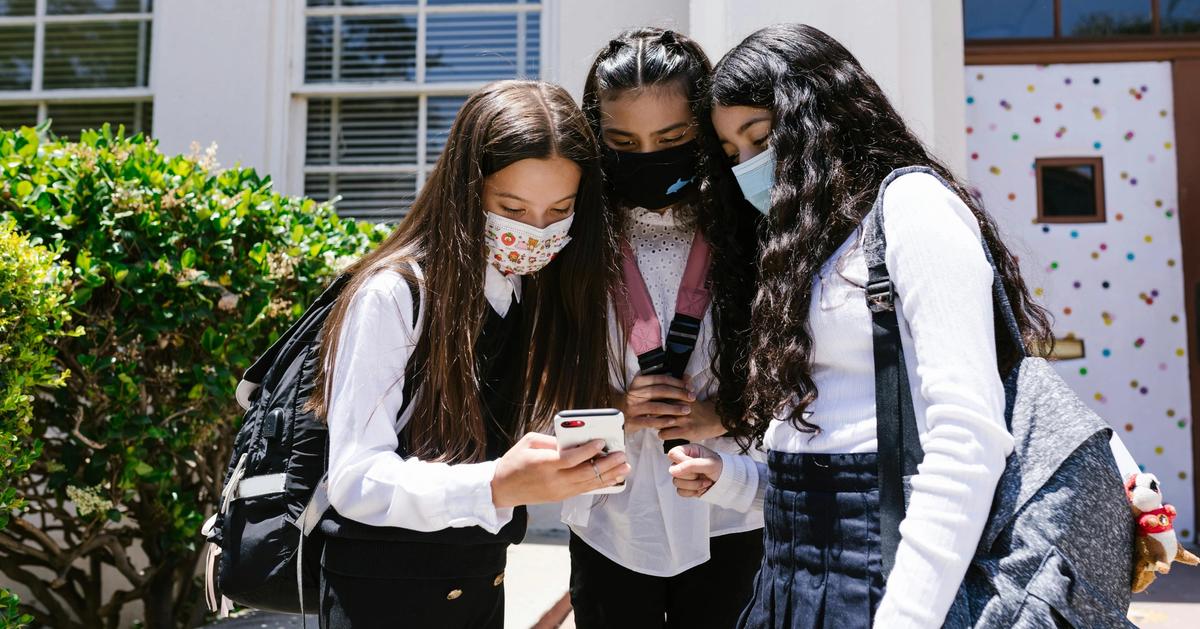
The 2024-2025 school year was, quietly, one of the biggest natural experiments in modern education policy. Twenty-two US states enacted phone restrictions in K-12 classrooms in 2025 alone, on top of those that had moved earlier. By the end of that academic year, more than 30 states had policies in place. By April 2026, the figure was 35 states plus Washington D.C., according to Ballotpedia.
It is the closest thing we have to a controlled experiment on a generation. And, finally, the data from that first full year is starting to come in.
This post walks through what the early evidence actually shows, separated from the political noise on either side. Not "phones in schools are evil." Not "phone bans are pointless surveillance." The honest middle: what changed when phones came out of the classroom, and what parents should take from it.
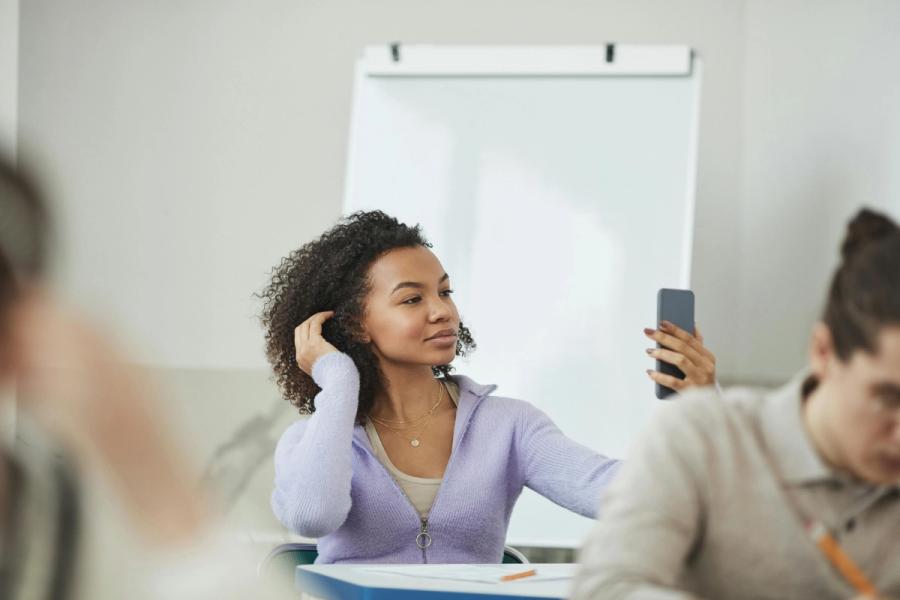
What states have actually banned
The policies vary, but they cluster into three types.
"Bell-to-bell" bans. Phones are off, away, or in pouches from the moment students arrive at school until the moment they leave. No use during lunch, study hall, or between classes. This is the strongest version. Florida pioneered it in 2023 with the first statewide legislative ban, and 26 states have followed with similar restrictions.
"Instructional time" bans. Phones are restricted only during class itself. Students can use them at lunch and between classes. Arizona, California, and Ohio fall into this softer category.
"Encouraged" policies. Several states (Alabama, Idaho, Kansas, Connecticut, Maine, Minnesota, New Mexico, Washington) have passed resolutions encouraging districts to develop their own policies, without specifying what the policies must contain.
The biggest single move came in New York, where Governor Kathy Hochul signed a bell-to-bell ban that took effect for the 2025-2026 academic year, making New York the largest state in the US with the policy. California's Phone-Free Schools Act, signed by Governor Newsom in September 2024, takes effect 1 July 2026.
So when we talk about the data from year one, we are mostly talking about the states that moved early: Florida, South Carolina, Indiana, Virginia, and a handful of others, plus large districts like Los Angeles Unified that moved ahead of their state legislation.
The 5 findings from year one
The most carefully done academic study so far is a National Bureau of Economic Research analysis of a Florida school district's all-day phone ban, which found a 0.6 to 1.1 percentile point gain in test scores after the ban, with larger effects for male students (1.4 percentile points), middle and high school students (1.3 percentile points), and Black and white students (1.2 to 1.4 percentile points). Modest, but real, and consistent with the older UK research that motivated this whole movement.
The teacher-reported data is more dramatic than the test-score data. A 2025 survey of teachers in a Virginia school division found 78% supported the policy and 62% reported improved student behaviour, with teachers describing increased engagement, stronger peer interaction, and fewer classroom disruptions. The behavioural improvement appears to be larger than the academic improvement, which is itself an interesting finding.
The Florida study found a measurable improvement in middle and high school attendance, particularly in unexcused absences. The mechanism is not entirely clear, but plausible explanations include reduced class-skipping (students were less likely to leave the building if their primary social channel was offline) and increased engagement (a more interesting class day produces better attendance).
This is where I have to be honest. The headline claim that phone bans improve teen mental health, made loudly by some advocates, is not yet well-supported by the year-one data. The Paragon Institute's literature review finds the evidence on direct mental health benefits "mixed," with some indirect benefits but no clean signal of improved teen anxiety or depression directly attributable to the ban itself. This may change with more data. As of April 2026, claiming the ban has solved the teen mental health crisis is ahead of the evidence.
Whatever the academic verdict, the public verdict is settled. Pew Research polling in summer 2025 showed 75% of US adults support classroom phone bans, up from 68% the previous fall. The Brookings Institution's 2026 survey found 93% of parents prefer either bell-to-bell bans or no phone use during classes. Crucially, even teens themselves report mostly positive views: most say their school's restrictions have had no negative impact on their friendships or social life.
These results are consistent, supportive evidence of anecdotal stories from across the country about kids missing out on learning and social opportunities. They can help justify efforts to provide a coherent smartphone policy for schools, which should not be left up to individual teachers to enforce.
Lauren Hale, researcher quoted in The 74 / Stacker year-end review, December 2025
Why it works (when it works)
The mechanism behind the effects, as far as researchers can tell, is fairly simple. Pre-ban, an estimated 20% of classroom time was being spent on phones for non-educational purposes. Reclaiming even a fraction of that time produces measurable outcomes.
But the mechanism is not just "more attention available for school work." It is also social. Phones in classrooms had quietly redirected adolescent social life away from the cafeteria, the playground, and the corridor (where teachers and adults could see and shape it) and into private screens (where they could not). Teachers reporting "stronger peer interaction" after the ban are observing children rediscovering each other.
This matters because Jonathan Haidt's central argument in The Anxious Generation was not just that phones are bad. It was that phone-based childhood replaces play-based childhood with consequences for development. School phone bans, in this framing, are not really about test scores. They are about restoring eight hours a day of in-person childhood inside the one place that can hold it.
Whether or not you accept Haidt's larger argument, the in-school behavioural change is striking enough that even sceptics are revising their priors. The kids look up. They talk to each other. They play. The mechanism is roughly that simple.
The honest limits of the policy
Three honest critiques of phone bans worth taking seriously:
One. School-only bans don't fix the rest of the day. A child who cannot use TikTok between 8am and 3pm but spends four unsupervised hours on it after school is still being shaped by it. Some studies, including a notable UK analysis, suggest school bans alone do not improve overall teen wellbeing or academic outcomes, because total daily phone time barely changes. The bans must be paired with at-home rules to produce broad effects.
Two. Enforcement varies wildly. Bell-to-bell bans with phones in pouches (Yondr or similar) work much more consistently than "instructional time" bans where teachers are expected to police use individually. Many of the disappointing studies are of weakly enforced policies, not of the policy concept itself.
Three. Emergency communication is a real concern. School shootings in the US have made many parents understandably anxious about being unable to reach their children during a crisis. Most ban policies allow phones to be retrievable from a central location in genuine emergencies. The data suggests this works in practice, but the parental fear is legitimate and worth acknowledging.
The cleanest pattern from the data: bell-to-bell bans, consistently enforced, produce the strongest behavioural and modest academic gains. Half-measures (instructional time only, voluntary, teacher-enforced) produce much weaker effects. If a school is going to do this, the research suggests doing it fully is meaningfully better than doing it partially.
What this means for parents
Whether your child's school has a ban, whether you live somewhere considering one, or whether none of this is on your local agenda, here is what the year-one data should change about your thinking.
Two years ago, asking your child's school about its phone policy felt overprotective. Today, the default position in most US states is that phones do not belong in classrooms, full stop. You are now in line with the consensus, not outside it. This is also true in the UK, where most state schools have adopted full or partial bans.
Counter-intuitively, the school ban makes the home rule more important, not less. If 8 hours a day of phone exposure has just been removed at school, the at-home hours are now where the developmental dose is concentrated. The school is doing its part. Now the home matters disproportionately.
If your school's policy is the weaker version (no phones in class, allowed at lunch and between periods), the research is increasingly clear that this produces much smaller effects than full bans. If you are part of a parent council or PTA, the data now supports pushing for bell-to-bell.
If your concern is emergency communication, ask the school about their specific protocol for genuine emergencies. Most schools with bans have one. Knowing what it is will resolve most of the anxiety. The protocol matters more than the absence of the phone.
If 8 hours of phone-free school is producing measurable improvements in attention and behaviour, what would 14 hours look like? The honest answer is "probably more of the same effect," and that is what the home phone-free hours and rules are doing.
Frequently asked questions
My child's school doesn't have a ban. Should I push for one?
Worth doing, but not alone. Talk to other parents first. Bring the year-one data to a PTA meeting. Ask the school administration what their current policy is and why. Most schools that don't yet have a ban are already considering one. A small group of parents bringing recent research is usually enough to move the conversation. Look up your state's current status on Ballotpedia or the Away For The Day project.
My teen says the ban will ruin their social life. Is that real?
The Brookings 2026 survey is unusually clear on this: most teens themselves report no impact on friendships from school bans. Some report initial frustration that fades within weeks. The "ruined social life" prediction has not, so far, materialised in the data. Take their concern seriously as a real feeling, but the evidence does not support the underlying fear.
What about kids with medical conditions or anxiety who need their phones?
Almost every school policy includes specific exemptions for medical needs (diabetes monitors, hearing aids, etc.) and for documented mental health accommodations. These exemptions are typically managed through the school's special education or 504 plan process. If your child has a genuine need, ask the school's policy on accommodations.
How does this connect to Australia's social media ban?
They're related but different policies attacking the same problem. Australia restricts who can have a social media account at all, regardless of where they are. School phone bans restrict where phones can be used, regardless of who owns the account. The two together (no social media until 16, plus no phones in school) describe the most protective version of the current consensus.
Will this last, or will it get rolled back?
It looks durable. The 75% public support, the bipartisan voting patterns (Florida's original ban passed unanimously in both chambers), and the fact that no state has rolled back its policy after implementation all suggest staying power. The question now is whether more states will go further (bell-to-bell rather than instructional time only), not whether they will reverse.
The quiet experiment
What happened in the 2024-2025 school year was not flashy. There was no breakthrough study. No miracle drug. No new app. Just the slow, unglamorous decision by 35 state legislatures to put phones away during class.
The early data says it is producing modest gains in test scores, larger gains in classroom behaviour and attendance, and a substantial cultural shift in how teachers experience their work. The mental health story is still being written.
Whatever your country and your school, the lesson for parents is simple. Eight hours a day matters. The home equivalent of those eight hours matters too.
Your house can be a phone-free school of its own, after 4pm.
What's your school's current phone policy, and is it working? Tell me in the comments. The cross-school data parents are sharing is becoming genuinely useful.
Read next
Community Discussion
Join 0 parents sharing their thoughts
Loading conversation...
Save this article for later?
We'll send a beautiful copy straight to your inbox so you never lose it.

Avery Hayes
Mom Of Two
Avery Hayes is a mother of two and a parenting writer passionate about helping families through honest, relatable content.
Related Articles
School Refusal Has Doubled Since the Pandemic. Here's Why Punishment Is the Worst Thing You Can Do.
Before the pandemic, 14% of children were at high risk of school avoidance. By the 2021-22 school year, that figure had jumped to 22%, and severe school refusal has more than tripled. 80% of cases are anxiety-driven.
TikTok Calls It the "Nap Trap." Infant Sleep Researchers Quietly Call It "Biology."
The "nap trap" shaming is one of the quieter cruelties of modern new-motherhood content. The research says contact naps are completely developmentally normal, do not create bad sleep habits, and are not a trap at all.
Giving Your Tween a Smartphone Before 14 Is One of the Most Consequential Calls You'll Make
The research on smartphones and adolescent mental health has moved from "possibly linked" to "robustly established" in the last five years. Here is what Jonathan Haidt and the wider evidence actually show, what is rewiring your tween's brain, and the four norms that are reversing the pattern.