"Dad Rage" Is Real, It's Everywhere on Reddit, and It's Quietly Breaking Modern Marriages in Half.
Reddit's dad-focused subreddits are flooded with fathers admitting they are losing their tempers in ways that frighten them. Paternal burnout is real. It looks different from mum burnout. And ignoring it is breaking a growing number of modern marriages.

Avery Hayes
Mom Of Two
April 24, 2026 · 12 min read

A few months ago I read a Reddit post from a father who had just yelled at his 3 year old over a spilled drink, realised the disproportion of his reaction, and gone into the bathroom and cried. He wrote: "I don't recognise the person I have become. I love my kids. Why am I like this?"
The post had 8,000 upvotes and several thousand comments. Most of them were other fathers saying: me too. My husband too. I thought it was just me.
The phrase "dad rage" has been quietly surfacing across Reddit, parenting forums, and therapist offices for a few years now. It describes something very specific. Not abuse. Not anger problems. Burnt-out fathers who are losing their tempers in ways that frighten them, cannot explain it, and feel too ashamed to talk about it. And it is quietly reshaping a lot of modern marriages, usually for the worse.
This post is for the mothers watching their partners struggle. For the fathers who feel alone in it. And for the couples who do not yet have the language for what is happening.
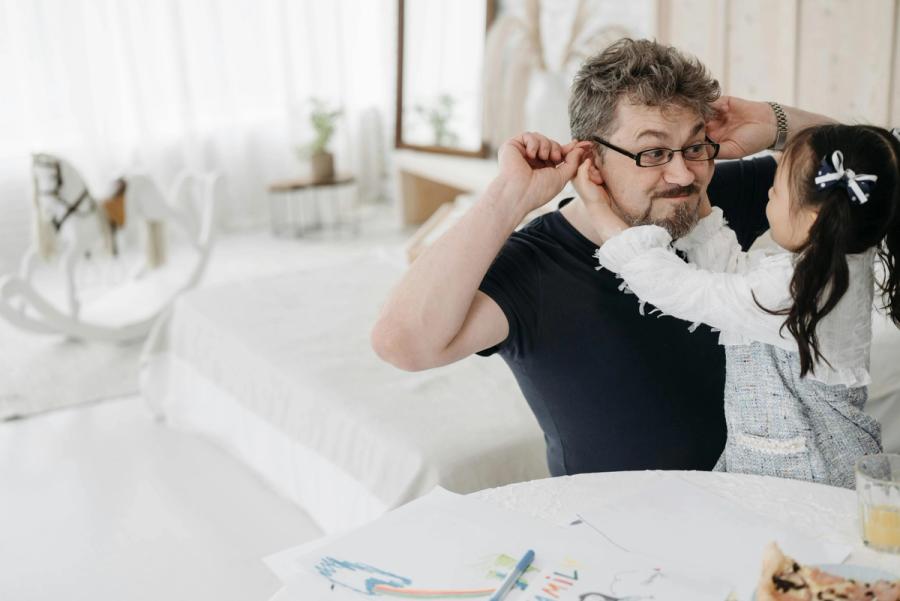
What "dad rage" actually is
Paternal burnout is a specific, measurable condition that clinicians are increasingly taking seriously. Like mum burnout, it is the result of prolonged stress, sleep deprivation, and cognitive overload. Unlike mum burnout, it tends to be expressed outwardly. As irritability. Short temper. Disproportionate reactions. And, in many cases, anger.
This is not a character flaw. It is a stress response pattern that men in particular, shaped by culture and socialisation, often default to when they are drowning but cannot ask for help.
The research on paternal mental health is still catching up. The mental health screening tools for new mothers have been in widespread use for decades. The equivalent for new fathers is only now entering mainstream paediatric practice. About 11% of fathers screen positive for postpartum depression in the first year, but the rate among fathers whose partners also have PPD can climb to nearly 50%.
Men are socialised to present anger as the acceptable output of every difficult emotion. Sad, scared, overwhelmed, ashamed, exhausted all come out as anger because anger is the one feeling they were given permission to show. In the context of fathering, this produces what we are now calling dad rage. Synthesis of how therapists specialising in men's mental health describe the pattern to couples in therapy
The 7 signs of paternal burnout
A spilled drink, a slow response, a toy left out. Tiny friction points provoke reactions that everyone (including him) knows are out of proportion. He apologises later but it keeps happening. This is the single most common sign.
When he is home, he is not really home. Long scrolling sessions after the kids are down. Disappearing into hobbies or work. Physical presence without emotional presence. Many fathers self-medicate burnout with withdrawal before the anger even shows up.
Mornings are fine. Mid-afternoon is manageable. Then 5pm happens and the fuse disappears. The "witching hour" affects fathers too, often more sharply because the day's accumulated stress hits just as the family demands peak.
Sports. Friends. Music. Sex. Hobbies. The stuff that used to matter feels flat. He is not sad in the classical sense. He is empty. This is often the depression pattern showing up, but in men it is commonly misread as "he is just tired."
He lies awake at night thinking about work. He wakes at 4am. He falls asleep on the sofa at 8:30pm. The sleep pattern is disrupted in ways that are not about the kids' schedule but about something going on in his own nervous system.
A couple of beers after the kids go down. A glass of wine while cooking. Then a second, then a third. Alcohol use creeping up, especially used alone, is one of the most common ways paternal burnout shows up before anyone names it as burnout.
He loves his family. He also feels he has lost himself. The sense of being trapped in an obligation he cannot escape can produce everything from irritability to despair. Most men do not say this out loud. Many feel it.
If the anger is ever physical: If the "rage" is involving any physical contact with children or partner (pushing, gripping, throwing things near people, breaking doors), this has crossed from burnout into a different situation that needs qualified professional help immediately. Please call a domestic violence helpline or a therapist trained in anger management. This post is about irritability and short temper, not physical harm.
Why fathers express burnout as anger
Here is the underlying pattern that therapists describe when working with burnt-out fathers. Boys are taught, very early, that there are essentially two acceptable emotions for men. Happy and angry. Sad is weakness. Scared is shameful. Overwhelmed is not a word. Tired is complaining.
When a man hits the wall of sustained parental stress (sleep deprivation, financial pressure, relationship strain, loss of freedom, identity disruption), the honest response would be something like: "I am overwhelmed. I am scared. I am exhausted. I do not know who I am anymore."
But he has not been given the permission or the vocabulary to say any of those things. So his nervous system routes everything to the one channel that has always been acceptable. Anger.
What looks like an angry man is usually a frightened, exhausted, grieving man whose only available outlet is yelling. Understanding this does not excuse the behaviour. But it does point to where the fix actually lives.
The 4 moves that fix it
The fix starts with naming what is happening, ideally in a calm moment. "I think you might be burnt out. I have been. I want us to take this seriously." Most fathers are relieved when their partner names it because they have not been able to. This conversation does not happen during the rage. It happens the next morning, on a walk, in the car.
Burnout does not resolve by itself. It resolves when the inputs change. Look at the division of labour. If one partner is doing 70% and the other 30%, whoever is doing 70% is burning out, regardless of gender. Rebalancing is not a feelings conversation. It is an operations conversation. Write it down. Divide it. Hold each other to it.
Isolation is the biggest predictor of male mental health decline. Many fathers lose their male friendships in the transition to parenthood and never rebuild them. A regular football game, a men's group, a walking buddy, a coffee every two weeks with his brother. One reliable male connection, maintained consistently, is one of the most protective factors in male mental health. Mothers cannot be his only support. He needs more.
A therapist who works with fathers or couples. A GP. A men's mental health line. If substance use is part of the picture, a dedicated substance counsellor. The research on getting men to accept help is unambiguous. They are more likely to engage when a partner or close person goes with them to the first appointment, rather than sending them alone. This is not a failure of his adulthood. It is a pattern that works and is worth using.
Frequently asked questions
Is this excusing bad behaviour?
No. Understanding the mechanism is not the same as excusing the outcome. Burnt-out fathers are still responsible for their behaviour. The point of this post is to give both partners a framework for addressing the root cause rather than just fighting about the symptoms. The behaviour needs to change. The fix is to address what is producing it, not only to argue about what happened.
My husband would never admit to burnout. How do I start the conversation?
Do not lead with the word "burnout" if that is likely to trigger defensiveness. Start with observation. "You have been short with the kids more than usual. I am worried. I think we are both worn out. Can we talk about how to get some relief?" Positioning it as "we" and "worn out" rather than "you" and "burnout" usually opens the conversation. Then the formal language can follow if useful.
Are men just bad at parenting? Is that why this happens?
No. Men are not inherently worse at parenting. But many men entered fatherhood without the community, the role models, the vocabulary, or the mental health tools their wives had access to. The issue is not male inadequacy. It is male under-support. Fix the support structure and the parenting improves quickly.
What if I cannot convince him to get help?
You can and should get help yourself. A therapist who works with you alone can help you think about how to manage the situation, your own wellbeing, and the decisions you may eventually need to make. You are not responsible for your husband's recovery. You are responsible for your own wellbeing and your children's safety. Those can require you to act even if he will not.
Does this get better on its own?
Rarely. Paternal burnout that is ignored tends to escalate or chronicise. The hopeful news is that it responds well to the kind of intervention described in this post. Rebalanced load, male community, professional help, couples therapy. Most fathers who engage with these show meaningful improvement within a few months. Those who do not engage tend to stay where they are or get worse.
The quiet crisis
There is a whole population of fathers right now, loving their children, doing their best, and quietly burning out without the words or the permission to say it. They are expressing it as irritability, withdrawal, and rage. Their partners are confused, hurt, and increasingly alone. The children are absorbing the tension. And nobody is naming what is actually happening.
You naming it, gently, in your own family, is the start of the fix. He is not a bad man. He is an overwhelmed one. Most overwhelmed parents, with the right support, come back.
This is worth the conversation. It is worth the professional help. It is worth the slow, structural rebuild of how your family actually works.
Has this been showing up in your home? You are not alone. Tell me in the comments if you can.
Read next
Community Discussion
Join 0 parents sharing their thoughts
Loading conversation...
Save this article for later?
We'll send a beautiful copy straight to your inbox so you never lose it.

Avery Hayes
Mom Of Two
Avery Hayes is a mother of two and a parenting writer passionate about helping families through honest, relatable content.
Related Articles

Every Platform Your Kid Wants to Join Has a Minimum Age. Here's Why Every Single One Is Ignored.
Instagram, TikTok, Snapchat, YouTube, Discord. Every major platform your kid is begging to join has a minimum age of 13. Most kids join at 9 or 10. The companies know. The parents know.

What Looks Like "She Has It All Together" Is Often Just Anxiety Nobody's Diagnosing. Here's 9 Signs.
She is the mum who remembers every birthday. Whose lunchboxes are themed. Whose house is clean. Who never missed a deadline. Who is also, quietly, drowning. High-functioning anxiety in mothers is one of the most under-diagnosed mental health patterns we have. Here is how to spot it.

Self-Care for Moms Who Are Tired of Being Told to Take a Bath
If one more person tells you to light a candle and take a bath, you might set fire to the candle. Real self-care is not pretty. It is the boring, unglamorous basics that actually restore a depleted nervous system. Here are the seven that work.