Every Platform Your Kid Wants to Join Has a Minimum Age. Here's Why Every Single One Is Ignored.
Instagram, TikTok, Snapchat, YouTube, Discord. Every major platform your kid is begging to join has a minimum age of 13. Most kids join at 9 or 10. The companies know. The parents know.

Avery Hayes
Mom Of Two
April 26, 2026 · 11 min read
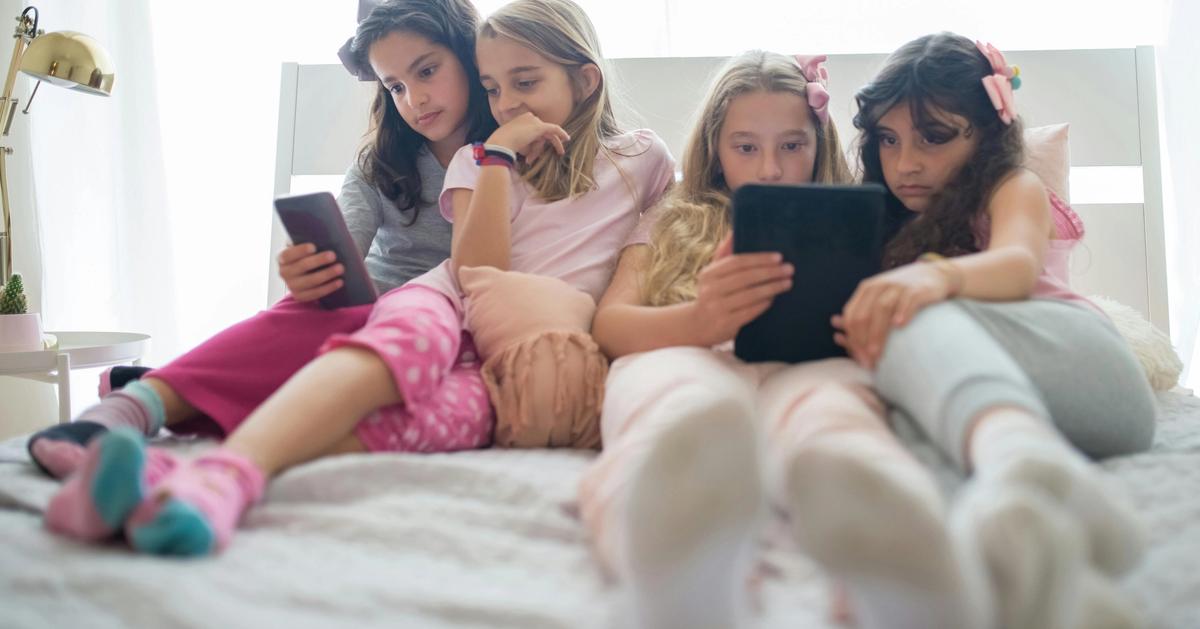
My 11 year old came home last year and told me every single person in her class had a TikTok account. Not most. All of them. Except her. I asked, very carefully, how she knew. She said because they were all watching it together at lunch.
I did the maths in my head. TikTok's minimum age is 13. These children were 11. Their parents had either created the accounts for them or allowed them to lie about their age. Every single parent of every single child in her class had broken the platform's own age rule, and nobody was even pretending otherwise.
This post is about why that happens, what it is actually doing to the kids, and how a small but growing number of families are pushing back.

Why the age 13 rule exists in the first place
The age 13 rule on nearly every major platform comes from a specific piece of US legislation, the Children's Online Privacy Protection Act (COPPA), which restricts what data companies can collect from children under 13. This is why Instagram, TikTok, Snapchat, Facebook, YouTube, and Discord all list 13 as their minimum age. It is a legal compliance floor, not a child development assessment. A 13-year-old is not developmentally ready for these platforms. They are just legally allowed on them.
The actual developmental research, as covered extensively in Jonathan Haidt's The Anxious Generation, suggests that social media use before the mid-teens is consistently associated with worse mental health outcomes. This is why Australia in 2025 passed legislation raising the effective minimum age to 16 for social media, and why growing numbers of European countries are considering similar laws.
The minimum-age rule on social media is a legal compliance line, not a safety line. It protects the company from data-collection liability. It does not protect your child from the platform itself. Synthesis of what online safety researchers and paediatric mental health experts have been stating increasingly clearly since 2023
The 6 rules families are actually using
Haidt's recommendation is 16. Many families settle on 14, in line with starting high school. Below that, the platforms are not age-appropriate and the research shows real harm. Your child can have a phone for calls and texts without having social media. These are separate decisions.
"Finsta" culture (fake Instagram accounts kids keep hidden from parents) is real and rampant. The rule in many family-media pacts now is that if a social media account is discovered that parents did not know about, the phone is paused completely until trust is rebuilt. This is not surveillance. It is an age-appropriate boundary.
This single rule, applied consistently, does more to protect kids than any other. Phones that leave the common area at night are used alone, at night, often with sleep deprivation. Bedroom phone use is where most of the worst outcomes happen. Charging lives downstairs.
On any device a minor uses, parents have access to all accounts, all passwords, and can spot-check at any time. This is not snooping. It is a condition of being allowed to use the account. Framed clearly from day one, most teens accept it. It is the "entry ticket."
Most phones have screen time tools. Most families who manage this successfully set visible, known limits on social media apps specifically. Not total screen time. Social media in particular. 30 to 60 minutes per day, after school, monitored.
What is on your feed. Who is sending messages. What is trending. What content was upsetting. The teenager who talks about what they are seeing is safer than the teenager who is going through it alone. Make the conversation a regular, casual, non-punitive part of family life.
The social pressure piece: if you feel like the only family with these rules, you are probably in a bubble. Look around. Talk to other parents. In almost every school community there is a quiet minority of families holding similar lines. Finding each other matters enormously. Two families holding the same line halves the "I'm the only one" pressure on both of their children.
Frequently asked questions
My child says they will be socially excluded without a TikTok account.
Exclusion is a real worry. It is also, usually, overstated. The research on children who do not have social media shows that most maintain in-person friendships just fine. If your child is being excluded specifically because they are not on a platform, that is a friendship issue worth addressing directly, not a reason to capitulate on the platform.
What about YouTube? Is that "social media"?
YouTube is a mixed case. Passive watching is less concerning than active commenting, posting, and live-streaming. Many families allow YouTube viewing with supervision but do not allow the child to have their own commenting or posting account until the age used for other social platforms.
What about messaging apps like WhatsApp?
WhatsApp and similar are different. One-to-one or small group messaging with known contacts is a different activity from algorithmic public social media. Most of the mental health research is on the algorithmic public platforms (Instagram, TikTok, Snapchat), not on closed messaging. Treat them differently.
Is this being overprotective?
No. The research on adolescent social media use is now robust enough that some level of restriction is widely recommended by paediatric mental health organisations. You are not overprotective. You are informed.
The line worth holding
Your child will tell you every other child has an account. Some of what they say is true. Some is exaggeration. Either way, the question is not "what are other parents doing." It is "what is the evidence saying about what is healthy for a developing adolescent brain."
The evidence is increasingly clear. Delay is the intervention. You are allowed to hold the line.
What age did (or will) you allow your child on social media? Tell me in the comments. No judgement, just comparing notes.
Read next
Community Discussion
Join 0 parents sharing their thoughts
Loading conversation...
Save this article for later?
We'll send a beautiful copy straight to your inbox so you never lose it.

Avery Hayes
Mom Of Two
Avery Hayes is a mother of two and a parenting writer passionate about helping families through honest, relatable content.
Related Articles
"Dad Rage" Is Real, It's Everywhere on Reddit, and It's Quietly Breaking Modern Marriages in Half.
Reddit's dad-focused subreddits are flooded with fathers admitting they are losing their tempers in ways that frighten them. Paternal burnout is real. It looks different from mum burnout. And ignoring it is breaking a growing number of modern marriages.

What Looks Like "She Has It All Together" Is Often Just Anxiety Nobody's Diagnosing. Here's 9 Signs.
She is the mum who remembers every birthday. Whose lunchboxes are themed. Whose house is clean. Who never missed a deadline. Who is also, quietly, drowning. High-functioning anxiety in mothers is one of the most under-diagnosed mental health patterns we have. Here is how to spot it.
Self-Care for Moms Who Are Tired of Being Told to Take a Bath
If one more person tells you to light a candle and take a bath, you might set fire to the candle. Real self-care is not pretty. It is the boring, unglamorous basics that actually restore a depleted nervous system. Here are the seven that work.