The Reason Your Toddler "Doesn't Play With Anything" Is Probably Sitting in Your Living Room.
A 2018 University of Toledo study showed children given fewer toys played longer, deeper, and more creatively than those given many. The cluttered playroom you are working so hard to maintain is actually the problem. Here is the research, and the 4-bin reset that fixes it in a weekend.

Avery Hayes
Mom Of Two
April 24, 2026 · 11 min read
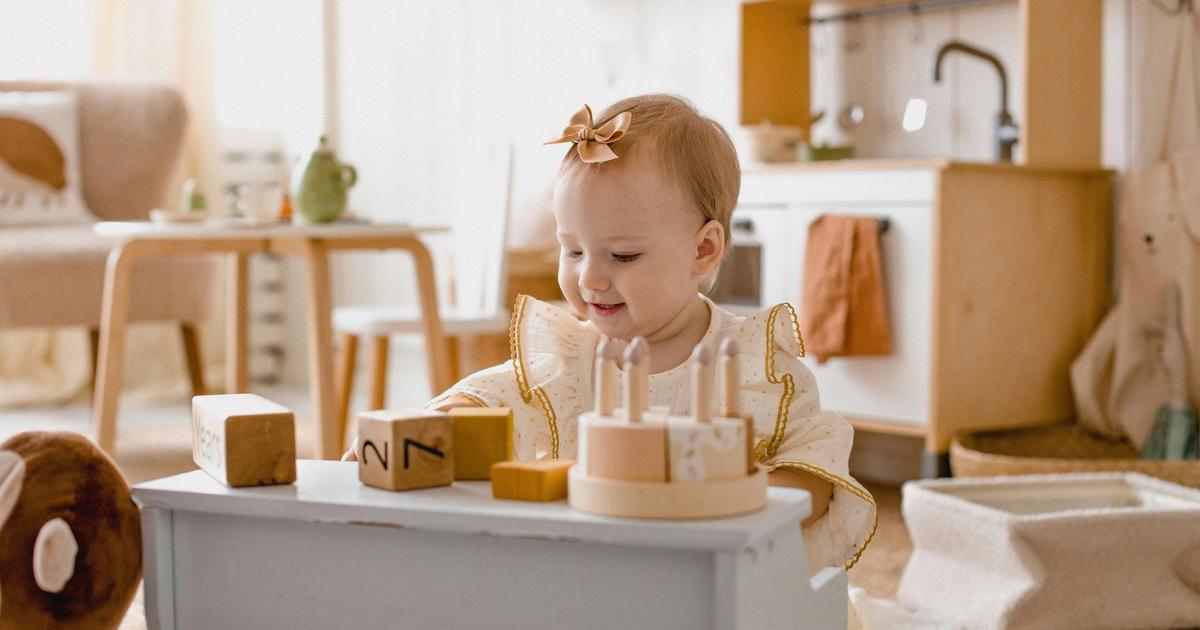
We had a playroom that looked like a toy shop after a burglary. Toys in crates. Toys in baskets. Toys spilling out of the crates and baskets. I spent about 40 minutes a day trying to tidy it, which meant I spent about 40 minutes a day being frustrated.
And the weirdest thing. My kids did not really play in there. They would go in, pick up one thing, drop it, pick up another, drift off within 5 minutes. I thought they were being difficult. I thought they had short attention spans. I thought I needed to buy better toys.
Then I read a piece of research from the University of Toledo that quietly, politely, told me I had the whole thing backwards.
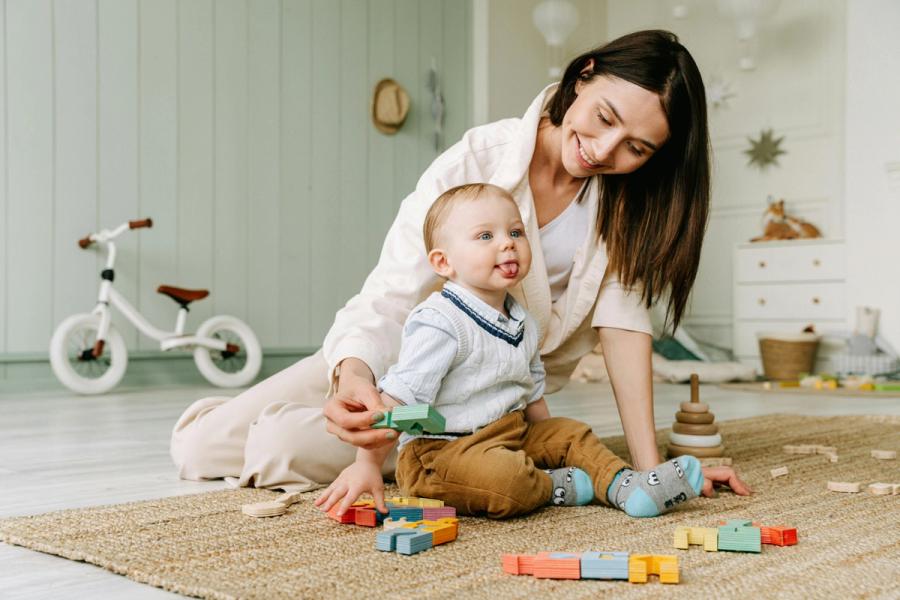
The study that changed how I view toys
In 2018, researchers at the University of Toledo published a study in the journal Infant Behavior and Development that tested a simple question. Do toddlers play better with many toys or fewer?
They set up two conditions. In one, toddlers had access to 16 toys. In the other, the same toddlers had access to only 4 toys. Researchers measured the quality and duration of play.
When given only 4 toys, toddlers played with each toy roughly twice as long, and showed significantly more creative, varied, and imaginative play than when given 16 toys.
When provided with fewer toys in the environment, toddlers engage in longer periods of play with a single toy, allowing better focus to explore and play more creatively. An abundance of toys present appears to create a distraction.
Dauch, C., Imwalle, M., Ocasio, B., & Metz, A.E. (2018), University of Toledo, Infant Behavior and Development
This finding has been consistent with decades of preceding research on attention, decision fatigue, and play quality. What the Toledo study did was put a specific number on it. Four toys. That is the level at which play became deeper. Above that, quality dropped.
If your toddler "does not play with anything," "has the attention span of a goldfish," or "bounces from toy to toy," the most likely explanation is not their attention. It is the environment you have built for them.
Why too many toys reduces play
A toddler with 16 toys in front of them is not playing. They are evaluating. Their brain is scanning the field, comparing options, choosing between stimuli. This is decision fatigue, applied to a child's play environment. Every toy in the field is competing for attention, and none of them wins for long.
A toddler with 4 toys is different. The scanning is done. The choice is constrained. Their attention settles. They can go deeper with each object. They can imagine more, because their brain is not using its cognitive resources to choose.
This is the same mechanism, at a smaller scale, that makes adults more productive at a clear desk than a cluttered one. More stuff = more mental load. More mental load = less capacity to do the actual thing.
Your playroom, full of well-intentioned gifts and sensible developmental toys, is working against your child's focus. This is not a moral failing. It is a design problem. And it is reversible this weekend.
The 4-bin weekend reset
This is the specific protocol I used. It took me about 3 hours on a Saturday morning while the kids were with my husband. The change in their play within a week was dramatic.
Pile them all in one room. Every single one. Do not sort as you go. The goal is to see the full scale of what you have. Most parents are shocked by the total volume once it is in one pile.
Four large bins or bags. Label them: KEEP, ROTATE, DONATE, BIN. Every toy has to go into one of these four. No sentimental third categories. Fast decisions.
The 10 to 15 toys your child actively uses and that build something genuine. Open-ended toys rank highest. Blocks, dolls, a kitchen, books, a magnet tile set, a good puzzle, art supplies, dress-up. These go back into the space, spread out so each one is visible and inviting.
The second tier. Toys your child enjoys but does not use daily. These go into labelled boxes in a cupboard or loft. Every 2 to 3 weeks, you rotate a couple of them into the KEEP space and pull a couple out. Each rotation feels like new toys. The novelty effect is real and free.
Toys in good condition that your child has outgrown, ignored, or that you bought with optimism and they never engaged with. Be ruthless. Someone else will use these. Charity shops, local nurseries, toy libraries. Drop them off this week.
Broken plastic pieces. Missing puzzle halves. The loud battery-operated toys you secretly hate. Let them go. You are not required to keep toys because they were gifted. Bin with confidence.
Each toy visible. Not piled in a bin where half are invisible. Low shelves. Labelled baskets with one type of toy in each. The child should be able to see what is available at a glance. This is Montessori's "prepared environment" principle and it matters. A visible toy is a used toy.
Resist the urge to re-introduce toys quickly. Give it a full week. Most parents report within 3 to 5 days that their child is playing longer, engaging more, and tidying more willingly (because there is now less to tidy).
What a "good" play space actually looks like
Based on the research on play quality and observation in high-performing early childhood settings, these are the principles that define a play space that works.
Low in volume, high in quality. 10 to 15 active toys is plenty for a young child. The quality of each toy matters more than the quantity.
Open-ended over single-purpose. A set of wooden blocks can be a house, a tower, a road, a spaceship, a bridge. A plastic toy that does one specific thing when you press a button can only do that thing. Open-ended toys win every single time, in every study, in every setting. Prioritise them.
Visible and accessible. If a toy lives at the bottom of a bin with other toys piled on top, it is effectively invisible. Low shelves. Baskets with one category each. Labels if you like. The child should be able to find and return each thing.
Low on batteries, high on imagination. The American Academy of Pediatrics' clinical report on the power of play reached a similar conclusion: the most developmentally valuable toys are often the least exciting-looking. Blocks. Scarves. Kitchen items. Paper and crayons. Dolls. Figures. Dress-up. Nature items. These are the toys children return to for years.
Adult-accessible, for clean-up. If you cannot tidy the space in 5 minutes with your child, it is not set up well. The test: can your child (with minor help) put everything back in under 10 minutes? If not, there is still too much.
Handling the guilt: When we reduced toys, my mother-in-law was briefly sad. The toys she had bought were "gone." We had a calm conversation: some were donated, some were stored, and our daughter was playing more deeply than before. She got it. Most grandparents do, once they see the result. You do not need to apologise for making your home work for your kids.
Frequently asked questions
What if my child notices a toy is missing?
Most children do not notice 80% of what you remove. For the toy they do ask about, you can rotate it back in, or gently say "that one is resting, let's see what else you want to play with." After a week, most "missed" toys are forgotten. Genuine favourites stay in the KEEP pile.
My house is already minimalist. Could my kid actually need more toys?
Rarely. Under-stimulation is much less common than over-stimulation in modern homes. That said, if your play space feels barren and your child is bored, the fix is usually not more toys. It is better toys. More open-ended materials. Art supplies. Loose parts. Nature items. Quality, not quantity.
What about multi-child households with different ages?
Same principle, slightly different execution. Each child needs a small curated collection of age-appropriate toys. Shared play spaces can work, but consider either dedicated zones or a mixed set of open-ended toys that work for multiple ages (blocks, art supplies, dress-up, figures).
How do I handle birthdays and Christmas with grandparents?
Have the conversation early. Before a big occasion, let grandparents know what your child is really into right now (art supplies, a specific puzzle type, books). Most grandparents want to buy something their grandchild will love. Pointing them in the right direction is a gift to them too. For the ones who gift anyway, the ROTATE bin absorbs the extras.
How often should I repeat the reset?
Twice a year is a good cadence. January (after the Christmas accumulation) and late summer (before the autumn birthday and back-to-school wave). Between resets, a steady rotation keeps the KEEP space fresh without the toys creeping back to overwhelm.
The house that lets your child play
Three weeks after our reset, I watched my 3 year old build an elaborate hospital for her stuffed animals. It took her 90 minutes. Before the reset, 90 minutes of focused play was a thing that happened maybe once a month. Now it was happening a few times a week.
Nothing had changed about her. Nothing had changed about the toys. What had changed was the amount of cognitive load her environment was placing on her before she even started. We had taken away the decision fatigue. The play flooded into the space we had cleared.
Your child wants to play deeply. Your home can help or hinder that. One Saturday is enough to move it from hindering to helping. I promise you, it will change more than just the playroom.
How many toys do you estimate are in your child's space right now? Tell me in the comments. No judgement.
Read next
Community Discussion
Join 0 parents sharing their thoughts
Loading conversation...
Save this article for later?
We'll send a beautiful copy straight to your inbox so you never lose it.

Avery Hayes
Mom Of Two
Avery Hayes is a mother of two and a parenting writer passionate about helping families through honest, relatable content.
Related Articles
The Feeding Method With 40 Years of Research Behind It That Most Parents Have Never Heard Of.
Ellyn Satter's Division of Responsibility was developed in the 1980s, has 40+ years of peer-reviewed research behind it, is endorsed by the American Academy of Pediatrics, and produces children who eat a wide variety of foods, self-regulate their intake.
Sleep Regressions Are Not Random. There Are 5 Predictable Ones, and Each Has a Different Fix.
The 4 month regression, the 8 month regression, the 12, 18, and 2 year regressions. Each one is tied to a specific developmental leap. When you know which one you are in, you know exactly how to respond. Here is the complete map.
The Fail-Safe School Lunch Formula That Stopped the Wednesday Night Meltdowns in My House.
A simple four-component lunch formula that works for picky kids, balanced nutrition, and your sanity. Stop reinventing the wheel every morning. Twenty rotating combos that use the same formula, so you never think about lunch again.