Your Newborn Isn’t Broken — Here’s What Sleep Actually Looks Like in the First Few Exhausting Weeks
Newborn sleep feels impossible because the internet sold you a myth about what "normal" looks like. Real newborn sleep is messy, frequent, and nothing like what you've been told. Here is what the evidence actually shows, and how to keep them safe.

Avery Hayes
Mom Of Two
April 21, 2026 · 13 min read
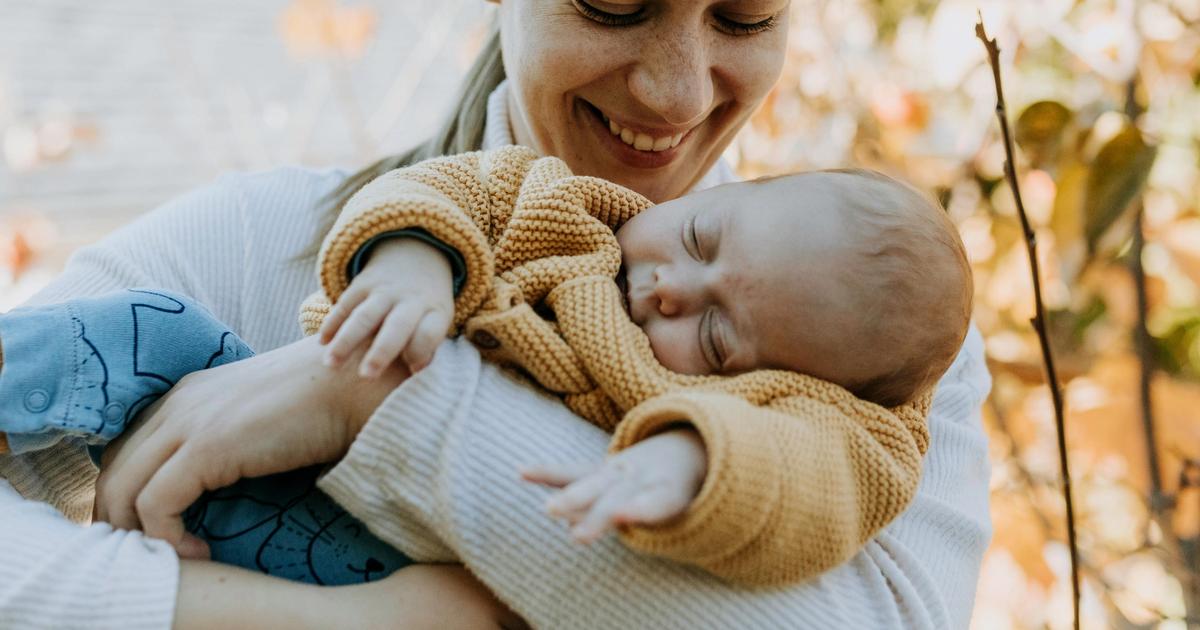
I wrote this post at 3am with one hand while my newborn fed on the other side. This is not a humblebrag. This is the job. And the reason I am writing it at 3am is because, when I was a new mum for the first time, I could not find a single piece of honest writing about what newborn sleep actually is.
What I found instead was pastel Instagram posts about "my baby slept through the night at 6 weeks," sleep training ads aimed at babies who were barely a month old, and vague advice about "routines" that made me feel like a failure because my 5 week old would not follow one.
Let me tell you what I wish someone had told me then. Your newborn is not broken. You are not failing. And the sleep patterns you are experiencing are almost certainly completely, utterly, boringly normal. Here is what the actual evidence shows.
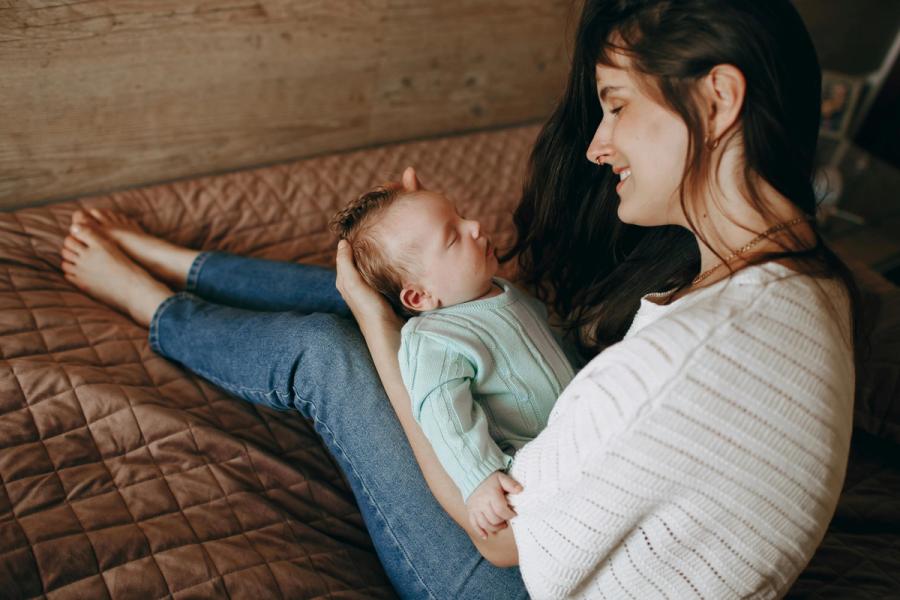
The myth that's making you feel like a failure
Somewhere in the last twenty years, parenting culture decided that a "good baby" is one who sleeps through the night early, has a predictable schedule by 6 weeks, and fits neatly into their parents' existing life. This is not based on developmental science. It is based on marketing, Instagram, and the collective amnesia of people who have forgotten what the fourth trimester is actually like.
Newborn sleep is biologically designed to be short, frequent, and unpredictable. Their stomachs are the size of a walnut at birth. They cannot go long stretches without feeding. Their sleep cycles are about half as long as ours. They cannot self-regulate their nervous systems yet, so they need you close to calm down. This is not a problem to be fixed. It is how humans are built.
Most babies do not begin sleeping through the night (6 to 8 hours) without waking until at least 3 months of age, or until they weigh 12 to 13 pounds. However, this varies considerably and some babies do not sleep through the night until closer to 1 year.
Children's Hospital of Philadelphia, Newborn Sleep Patterns
Read that again. Some babies do not sleep through the night until closer to a year. That is a hospital speaking. Not a mum blog. If your 6 week old is waking every 2 to 3 hours, your 6 week old is doing exactly what a 6 week old is supposed to do.
What newborn sleep actually looks like
Here is the honest picture, drawn from paediatric sleep research and the AAP's latest guidance.
Total daily sleep (birth to 3 months)
Most newborns sleep between 14 and 17 hours a day in total. Spread across the 24 hour cycle in short chunks. There is no meaningful "day and night" distinction yet because they have not developed a circadian rhythm. That kicks in around weeks 6 to 10, which is why so many parents feel like the fog begins to lift around then.
Length of each sleep stretch
Typical stretches are 2 to 4 hours. Some babies do one longer stretch at night (4 to 5 hours) early on. Some do not. Both are normal. What is not normal, and what you should flag to your doctor, is a newborn who sleeps for very long stretches (over 5 hours) without waking for feeds in the first few weeks. Rouse them to feed.
Day-night confusion
Many newborns arrive with their clocks flipped. Wide awake at night, sleepy during the day. This is not a sleep problem. It is the absence of a circadian rhythm. It resolves on its own. You can help it along with bright daylight during the day and dim, quiet nights, but do not expect dramatic results before 6 weeks.
The witching hour
Most newborns have a period of persistent fussiness somewhere between 5pm and midnight, usually peaking around 6 weeks old. This is completely normal. It often passes by 3 to 4 months. In the middle of it, you will feel certain something is wrong. Usually, nothing is.
The 6 AAP safe sleep rules that save lives
Before anything else, these rules matter more than any sleep tip in this post. The American Academy of Paediatrics updated its safe sleep guidance in 2022 and again in 2025, based on 159 scientific studies. Every rule below exists because not following it measurably increases the risk of sleep-related infant death.
Always put your baby down on their back. For naps, for nighttime, for every sleep until their first birthday. Since this guidance was introduced in 1992, SIDS rates have dropped by more than 50%. Side sleeping is not safer. It is riskier than back.
A crib, bassinet, or play yard with a firm mattress and a tight-fitting sheet. No inclined sleepers. No couches. No armchairs. If you press down on the mattress and it leaves an indentation, it is too soft.
Baby in your room, on their own surface, ideally for the first 6 months. Room sharing reduces SIDS risk by as much as 50%. Bed sharing significantly increases it. The AAP does not support bed sharing under any circumstances, which is blunt language for a paediatric organisation.
No pillows. No blankets. No bumpers. No stuffed animals. No positioners. The bed is the baby, a fitted sheet, and nothing else. For warmth, use a wearable blanket or sleep sack.
Overheating is a SIDS risk. Keep the room between 68 and 72°F (20 to 22°C). Dress baby in one more layer than you would wear comfortably. If their chest feels hot or they are sweaty, they are too warm.
The AAP notes that pacifier use at sleep time is associated with reduced SIDS risk. If you are breastfeeding, wait until feeding is well established (usually 3 to 4 weeks) before introducing one.
Important: This is general information, not medical advice. Always follow the specific guidance from your paediatrician. If you have any concerns about your baby's sleep or breathing, call your doctor. Trust your gut.
How to survive the fourth trimester
Surviving the first three months is not a glamorous skill. It is not something anyone should need to be taught. And yet, because our culture isolates new parents from the kind of community support humans have always had, we are mostly doing this alone. Here is what genuinely helps.
Sleep when the baby sleeps, but not in the way you've been told. You will be told to nap every time they nap. Most people cannot force themselves to sleep on demand. What is more realistic: when the baby sleeps, do nothing productive. Do not tidy. Do not answer emails. Lie down. Even if you do not sleep, rest is partial recovery.
Outsource one meal a day. Not cook. Not prep. Literally outsource. Partner brings breakfast. Neighbour drops off dinner. You eat cereal for lunch. Food happens without you being the one making it happen. This single change extends your capacity more than almost anything else in the early weeks.
Shift visitors to helpers. People who want to come and meet the baby should also come and do a load of laundry, hold the baby while you shower, or bring a meal. If they cannot do those things, they can come in four weeks.
Leave the house once a day, even for ten minutes. The postpartum fog is thicker indoors. Getting outside, even for a slow walk to the end of the street, resets something small but real in your nervous system.
Stop reading about sleep. This is counterintuitive advice inside a post about sleep. But the googling spiral is making things worse. Pick one reliable source (the AAP, your paediatrician), follow their rules, and stop reading every new article that promises to fix everything. Your baby is not a problem to be optimised.
When to call the doctor
Most newborn sleep issues are normal and self-resolving. Some are not. Call your paediatrician (or seek urgent care) if you notice any of these.
Very sleepy or difficult to wake for feeds. Especially in the first week. Newborns should be waking for feeds roughly every 2 to 4 hours. A baby who is consistently harder to rouse than expected, or who is not feeding well, needs to be checked.
Pauses in breathing lasting more than 10 to 20 seconds. Brief irregular breathing is normal in newborns. Extended pauses, colour changes (blue around lips), or struggling to breathe are emergencies.
Persistent inconsolable crying. Crying for more than 3 hours, particularly if the cry sounds different or distressed, warrants a check. Most crying is normal. Some signals something else.
Your gut telling you something is wrong. This is the most important sign of all. Parents who know their baby notice changes before medical systems do. If your instinct is saying something is off, call your doctor. Do not apologise for it. Do not qualify it. Trust yourself.
Frequently asked questions
Is it safe to swaddle my newborn?
Swaddling is generally safe for the first 8 weeks, as long as it is done correctly and stopped at the first signs of rolling (usually around 2 to 4 months). A swaddled baby must always sleep on their back. Once they can roll, swaddling becomes dangerous because they cannot use their arms to reposition. There is no firm evidence that swaddling reduces SIDS risk, but many parents find it helps with sleep. Ask your paediatrician if you are unsure.
Can I let my newborn sleep on me?
While you are awake, yes, and skin to skin contact is positively encouraged. The danger comes when you fall asleep with the baby on you, especially on a couch or armchair. If you feel yourself getting drowsy during a feed on the sofa, move to a safe sleep surface. Falling asleep with a baby on your chest on a couch is one of the highest-risk scenarios for infant death.
When should I start a bedtime routine?
Anywhere from 6 to 12 weeks is reasonable. Before that, a "routine" is mostly about creating calm cues (dim lights, bath, feed, cuddle). Do not expect it to work the way it would with an older baby. It is a seed you are planting. It pays off later.
My baby only sleeps when held. Is that a problem?
It is not a problem. It is evolutionary. Human babies are biologically programmed to want to be held. That said, it is not sustainable for you. You can practise short periods of being put down after they are in deep sleep (about 20 minutes into the nap). Do not expect immediate results. This is a slow process that improves across months, not days.
Should I sleep train a newborn?
No. Most sleep consultants and paediatricians advise against any form of sleep training before 4 months, and many recommend waiting until 6 months. Newborns are not developmentally capable of self-soothing or being sleep trained. Any programme that promises otherwise is ignoring basic developmental biology.
The permission you needed
Your newborn is doing exactly what newborns are supposed to do. You are not behind. You are not failing. The sleep deprivation is real, and it is temporary, and the gap between how you thought this would feel and how it actually feels is not because something has gone wrong. It is because the version of new motherhood we have been sold does not exist.
Drink water. Follow the safe sleep rules. Stop reading comparison content. Call your doctor when something feels off. This is the fourth trimester. You are doing it.
Read next
Community Discussion
Join 0 parents sharing their thoughts
Loading conversation...
Save this article for later?
We'll send a beautiful copy straight to your inbox so you never lose it.

Avery Hayes
Mom Of Two
Avery Hayes is a mother of two and a parenting writer passionate about helping families through honest, relatable content.
Related Articles

School Refusal Has Doubled Since the Pandemic. Here's Why Punishment Is the Worst Thing You Can Do.
Before the pandemic, 14% of children were at high risk of school avoidance. By the 2021-22 school year, that figure had jumped to 22%, and severe school refusal has more than tripled. 80% of cases are anxiety-driven.
35 States Banned Phones in Schools. After One Full Year, the Data Is in. Here's What It Says.
35 US states and Washington D.C. have now signed laws or policies restricting student phone use in K-12 classrooms. The 2024-2025 school year was the first with most of those laws in effect. The early data is mixed, surprising, and clearer than anyone expected.
TikTok Calls It the "Nap Trap." Infant Sleep Researchers Quietly Call It "Biology."
The "nap trap" shaming is one of the quieter cruelties of modern new-motherhood content. The research says contact naps are completely developmentally normal, do not create bad sleep habits, and are not a trap at all.