I Quit Gentle Parenting for 30 Days — Here’s What Actually Happened
In 2024, researchers at Macalester College and Rollins College published the first peer-reviewed empirical study of gentle parenting, published in the journal PLOS ONE.

Avery Hayes
Mom Of Two
April 13, 2026 · 12 min read
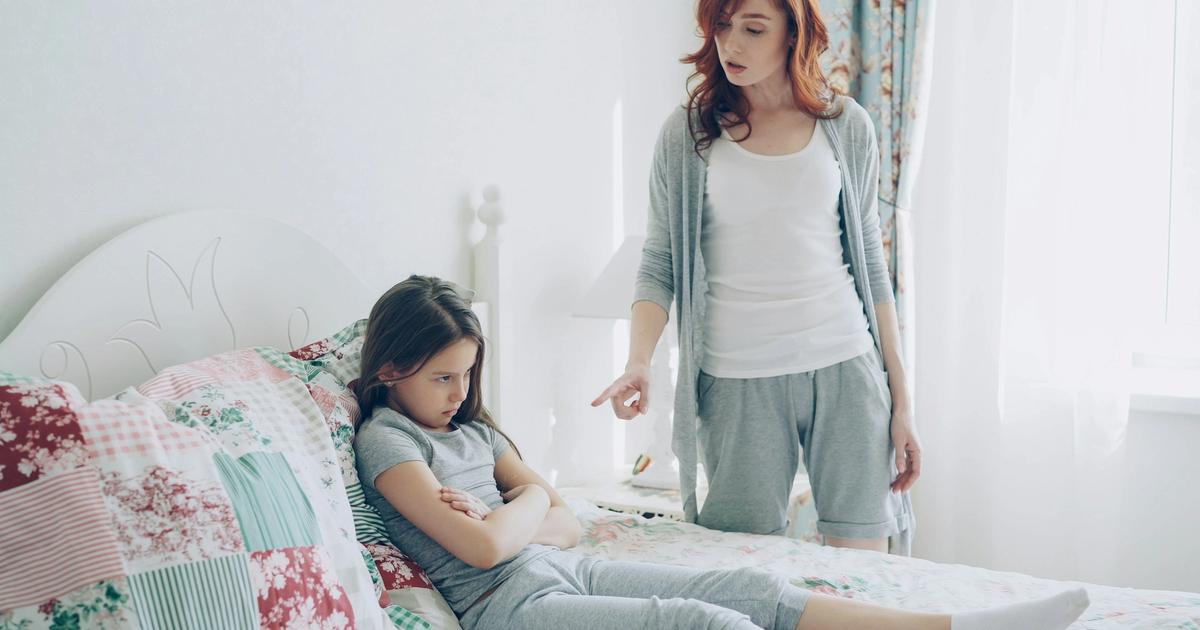
I was a committed gentle parent for three years. Then I quit cold turkey for 30 days. No emotional validation scripts, no co-regulation sessions on the grocery store floor, no “I see you’re feeling frustrated right now.” Here’s the raw, honest truth about what changed, what got worse, and what I’ll never go back to.
Let me set the scene. My son was four years old and had been screaming for eleven minutes because his toast was cut into squares instead of triangles. I was crouched down to his eye level, using my practiced calm voice the one I had spent three years perfecting saying, “I hear that you’re feeling really disappointed about your toast. Can you help Mummy understand what you need right now?”
He looked me dead in the eyes and threw the toast at my face.
And something in me just snapped. Not at him. Not in a scary, shouty way. I just stood up, put the toast in the bin, made new toast cut into triangles, and walked away. No script. No co-regulation. No lengthy validation of the feelings of a four-year-old who was, let’s be honest, having a meltdown over bread geometry.
That was the moment I decided to quit gentle parenting for 30 days and document exactly what happened.
I want to be very clear before we go further: this is not a hit piece on gentle parenting. Its core values empathy, respect, connection are things I still deeply believe in. But somewhere between the TikTok tutorials and the parenting Instagram accounts, I had twisted it into something so rigid and so exhausting that I had forgotten I was also a full human being in this family. So I ran an experiment. Here’s every honest thing that happened.

1. What gentle parenting actually is — and where it went wrong for me
Before I get into my experiment, I want to give gentle parenting a genuinely fair hearing, because the version most of us are actually practising looks very different from the original approach.
Gentle parenting was popularised by British parenting author Sarah Ockwell-Smith and is built on four core principles: empathy, respect, understanding, and boundaries. It treats children as whole people with valid emotional experiences, rather than small, inconvenient problems to be managed into submission. The foundational idea is that you can hold firm limits and remain emotionally connected that firmness and warmth are not opposites.
That part, I genuinely love. And I still stand by it.
The problem is what happened to gentle parenting on social media. The hashtag exploded to hundreds of millions of posts on TikTok and Instagram during the pandemic years, and along the way the message got distorted. The version that went viral often looked less like “empathetic parenting” and a lot more like “never saying no, never showing your own emotions, and turning every single meltdown into a 20-minute therapeutic processing session while also somehow remaining serenely calm.”
That is not a parenting approach. That is a performance. And it is an unsustainable one.
xWhat they found should be required reading for every parent who identifies with this approach. Statements of parenting uncertainty and burnout were present in over one-third of the gentle parent sample. Lead researcher Professor Annie Pezalla described her gentle parent participants as “A+ parents doing so much earnest work to try to do right by their kids — but we’re concerned they are burning themselves out.”
One-third. That is not a small number. That is an epidemic of well-meaning, depleted parents who are quietly running on empty trying to be perpetually regulated in a world that fundamentally is not.
I was one of them. I just hadn’t realised it yet.
According to the peer-reviewed study published in PLOS ONE (2024), gentle parents in the study often described themselves as “hanging on for dear life” and “overwhelmed all day every day.” The researchers note this is the first systematic empirical investigation of gentle parenting — meaning for years, millions of parents were following advice that had never been scientifically studied at all.
2. Why I quit: the moment that finally broke me
The toast incident was the spark, but the fire had been building for months.
I had started actively dreading my children’s difficult moments not because the moments themselves were hard, but because I felt such intense, crushing pressure to respond to them perfectly. Every tantrum was a test I might fail. Every time I raised my voice even slightly, I would spend the rest of the day spiralling in guilt. I was spending more mental energy managing my own performance as a gentle parent than I was spending actually connecting with my children.
My husband noticed before I did. “You seem so stressed when the kids get upset,” he said one evening. “Like you’re bracing for an exam.”
He was right. I had turned parenting into a performance and I was burning out in the audience of my own life.
I wasn’t parenting from connection anymore. I was parenting from fear. Fear of doing it wrong. Fear of damaging them. Fear of becoming my own parents, who never once said “I see your feelings are valid.”
I also started noticing something uncomfortable about my children’s coping skills. Every hard feeling required my full, immediate, elaborate attention and processing. My four-year-old had almost no capacity to tolerate being told “no” without it escalating into a full breakdown and I had, without meaning to, trained him to expect an extensive emotional response every single time.
I need to be honest here: I am not blaming gentle parenting for this. I am blaming my rigid, perfectionist, social-media-saturated interpretation of it. But the result was the same. And as therapist David Bruce noted in The Bump’s 2026 parenting trends report, “Somewhere along the way, gentle parenting got confused with permissive parenting, leading to poor boundary development in social settings.”
So I decided to step back. Not to become harsh or cold or authoritarian. Not to “toughen them up” in some punitive way. Just to be a more real, present, human parent for 30 days and honestly document what happened.
3. Weeks 1 & 2: the chaos before the calm
I want to be honest with you: the first two weeks were genuinely difficult, and I almost gave up several times.
My children had been conditioned to expect a very particular kind of response from me. When it did not come, they escalated to get it. My son’s tantrums actually got louder before they got quieter. My daughter, who is six, pushed harder against limits I now stated clearly and simply, without the long explanatory conversations she was used to receiving.
Here is specifically what I changed during those first two weeks:
What I stopped doing
Long emotional processing sessions during the peak of a meltdown. Instead of crouching down and carefully walking through feelings at the height of a tantrum, I started saying something simple and warm: “I know this is hard. I’m right here. We’ll talk when you’re ready.” Then I stepped back physically but stayed present. I did not abandon them. I did not punish them. I just stopped treating the volcanic peak of a meltdown as a teachable moment, because it’s not, and early childhood experts at Zero to Three confirm that children genuinely cannot process new information or learn during emotional flooding.
The exhaustive “why” explanations for every rule. I stopped justifying every single decision with a three-paragraph rationale. “We’re leaving the park in five minutes” replaced the elaborate explanation about how our bodies need rest and dinner and family connection. They are four and six. They need consistency and warmth, not a TED talk.
Performing calm I absolutely did not feel. This was the biggest shift of all, and honestly the most liberating. When I was frustrated, I started saying “I’m feeling a bit frustrated right now, so I need a moment to breathe” and then I actually took one. I stopped performing perfect, regulated serenity. I started modelling actual, imperfect, very human emotion management. There is a significant difference between the two, and my children began to learn more from watching the second one.
What I deliberately kept
Physical warmth and touch: lots of hugs, sitting close on the sofa, cuddles at bedtime. The after-the-storm conversations: when everyone was genuinely calm, we absolutely talked through what had happened. Unconditional love expressed out loud, every single day. The warmth stayed. The performance of perfection left.
My son had a meltdown at the supermarket. Old me would have crouched down and spent eight minutes co-regulating in the cereal aisle. Instead I said calmly: “I can see you’re really upset. I’m here. We’re still finishing our shopping.” He screamed for four minutes. Then he stopped. Then he helped me pick the apples and told me they needed to be green ones. It was the fastest natural resolution we had managed in months. I stood there genuinely surprised.
4. Weeks 3 & 4: the shifts I didn’t see coming
Something shifted around day 17. I was not expecting it, and I almost missed it because I was waiting for things to go wrong.
My children started recovering from upsets faster. Not because I was harsher with them but because the tantrums were no longer receiving the extended emotional negotiation they used to trigger. The meltdowns got shorter. Recovery time cut roughly in half. And this is not just my impression: research from Parenting Science’s review of authoritative parenting studies notes that children with parents who maintain warm-but-clear expectations actually develop stronger self-regulation skills over time than children whose every emotional state is immediately managed for them by an adult.
But here is the thing I genuinely did not anticipate: I started enjoying my children more.
When I stopped performing perfect parenting, I started actually being present in it. I was laughing more. I was less inside my own head. I stopped dreading difficult moments because I had released myself from the obligation to respond to them flawlessly. I had given myself permission to just be a mum an imperfect, sometimes-frustrated, deeply-loving mum and that permission changed everything.
What changed with my children
My son, the four-year-old, began attempting to self-soothe for the first time in his small life. Modest things at first: saying “I’m mad” and going to his room for a few minutes, then coming back out composed. Nobody taught him that particular sequence during those 30 days. He figured out, for the first time, that hard feelings pass on their own when you simply sit with them. That was not something I could have given him by immediately managing every feeling for him.
My daughter started reaching for physical comfort coming to me for a hug when she was sad rather than always reaching for a conversation. The physical connection between us actually increased when I stopped over-processing everything verbally.
What changed in me
I also, quietly, stopped carrying guilt as my constant companion. I made a rule during those weeks: if I responded to my children with warmth and without cruelty, I had done enough. That was my bar. Simple and achievable. And almost every single day I cleared it even when I was not perfectly calm, even when I raised my voice once, even when I chose my own rest over an elaborate bedtime routine. Enough was enough, and it turned out enough was actually pretty good.
The American Academy of Pediatrics (AAP) recommends authoritative parenting — which combines genuine warmth with clear, consistent expectations — as the approach most strongly associated with positive long-term outcomes for children, including emotional regulation, resilience, and academic success. It is worth noting that this is essentially what I naturally moved toward during my 30 days, without intending to.
5. What I kept, what I ditched, and what I’d tell every burnt-out mom
After 30 days, I did not “go back” to anything. I came out the other side with a new approach that felt less like a parenting philosophy and more like a liveable way of being a mother. When I started reading more widely, I realised it most closely resembled what researchers call authoritative parenting not authoritarian, which is very different and which decades of research consistently identify as the style most strongly linked to well-adjusted, resilient children.
Here is where I landed:
What I would tell every burnt-out gentle parent right now
You are not your parenting philosophy. Your children do not need you to be a perfectly regulated emotional support machine available on demand, 24 hours a day, without ever cracking. What they need and what the research consistently points to is a warm, secure, consistent attachment with a real person who shows up, stays connected, and repairs things when they go wrong. Not a specific method. Not a perfect response to tantrums. Just you, present and loving, most of the time.
A mother who sometimes gets frustrated and then says a genuine sorry is teaching her children something far more valuable than a mother who never cracks but is quietly hollow behind the calm. You are modelling repair. You are modelling real emotional life. That is not failure. That is some of the most important parenting there is.
If you are feeling the crushing weight of gentle parenting perfectionism right now, I want you to know: you are not alone, and it is not a character flaw. Millions of millennial parents are stepping back from the rigid interpretation of gentle parenting in 2026, not because they don’t love their children deeply, but because they finally recognise that burnt-out parents cannot pour from empty cups. And your children need you poured, not emptied.
And if this resonated with you if you too have found yourself performing calm you do not feel while quietly running on fumes please share this with a mum friend who might need it today. Some of the most important conversations we can have as mothers are the ones where someone finally says the honest thing.
Yes. Absolutely and without hesitation.
Not because gentle parenting is wrong — it is not. Its heart is right, and its core values are ones I intend to carry for the rest of my parenting life. But any approach, taken to a rigid, perfectionist extreme, stops being about your children and starts being about your performance. And you cannot perform your way to a genuine connection with your kids.
What my 30 days gave me was not a new parenting philosophy. It gave me permission to be a real person inside my own family. And honestly? That turned out to be the most important thing I could give my children.
I would love to hear from you. Are you feeling the weight of gentle parenting perfectionism? Did any part of this resonate with your experience? Leave a comment below — I read every single one, and this is the kind of conversation I started this blog to have.
If this helped you, share it. Text it to a mum friend. Post it to your parent group. Pin it. Every share genuinely helps this blog grow — and helps more burnt-out parents find it when they need it most. Thank you for being here.
If this helped you, share it. Text it to a mum friend. Post it to your parent group. Pin it. Every share genuinely helps this blog grow and helps more burnt-out parents find it when they need it most. Thank you for being here.
Community Discussion
Join 0 parents sharing their thoughts
Loading conversation...
Save this article for later?
We'll send a beautiful copy straight to your inbox so you never lose it.

Avery Hayes
Mom Of Two
Avery Hayes is a mother of two and a parenting writer passionate about helping families through honest, relatable content.
Related Articles
Gentle Parenting Is Quietly Dying and Gen Z Mums Are Replacing It With Something Far More Honest.
After years of being the dominant parenting philosophy, gentle parenting is collapsing under its own weight. Burnout, boundary confusion, viral parent meltdowns, and a growing research consensus are reshaping how a new wave of mothers are raising their kids. Here is what they are doing instead.
The "Almond Mom" Trend Going Viral Is Exposing How Many of Us Were Quietly Raised on Food Fear.
The "almond mom" archetype has blown up on TikTok, spawning counter-trends like "butter mom" and "gummy bear mom." What started as a joke is uncovering something painful.
The Tradwife Parenting Trend Looks Wholesome — But Its Message Is Much Darker
Homemade sourdough. Prairie dresses. Seven children homeschooled on a farm. The tradwife aesthetic has exploded on TikTok and Instagram, targeting tired modern mothers. Here is what the lifestyle is actually selling, who it is marketed to, and why you are right to feel uneasy about it.