The "Almond Mom" Trend Going Viral Is Exposing How Many of Us Were Quietly Raised on Food Fear.
The "almond mom" archetype has blown up on TikTok, spawning counter-trends like "butter mom" and "gummy bear mom." What started as a joke is uncovering something painful.

Avery Hayes
Mom Of Two
April 24, 2026 · 11 min read
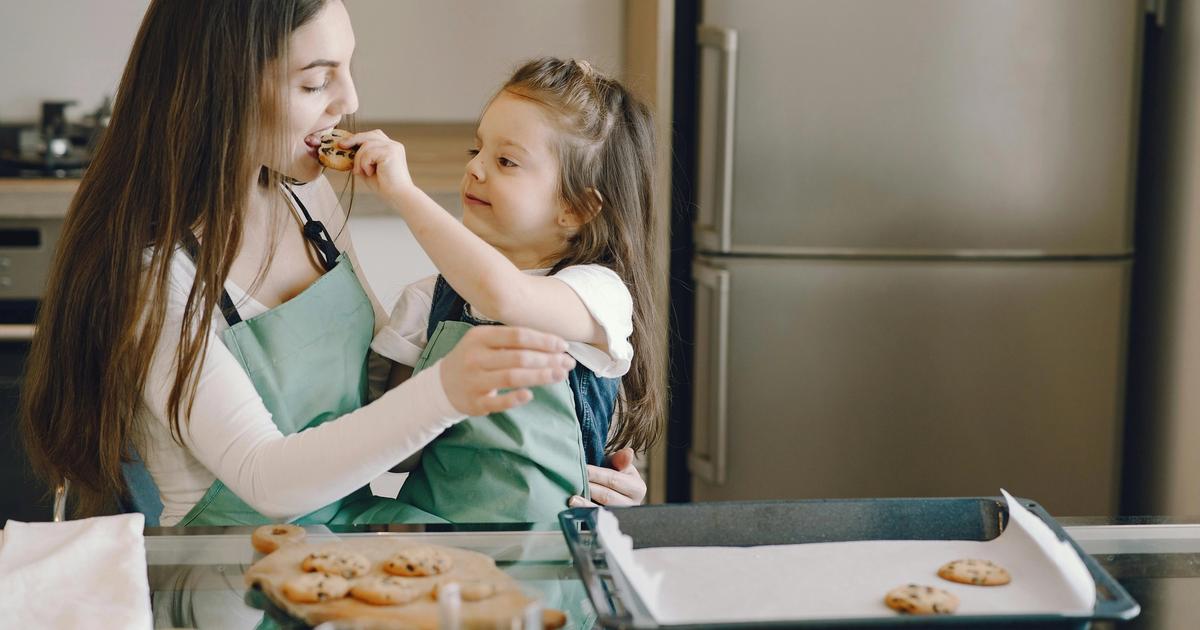
The term "almond mom" came from a 2013 reality TV moment where a mum, on hearing her adult daughter say she felt weak and hadn't eaten much, responded: "Have a couple of almonds and chew them really well." It went viral on TikTok in 2023 and has only grown since, with millions of women recording clips of their own mothers' eerily similar phrases. "You don't need the cream." "Are you really still hungry?" "Have a few carrot sticks."
What started as a joke has become one of the biggest pieces of quiet collective processing women have done online. Because for a lot of us, "almond mom" was not an archetype. It was just called "my mum." And watching the comments roll in, we realised we had all been raised inside the same quiet programme of food fear.
I am writing this not to shame our mothers. Most of them were trained inside a culture that was punishing women for the size of their bodies. They passed on what they were taught. The point is not blame. The point is noticing, so we can stop passing it on ourselves.
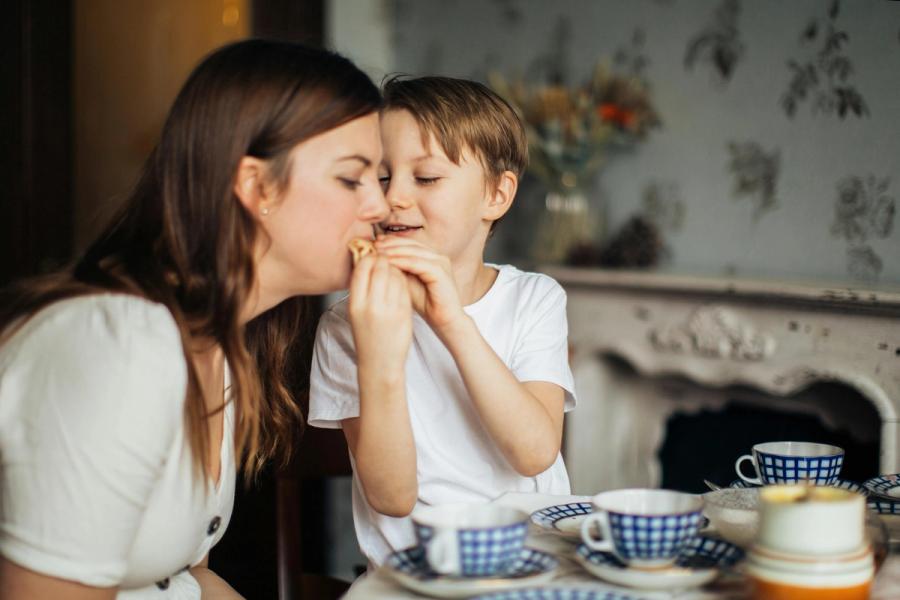
What "almond mom" actually means
The "almond mom" archetype describes a specific kind of mother who unconsciously (or consciously) raises her children inside diet culture. Food is labelled as "good" or "bad." Eating is monitored. Bodies are commented on. Hunger is framed as a problem to manage, not a signal to respond to. A "treat" is an ideological event. Being full is a sign you have failed.
None of this is stated as a rule. It lives in the air of the house. In the casual comments. In the mother's own relationship to food. In what gets praised and what gets mocked. Children absorb it not as teaching but as oxygen. Which is what makes it hard to see from the inside, and deeply hard to unlearn in adulthood.
Kids raised with restrictive eating patterns frequently develop either rigid control around food or the opposite, secret binge behaviour. The pattern often shows up decades later as disordered eating, anxiety around meals, or passing the same patterns to their own children without awareness. Synthesis of clinical literature on intergenerational transmission of disordered eating from the Academy for Eating Disorders; widely reported by dietitians and child psychologists working in this field
Why the trend is hitting so hard
Almond mom content hit a nerve because it named something most of us had never had a word for. We had language for explicit eating disorders. We did not have language for the subtler, lower-grade version that happens in otherwise "normal" houses. The kind that does not produce a clinical diagnosis but shapes your relationship to food for the rest of your life.
The counter-trends emerging in 2026 tell the same story in a different way. "Butter mom" and "gummy bear mom" are not really competing archetypes. They are repair narratives from women who are consciously trying to raise children without the fear their mothers accidentally passed to them. The fact that millions of women are reaching for a new identity around feeding their kids tells you how widespread the old one was.
10 almond mom phrases you might have heard (or said)
None of these on their own is catastrophic. Many together, casually, repeatedly, at every meal, for years, is the pattern. Recognising them is the first step.
1. "Are you still hungry? Have some water first." Teaches children to distrust their hunger signals.
2. "You don't need seconds." Overrides the child's own sense of their body's needs.
3. "Nothing tastes as good as skinny feels." Equates thinness with virtue.
4. "I'm being bad today." Models food moralising as a daily narrative.
5. "We don't eat that kind of thing in this house." Creates secretly forbidden food, which usually backfires into bingeing.
6. "You've had enough treats today." Frames a normal food as a special, limited event.
7. "Are you really going to eat all that?" Shames portion sizes, even when appropriate.
8. "Look at how much you ate." Comments on eating as an observable event.
9. "I'll eat the rest of yours to finish it up." Teaches that leaving food is a moral issue, passing the restriction forward.
10. Silence, watching. The meal monitored, without words. Children feel the surveillance even when nothing is said.
If you recognised any of these from your childhood: you are not alone, and you are not imagining it. The phrases were culture-wide for several generations. The work now is noticing what you absorbed and deciding whether you are willing to pass it on. That is the whole project of this post.
How to actually break the pattern with your kids
What most modern paediatric dietitians recommend, built from the research of Ellyn Satter's "Division of Responsibility" model and reinforced across recent feeding research.
This is the central principle. Your job is to offer a balanced range of foods at regular times in a calm setting. Their job is to eat what they want from what is offered, and to decide when they are done. No bargaining. No rewards. No punishment. This framework, done consistently, is what paediatric dietitians point to as the foundation for a healthy lifelong relationship with food.
"Good food." "Bad food." "Naughty." "Clean." "Treat." "Earned it." Remove these words from your vocabulary when you are around your children. Food is food. Ice cream is ice cream. Broccoli is broccoli. The absence of moral language around food is radical and counter-cultural and will change your children's internal relationship to eating.
The research on this is clear. Foods that are restricted become more desired. Foods that are freely available become less emotionally charged. If dessert is a casual, regular part of eating (not every day, but normal and unmoralised), children stop pedestalising it. This is the opposite of how most of us were raised.
Not your kids'. Not yours. Not your partner's. Not a stranger's. Body comments, even positive ones, teach children that bodies are objects to be evaluated. "You look great, have you lost weight?" is teaching a lesson. So is "she's got such skinny legs." The practice is to remove body commentary from family language entirely.
Kids pick up on what you do, not what you say. If you are privately living inside diet culture, that leaks. The hardest and most important part of this work is healing your own relationship to food, often with help. Therapy. A registered dietitian who specialises in non-diet approaches. Reading. Unfollowing accounts that make you feel bad. Your kids inherit the culture of your house. Changing it starts with the adults.
Frequently asked questions
What if my child is overeating or always asking for treats?
A child who is constantly asking for certain foods is often a child who feels those foods are restricted. The counter-intuitive finding from Ellyn Satter's research is that making "forbidden" foods freely available (within the normal meal structure) usually reduces the intensity of the demand. If you have specific health concerns, work with a paediatric dietitian who uses a non-diet framework rather than restricting.
I genuinely want my child to eat healthily. Is that wrong?
No, it is completely legitimate. The Division of Responsibility model is how you raise a child to eat healthily. You offer a range of nutritious foods at regular meals. That is the action. What you avoid is turning the eating itself into a morality play. The healthy eating shows up in the menu, not the commentary.
My mother still makes food comments at family meals. What do I do?
A calm, clear conversation before the next visit. "We're working on not commenting on food or bodies in our house. It would really help us if you could avoid that around the kids." Most grandparents, given clear guidance, will make the effort. If she continues, gently redirect in the moment, and discuss with the child afterwards. They do pick up on your leadership.
How do I know if I have an actual eating disorder I need help for?
If food or body thoughts are occupying a lot of your mental space, interfering with daily life, or causing distress, please talk to your GP or a therapist who specialises in eating disorders. The National Alliance for Eating Disorders provides resources and a helpline. The trend of recognising "almond mom" patterns has helped many women realise they have been living with undiagnosed disordered eating for years. Help is available and it is worth reaching for.
What about my child's weight? A doctor said they're above the percentile.
Weight conversations about children are a sensitive clinical area. A weight-inclusive paediatrician or dietitian will focus on behaviours (balanced meals, movement, sleep, family food culture) rather than putting a child on a diet, which the research shows consistently produces worse long-term outcomes. If your current doctor is recommending restriction for a child, a second opinion from a specialist is reasonable.
The quiet work
The viral spread of "almond mom" content is, underneath the jokes, a generation of women quietly processing something the rest of the culture had not let them see. You grew up inside a food culture that did not serve you. You are not going to recreate it for your children.
This is slow work. It is noticing the phrase you were about to say. Catching the comment before it arrives. Sitting with the discomfort of watching your child have a second helping of dessert and not saying anything. Doing the internal work yourself while raising kids who will not have to do it.
You are breaking a pattern that took three generations to build. That is real work. Quiet work. And it matters.
Which almond mom phrase did you grow up hearing? Tell me in the comments. It helps other women realise they are not alone.
Read next
Community Discussion
Join 0 parents sharing their thoughts
Loading conversation...
Save this article for later?
We'll send a beautiful copy straight to your inbox so you never lose it.

Avery Hayes
Mom Of Two
Avery Hayes is a mother of two and a parenting writer passionate about helping families through honest, relatable content.
Related Articles
Gentle Parenting Is Quietly Dying and Gen Z Mums Are Replacing It With Something Far More Honest.
After years of being the dominant parenting philosophy, gentle parenting is collapsing under its own weight. Burnout, boundary confusion, viral parent meltdowns, and a growing research consensus are reshaping how a new wave of mothers are raising their kids. Here is what they are doing instead.

The Tradwife Parenting Trend Looks Wholesome — But Its Message Is Much Darker
Homemade sourdough. Prairie dresses. Seven children homeschooled on a farm. The tradwife aesthetic has exploded on TikTok and Instagram, targeting tired modern mothers. Here is what the lifestyle is actually selling, who it is marketed to, and why you are right to feel uneasy about it.
Nobody Warned Me That the First Year Would Break Me in 12 Specific Ways. Here's the Full List.
The cards in hospital say "congratulations." Nobody sends a card that says "the person you were is about to die and the person you are becoming will take a year to arrive." Here are the twelve specific truths I wish someone had told me before the baby came.