Nobody Warned Me That the First Year Would Break Me in 12 Specific Ways. Here's the Full List.
The cards in hospital say "congratulations." Nobody sends a card that says "the person you were is about to die and the person you are becoming will take a year to arrive." Here are the twelve specific truths I wish someone had told me before the baby came.

Avery Hayes
Mom Of Two
April 24, 2026 · 11 min read

Nine months after my first daughter was born, I sat in my car in a supermarket car park and cried for twenty minutes. Not because anything bad had happened. Because I could not remember who I used to be, and I did not know if she was ever coming back.
Nobody had told me this was a thing that happened. The parenting books had warned me about cracked nipples, colic, and baby-led weaning. They had not warned me that I would grieve the person I used to be. That I would feel rage I did not recognise. That I would lie in bed at 3am and feel utterly alone in a house full of people.
This is the post I wish had existed then. Twelve things about the first year that nobody warns you about. Not because you are broken. Because these are the things that happen when a human being becomes a mother, and almost none of them are in the books.
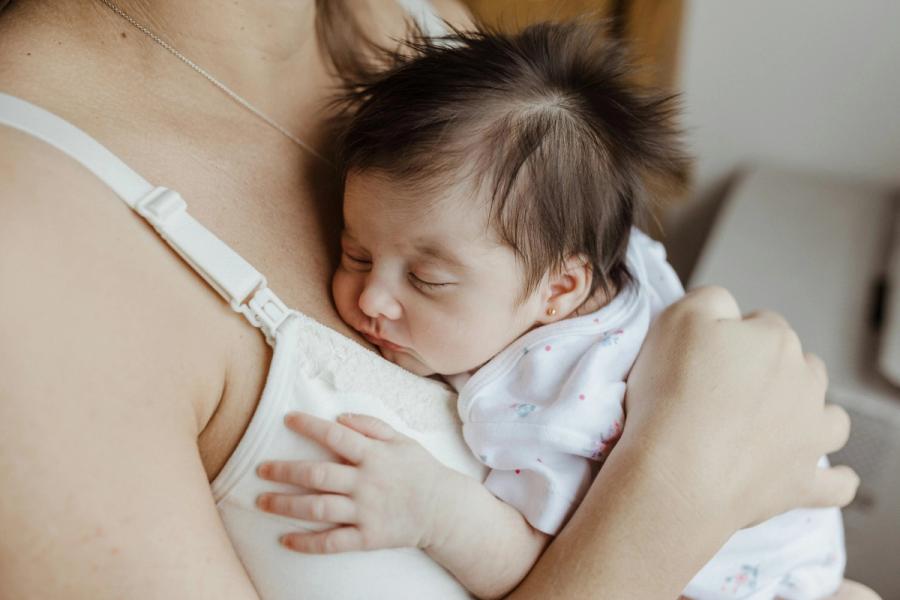
Why we do not talk about this
We have a cultural script about new motherhood. It is glowing, soft-focus, grateful. Sleep-deprived but radiant. Tired but blissed out. The mother in the Instagram photo looks exhausted but fulfilled, because the framing around new motherhood punishes anyone who says otherwise.
So we do not say otherwise. We carry the hard parts privately, which means every new mother thinks she is the only one who feels this way. She is not. The research on perinatal mental health is unambiguous: around one in five mothers experience a clinical mood or anxiety disorder in the first year, and a much larger proportion experience difficult emotions that do not meet diagnostic criteria but are still very real.
The twelve things below are not about pathology. They are about what almost every mother I know has gone through, in some form, and rarely said out loud.
The twelve things nobody warned me about
Not in a romantic way. In a real, sharp, disoriented way. The version of you who could leave the house in ten minutes, have a full conversation, read a book in bed, exist on your own terms. She does not die. But she goes quiet for a long time. Nobody warns you that becoming a mother means losing a self.
There will be moments you feel fury you did not know you were capable of. At your partner, at the baby, at the cat, at the sound of the doorbell. This is not a sign you are a bad mother. It is the predictable output of sleep deprivation plus overstimulation plus unmet needs plus invisible labour. Anyone would rage. Naming it helps.
This is not a crime. Love and like are different operations. You will love your baby fiercely and, at 4am on the ninth night of crying, you will not particularly like them. That is human. That is not a sign your bond is broken. Mothers have felt this since mothers existed. We just do not say it.
If it works, the physical cost is underreported. If it does not work, the emotional cost is devastating and nobody is prepared for it. Women who cannot breastfeed often carry a grief nobody validates. Women who do often carry an exhaustion nobody sees. Fed is best. The feelings are valid either way.
The research is unambiguous about this. About 67% of couples report a drop in relationship satisfaction after their first child. This does not mean the relationship is broken. It means the conditions a relationship needs (time, sleep, space) have been removed. What you do in response to that is what determines whether the relationship recovers.
Even with a partner, family, and friends, the first year can be profoundly isolating. Everyone is checking on the baby. Nobody is checking on you. The loneliness is not a sign of ingratitude. It is a sign that the scaffolding around new mothers in modern society has collapsed, and we are largely doing this alone.
At some point, usually between weeks 6 and 16, you will wake up at 3am with a sensation that you cannot quite name. Grief, fear, rage, confusion, all at once. It passes. It returns. It is not psychosis. It is your nervous system trying to metabolise what has happened to your life. Name it. Cry if you need to. Go back to sleep.
Instagram will show you women with washed hair and organised pantries. Your pantry is a biohazard. You will feel inadequate. The comparison is structural. Every mother on social media is performing. What you see is not what is happening in their houses. Close the app. Go back to your actual baby.
Nobody prepares you for how strange your own body will feel after birth. The sweating. The hair loss at month four. The new rib cage. The skin that does not belong to anyone you recognise. This is normal. Most of it eventually resolves. Some of it does not. Grieving your old body and getting to know the new one is a real and legitimate process.
Whether you want to go back or not. Whether your career matters to you or not. Whether the baby is in wonderful care or not. The splitting of yourself between mother and worker is one of the most underestimated emotional experiences in adult life. This is not a sign you have chosen wrong. It is a sign you love both parts.
Strangers will stop you in the street and tell you these are the best years of your life and to enjoy every moment. They are remembering selectively. Some moments of the first year are sacred. Many are not. You are not failing if you are not enjoying every moment. Survive them. That is enough.
Different. Not the same. But yourself again. The version of you that went into this does not fully return. The version that emerges at around 12 to 18 months is quieter, harder, softer in unexpected places, with a shorter tolerance for bullshit and a longer capacity for love. You are not gone. You are becoming.
When to get help
Feeling hard things in the first year of motherhood is not a disorder. It is the appropriate human response to what is happening. But some experiences cross into clinical territory and genuinely need professional support. These include:
Persistent feelings of hopelessness or flatness lasting more than two weeks. If you cannot feel joy, cannot imagine feeling joy, and this has gone on for over two weeks, please talk to your GP.
Intrusive thoughts of harm to yourself or the baby. These can be symptoms of postpartum anxiety or, rarely, postpartum psychosis. They are treatable. Please call your doctor or a mental health crisis line today.
Racing thoughts, inability to sleep even when baby is sleeping, or a feeling of being on fire inside. Postpartum anxiety is more common than postpartum depression and is frequently under-recognised.
An internal feeling of "something is wrong with me." If your instinct is telling you that what you are feeling is more than just the difficulty of the first year, please listen to that instinct. Book the appointment.
You are not alone. Perinatal mental health support is available almost everywhere. Talk to your GP. Your midwife. Your health visitor. Your paediatrician. A local mum's crisis line. If you are in immediate distress, call your local emergency line or crisis service. Getting help is not a failure. It is the bravest thing you can do in a year that will ask a lot of you.
Frequently asked questions
Is what I'm feeling the baby blues or something more?
Baby blues typically peak around day 5 and resolve within 2 weeks. They are brief and manageable. Postnatal depression and anxiety last longer (over 2 weeks) and are more intense. If your low mood or anxiety has gone beyond the third week and feels like it is getting worse, not better, please talk to a doctor. The difference between "hard" and "clinical" is not always obvious from the inside.
Is it normal to regret having a baby sometimes?
Intrusive moments of regret are more common than most mothers admit. They usually pass. What is different is persistent regret, detachment, or a feeling of disconnect that lasts weeks. Fleeting moments of "what have I done" at 3am are nearly universal. Persistent feelings warrant professional support.
My friends all seem fine. Why am I struggling?
They are not all fine. You are seeing the edited version of their lives. The research on maternal mental health suggests that the majority of mothers experience significant emotional difficulty in the first year, and most do not discuss it openly. You are not uniquely struggling. You are just someone who can see your own experience clearly while theirs is hidden.
Does it get easier?
It changes. The intense grief of the early months typically lifts between 6 and 12 months for most mothers. Some things genuinely get easier (sleep, physical recovery, confidence). Other things become new kinds of hard (returning to work, toddler tantrums, school anxiety). The specific crisis of the first year does pass. The job of mothering continues to evolve.
A note to the woman crying in the supermarket car park
I wrote this for you. You are not broken. You are not a bad mother. You are a person who has just been through the single most disorienting experience of adult life, and nobody told you how disorienting it would be.
The version of you that existed before is not dead. She is grieving. She is rebuilding. She is becoming something else. In about twelve months, someone new will turn up, wearing your face, and she will be different from the woman in the car park and different from the woman you were before. She will be softer in some places, harder in others, and tired. But she will be here.
Hold on. The hard parts do pass.
Which of the twelve hit closest to home? Tell me in the comments. You are not alone.
Read next
Community Discussion
Join 0 parents sharing their thoughts
Loading conversation...
Save this article for later?
We'll send a beautiful copy straight to your inbox so you never lose it.

Avery Hayes
Mom Of Two
Avery Hayes is a mother of two and a parenting writer passionate about helping families through honest, relatable content.
Related Articles

Gentle Parenting Is Quietly Dying and Gen Z Mums Are Replacing It With Something Far More Honest.
After years of being the dominant parenting philosophy, gentle parenting is collapsing under its own weight. Burnout, boundary confusion, viral parent meltdowns, and a growing research consensus are reshaping how a new wave of mothers are raising their kids. Here is what they are doing instead.

The "Almond Mom" Trend Going Viral Is Exposing How Many of Us Were Quietly Raised on Food Fear.
The "almond mom" archetype has blown up on TikTok, spawning counter-trends like "butter mom" and "gummy bear mom." What started as a joke is uncovering something painful.

The Tradwife Parenting Trend Looks Wholesome — But Its Message Is Much Darker
Homemade sourdough. Prairie dresses. Seven children homeschooled on a farm. The tradwife aesthetic has exploded on TikTok and Instagram, targeting tired modern mothers. Here is what the lifestyle is actually selling, who it is marketed to, and why you are right to feel uneasy about it.