Gen Z Parents Are Quietly Abandoning Gentle Parenting. Here's What They're Doing Instead.
A new survey shows only 38% of Gen Z parents still use gentle parenting exclusively.

Avery Hayes
Mom Of Two
April 16, 2026 · 13 min read

Last month I read something that stopped me scrolling. A recent survey from Kiddie Academy reported that only 38% of Gen Z parents with young children still use gentle parenting exclusively. Eighty percent of parents now agree there is no one size fits all approach to raising children. And the average Gen Z parent blends three different parenting styles to find what actually works for their family.
I read it twice. Because it described exactly what I had quietly started doing at home, without a name for it, without a framework, and certainly without permission.
Turns out there is a name. It is called hybrid parenting. And according to every major parenting publication writing about 2026 trends, it is rapidly replacing the rigid, exhausting version of gentle parenting that dominated the last decade.
Here is what I have learned about why it is happening, what it actually looks like at home, and why the research on child development has been quietly pointing in this direction for decades.
What hybrid parenting actually is, and what it is not
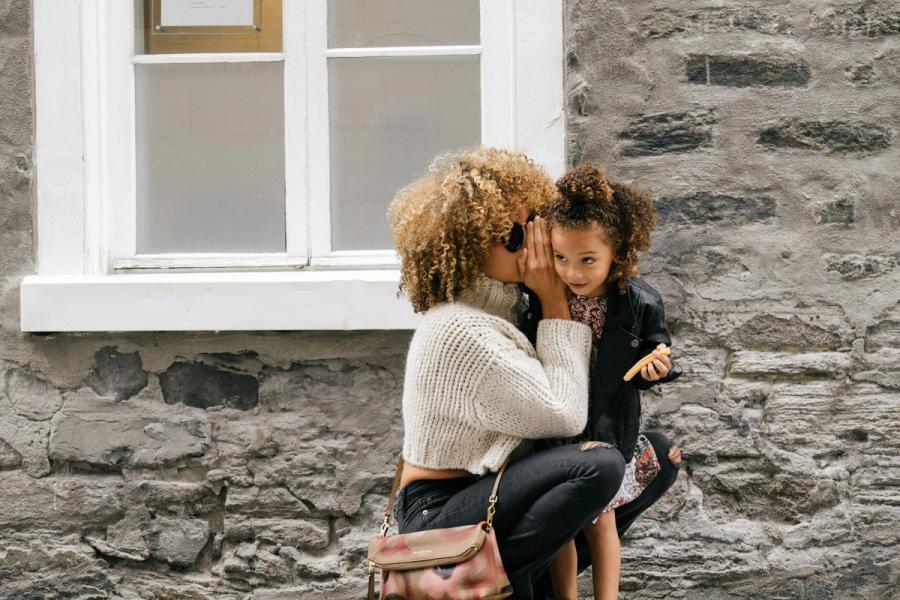
Hybrid parenting is the intentional blending of approaches from different parenting philosophies. Most parents doing it draw from three or more frameworks: often gentle parenting (for the warmth and emotional attunement), authoritative parenting (for clear boundaries and structure), and free range approaches (for independence and resilience).
It is not a loose excuse to parent however you feel like on any given day. That would be inconsistent parenting, which the research shows is one of the least effective approaches. Hybrid parenting is intentional. It is thoughtful. It adjusts the blend based on the child in front of you, the situation, and the moment.
According to The Bump's reporting on 2026 parenting trends, the shift stems from a specific concern: that gentle parenting, as it has played out on social media, has often collapsed into permissive parenting, where children lack structure and parents burn out from endless explanation and over negotiation.
As one mother quoted in Today's Parent recently put it: "Letting go of rigid rules feels freeing. It shifts parenting away from performance and back towards relationship, which is kind of the whole point."
An important distinction: Gentle parenting, as originally conceived by researchers, was never supposed to mean no boundaries. It was supposed to mean warm, respectful, firm limits. Somewhere along the way, in social media interpretation, the "firm limits" part got quietly dropped. Hybrid parenting is, in many ways, a return to what gentle parenting was meant to be in the first place, combined with honest acknowledgement that children need structure as much as they need warmth.
Why it matters: the research on what actually works
The shift towards hybrid parenting is not just a cultural reaction. It aligns with decades of developmental research showing that the best outcomes for children come from a specific combination: high warmth plus high structure.
This is the style that developmental psychologists call authoritative parenting. Not authoritarian (high control, low warmth), not permissive (high warmth, low control), but the combination of both.
A decade review of parenting research published in PMC summarised the finding plainly: "Parenting that is balanced, accepting with clear boundaries, encouraging autonomy with practical limits, displaying warmth with reasonable discipline, continues to predict the best adolescent outcomes in terms of academic success, mental health, emotion regulation, prosocial behaviour, and social relationships."
A study published in the Journal of Child and Family Studies reviewed 20 peer reviewed research papers and concluded that authoritative parenting consistently produces "the most positive long term psychological and behavioural developmental outcomes" over authoritarian and permissive styles.
Hybrid parenting is essentially authoritative parenting, operationalised for the reality of modern families. It is warmth and limits. Empathy and structure. Connection and consequences.
These hybrid models work because you can step outside of the rigidity of the framework and instead lean into understanding. We need to be intuitive and responsive to the actual child in front of us, not the scripted one in the book.Dr. Vanessa Lapointe, registered psychologist, quoted in Today's Parent, 2026
The four core principles of hybrid parenting
Reading through the major parenting publications covering this shift, four principles come up repeatedly. These are the anchors that make hybrid parenting different from inconsistent parenting.
Empathy and connection are non negotiable. Your child's feelings are valid and you name them. But so are boundaries. You can completely understand why your three year old is upset that the park is closed, and still not take them to a different park. Both things at once.
Children understand rules better when they understand the reason. But understanding the reason does not require a twenty minute negotiation. "The reason we hold hands crossing the road is because cars are dangerous and I love you too much to risk it. Take my hand." End of conversation.
Natural and logical consequences replace punitive ones. If you refuse to put on your coat in winter, you get cold. If you throw a toy, the toy goes away for today. You are not a bad child. The toy is not a punishment. It is just what happens. This builds cause and effect understanding without emotional damage.
A five year old and a twelve year old need different things. The same child needs different things on different days. One kid might need firmer boundaries. Their sibling might need more emotional scaffolding. Hybrid parenting lets you respond to the actual child rather than a scripted ideal.
What it looks like in actual moments
Principles are fine. But what does hybrid parenting sound like at 6pm on a Tuesday when you are tired, the toddler will not put their shoes on, and the older one has just drawn on the wall? Here are real scenarios with what a hybrid parent would do in each one.
Pure gentle parenting: Extensive emotional validation. "I can see you are really frustrated about putting your shoes on. It is hard when we have to leave the house. Do you want to tell me about those big feelings?" Twenty minutes later, you are still at the door.
Pure authoritarian: "Put your shoes on right now or you are in trouble."
Hybrid: "I can see you do not want to put your shoes on. That is okay. We still need to leave in five minutes. Do you want to put them on yourself or shall I help you? Either way, they are going on, and then we are leaving."
Pure gentle parenting: Sit on the floor beside them, talk them through every emotion, feel mounting shame as other shoppers stare, abandon the trolley, leave.
Pure authoritarian: "Stop it right now or there will be no TV for a week."
Hybrid: Pick them up calmly without saying much. Take them outside. Sit with them until they regulate. "I know. That was a lot. Let's breathe for a minute." Once they are calm: "We will talk about what happened when we get home. For now, we need to finish shopping. You can walk or I can carry you." You finish shopping.
Pure gentle parenting: "I wonder why you felt you needed to lie? What emotions were behind that?"
Pure authoritarian: "You are grounded. No TV for two weeks."
Hybrid: "I know you lied about finishing your homework. I understand you probably did not want to do it. But I need to be able to trust what you tell me. Tonight you finish it now, and tomorrow you show me when it is done. Lying is what we are going to work on together, not homework itself."
Why this is a relief for mums, specifically
I want to name something the research publications tend to underplay. Gentle parenting as it has been practised in the last decade has been disproportionately exhausting for mothers. The over explanation of feelings, the twenty minute negotiations, the pressure to always respond with perfect calm regardless of your own state, have contributed measurably to the mum burnout epidemic I wrote about in this earlier post.
A clinical study on parental burnout published in PMC found that parents, particularly mothers, who attempt rigid adherence to demanding parenting philosophies report significantly higher levels of burnout and self doubt. The research is clear: sustainable parenting is better parenting.
Hybrid parenting, done well, is sustainable. You are not performing. You are not scripting. You are responding to your actual child with warmth and structure, adjusting when something is not working, without the guilt spiral of having "failed" a particular parenting framework.
That matters. Because a mother who is present, calm, and emotionally available three weeks from now is worth more to her child than a perfectly gentle parent who hits the wall by Friday.
A note: For mums parenting in collectivist cultures, hybrid parenting is often much closer to how our own mothers raised us. Warm, firm, practical, unbothered by performing any particular philosophy. It turns out the instinctive way our mothers parented, blending love with clear expectations, is exactly what the research has been saying all along. You do not have to reject your cultural parenting wisdom to be a modern, informed parent. You can braid them together.
How to start, if you want to
If you recognise yourself in this post and want to start shifting, here is where I would begin. These are what I actually did, and they made the biggest difference.
1. Notice when you are over explaining. A three year old does not need a five sentence rationale for why we do not hit. "We do not hit. Hitting hurts." That is enough. Save the nuanced explanations for when your child is older and can actually use them.
2. Acknowledge the feeling, keep the limit. "I know you are disappointed. We are still not buying sweets today." Do not let the acknowledgement become the start of a negotiation. The feeling can be fully real. The limit can be fully firm. Both are true.
3. Stop narrating your own emotional regulation. You do not need to explain to your toddler that you are taking a deep breath because you are feeling overwhelmed. Just take the breath. They will absorb the modelling without the narration.
4. Let there be natural consequences. If they refuse dinner, they are hungry before bed. If they throw the toy, the toy goes away. You are not punishing them. You are letting them learn cause and effect, which is one of the most important cognitive skills they can develop.
5. Give yourself permission to not be perfect. You will lose your temper. You will snap. You will parent badly for entire afternoons. That is fine. Repair afterwards. "I got frustrated earlier. That was not fair. I am sorry." Children learn how to make mistakes and recover by watching you do it.
Frequently asked questions
Is hybrid parenting just a rebrand of authoritative parenting?
In many ways, yes. The core principles of hybrid parenting (warmth plus structure, empathy plus boundaries) are what developmental researchers have called authoritative parenting for decades. What makes hybrid parenting culturally distinct is the explicit blending of multiple frameworks and the rejection of rigid adherence to any single philosophy. It is authoritative parenting made accessible and non dogmatic for modern families.
How is hybrid parenting different from just being inconsistent?
Inconsistency means your response to the same behaviour is unpredictable. Tuesday's tantrum gets patience, Wednesday's gets a shout. That is harmful to children because they cannot predict your response. Hybrid parenting is different because the underlying principles stay consistent (warmth, structure, explanation, appropriate consequence). What flexes is the specific approach to match the child and situation. The anchor is the same. The response adapts.
Can I do hybrid parenting if my partner parents differently?
Yes, with conversations. The research on co parenting is clear that some variation between parents is actually healthy for children because it helps them learn to adapt to different people. What is not healthy is direct contradiction, or one parent undermining the other. You and your partner do not need to be identical. You do need to broadly agree on the principles (both warm, both setting limits) and not openly override each other in front of the kids.
Does hybrid parenting work for children with additional needs?
The principles still apply, but the execution often needs professional tailoring. Children with ADHD, autism, anxiety disorders, or trauma histories often need specific adjustments that a parenting philosophy alone cannot provide. If your child has additional needs, consider hybrid parenting the foundation, and work with a paediatric specialist or child therapist to customise the specific approach to your child's profile.
What if I was raised in an authoritarian way? Can I still do this?
Absolutely, and you are in very good company. Many of the parents driving the hybrid parenting shift describe themselves as "cycle breakers," intentionally parenting differently from how they were raised while still drawing on what was good from their own upbringing. The Bump's 2026 trend report found that 37% of Gen Z parents specifically identify as cycle breakers. It takes conscious effort. It is completely learnable. And you are not alone in doing it.
The permission you maybe needed
Here is what I wish someone had told me three years ago, when I was reading my fourth gentle parenting book and feeling vaguely like I was failing at it.
You are allowed to parent in a way that is sustainable for you. You are allowed to combine warmth with firm limits without apologising for either. You are allowed to stop explaining yourself to a two year old. You are allowed to let your child feel disappointed because you held a boundary. You are allowed to trust your own instincts about the child in front of you.
Hybrid parenting is not a new invention. It is the quiet return of something most of our own mothers knew instinctively: children need love and limits. Warmth and structure. To be held and to be told no. The parents quietly walking away from gentle parenting are not becoming harsher. They are becoming more honest. And, by every measure the research can produce, more effective.
What is one thing from your own upbringing that you want to keep, and one thing you want to do differently? I would genuinely love to hear it in the comments.
Read next
Community Discussion
Join 0 parents sharing their thoughts
Loading conversation...
Save this article for later?
We'll send a beautiful copy straight to your inbox so you never lose it.

Avery Hayes
Mom Of Two
Avery Hayes is a mother of two and a parenting writer passionate about helping families through honest, relatable content.
Related Articles

Gentle Parenting Is Quietly Dying and Gen Z Mums Are Replacing It With Something Far More Honest.
After years of being the dominant parenting philosophy, gentle parenting is collapsing under its own weight. Burnout, boundary confusion, viral parent meltdowns, and a growing research consensus are reshaping how a new wave of mothers are raising their kids. Here is what they are doing instead.

The "Almond Mom" Trend Going Viral Is Exposing How Many of Us Were Quietly Raised on Food Fear.
The "almond mom" archetype has blown up on TikTok, spawning counter-trends like "butter mom" and "gummy bear mom." What started as a joke is uncovering something painful.
The Tradwife Parenting Trend Looks Wholesome — But Its Message Is Much Darker
Homemade sourdough. Prairie dresses. Seven children homeschooled on a farm. The tradwife aesthetic has exploded on TikTok and Instagram, targeting tired modern mothers. Here is what the lifestyle is actually selling, who it is marketed to, and why you are right to feel uneasy about it.