The Discipline Approach Backed by Research — and Why It Works Better Than What Most of Us Knew
Fifty years of developmental psychology research points to one discipline style that consistently produces children who are confident, socially competent, and self-regulating. It is not the one most of us grew up with. And the shift takes practice.

Avery Hayes
Mom Of Two
April 21, 2026 · 12 min read
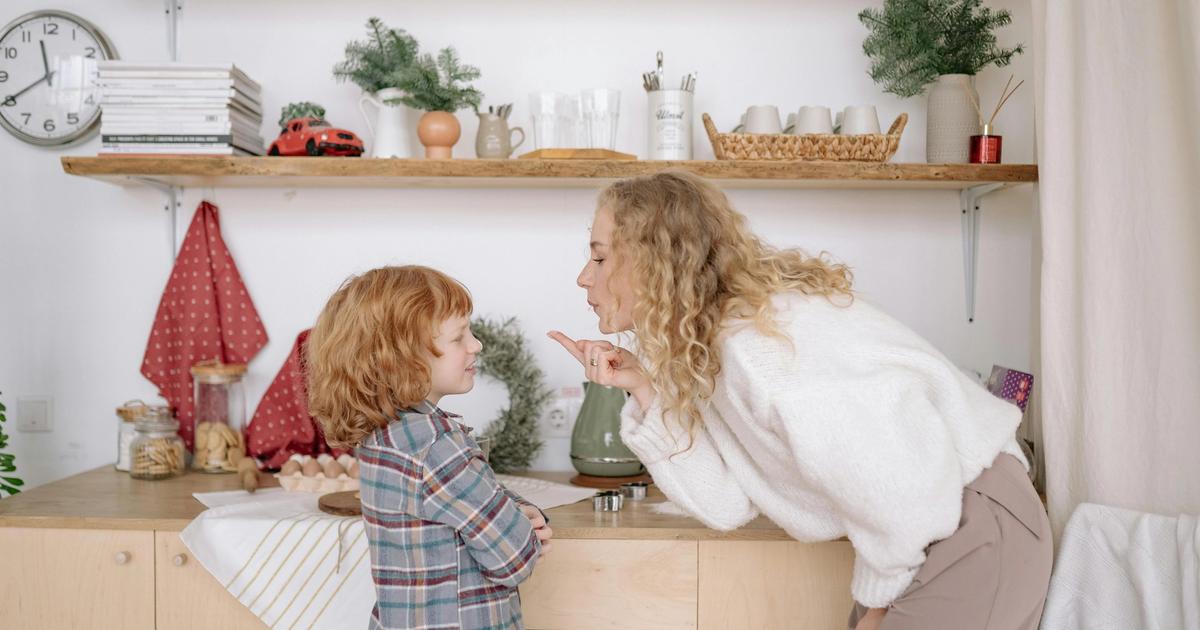
My mother was strict. Not in a frightening way. In the way that most children of her generation were raised, where the word of the adult was final and the feelings of the child came a distant second. When I had my own children, I told myself I would parent differently. Warmer. More understanding. Less shouty.
What I landed on for about a year was not better. It was just the opposite of what my mother had done. Which is not the same as something well-designed. My kids were confused, I was exhausted, and the house had no edges. Eventually I did what I should have done at the start, which was read the actual research on what discipline styles produce the best long-term outcomes for children. The answer turned out to be neither what my mother did nor what I was doing.

The four parenting styles, plainly explained
In the 1960s, developmental psychologist Diana Baumrind identified three distinct parenting styles based on two dimensions: how responsive parents are to their child's needs, and how demanding they are about standards and behaviour. A fourth style was later added by researchers Maccoby and Martin. The four have since been studied extensively, across cultures, and the findings are remarkably consistent.
Authoritative
High warmth + high expectations. Clear rules, explained with reasons. Consequences follow through. Emotions are validated, behaviour is shaped. The child is loved AND guided.
Warm without structure
High warmth + low expectations. Very loving, very available, but few rules. Avoids conflict. Kids often struggle with self-control, boundaries, and disappointment later.
Strict without warmth
Low warmth + high expectations. Rules without explanation. "Because I said so." Obedience prized over understanding. Often produces anxious or rebellious children.
Neither warm nor structured
Low warmth + low expectations. Parent is disengaged, whether through stress, depression, or circumstance. Consistently produces the poorest outcomes across all measures.
Notice what the two dimensions are. Not "strict or soft." Not "traditional or modern." It is warmth and structure, and the research shows that children do best when they get both, not either-or.
Why one of them outperforms the others
Decades of longitudinal studies, meta-analyses, and cross-cultural research keep landing on the same finding. Children raised with the authoritative style are more likely to be socially competent, emotionally regulated, academically successful, and resilient. They have lower rates of anxiety, depression, and behavioural problems. They grow into adults with better relationships, better mental health, and higher reported life satisfaction.
This does not mean authoritative parents produce perfect children or that any single style guarantees an outcome. Genetics, environment, luck, and the child's own temperament all matter enormously. But across populations, the pattern is consistent enough that the American Psychological Association, the American Academy of Paediatrics, and most paediatric mental health organisations point to authoritative parenting as the evidence-based approach.
Children of authoritative parents are more likely to be self-reliant, socially competent, and academically successful than children raised with other styles. This finding has been replicated across decades and across diverse cultural contexts.
Synthesis of Baumrind (1967, 1971) and subsequent meta-analyses in developmental psychology
The striking thing, when I read this for the first time, was how simple the principle is. Be warm. Hold the line. Explain why. That is it. The complexity is in the execution, which is where the rest of this post comes in.
The 5 tools of discipline that actually works
Authoritative discipline is not a feeling. It is a set of daily practices. These are the five that most directly translate the research into what you actually do at home.
Before addressing the behaviour, connect with the child. Crouch to their level. Say their name. Make eye contact. A child who feels seen can hear you. A child who feels attacked cannot. This step takes 15 seconds and changes everything about what follows.
"You really wanted to keep playing. That is hard. And we still have to leave now." You are not arguing with the feeling. You are validating it. Then you are holding the limit anyway. Both together. This is the authoritative sentence structure. Warmth plus structure in one breath.
"We do not hit because it hurts people." Not because I said so. Not because you are bad. The reason, once, calmly. Children raised with explanations internalise rules. Children raised with commands alone obey in front of you and drop the rule as soon as you are not watching.
The single biggest mistake warm parents make is not following through. You said no screens if homework is not done. Homework is not done. No screens. Even if they melt down. Especially if they melt down. A limit that sometimes holds and sometimes doesn't is worse than no limit at all, because now the child has to test it every time to see which version you are on.
You will shout sometimes. You will lose your temper. This does not ruin your children. What matters is the repair. "I shouted earlier. I was frustrated. I am sorry. That was not okay." Repair teaches children more than perfect patience would. It shows them that everyone makes mistakes and relationships survive mistakes. This skill will serve them for the rest of their lives.
Common mistakes when making the switch
If you were raised with a different style, authoritative parenting will feel awkward at first. It is not how your nervous system is wired to respond. Here are the pitfalls I fell into, and that I see in most parents making the shift.
Confusing warmth with permissiveness. Being warm does not mean saying yes. It means saying no with love. If your child is never disappointed, you are probably not holding enough line.
Using explanation as negotiation. Explaining the why once is authoritative. Explaining it four times as your child escalates is permissive. Say it once, calmly, then stop explaining and hold the line. Endless reasoning teaches children that rules are debatable.
Rescuing your child from feelings. You are not responsible for preventing your child from ever feeling disappointed, bored, frustrated, or angry. Feelings are how children learn to regulate. Your job is to be present with them through the feeling, not to remove the feeling.
Conflating boundaries with punishment. A boundary is "we are leaving the park now." A punishment is "we are never coming back because you did not listen." The first is a limit. The second is retaliation. Children need the first and almost never benefit from the second.
If you grew up in an authoritarian household: The hardest part of switching will be tolerating your child's feelings without interpreting them as rebellion. When your toddler screams "no," you may feel a flash of the same response you were given as a child. That is not guidance speaking. That is your nervous system. Pause. Breathe. Respond, do not react.
Frequently asked questions
Is this the same as "gentle parenting"?
Not quite. Authoritative parenting is a 60-year-old research framework with strong evidence for both warmth and structure. Gentle parenting is a modern popular movement that sometimes overlaps with authoritative parenting and sometimes drifts toward permissive (no limits, endless explaining, avoiding a child's distress at all costs). Good gentle parenting is authoritative. Not all gentle parenting is good gentle parenting.
What about time-outs? Do they work?
Brief, calm time-outs (a minute or two, used for the most serious behaviours only) can be effective for some children when used within an authoritative frame. The evidence against time-outs is mostly about how they are commonly misused: too long, too often, in isolation, as a punishment rather than a pause. A better default for most situations is "time-in" — stay close, name the feeling, hold the limit.
My partner and I have different styles. What do we do?
This is common. The research shows that consistency between caregivers is one of the biggest predictors of positive outcomes. Sit down, agree on the big non-negotiables (no hitting, bedtime is bedtime, screen time limits), and back each other up. Different personalities can co-exist. Actively contradicting each other in front of the child cannot.
How do I do this with a strong-willed child?
The research says the same approach works — but the stakes are higher. Strong-willed children especially need warmth (to feel safe) and structure (to learn the world has edges). Inconsistent discipline teaches them to test harder. Authoritarian discipline teaches them to rebel. Authoritative is often the only thing that works, though it requires more stamina from you.
I grew up shouted at and I turned out fine. Is this overthinking it?
Most of us turned out "fine" on the surface. The research is about averages across populations, not predictions about any one individual. You survived. Some percentage of your peers did not. The goal is not to judge how our parents raised us. It is to choose, consciously, what we pass on to the next generation. You get to decide.
The short version
Be warm. Hold the line. Explain why. Follow through. Repair when you mess up. That is the whole thing. The complexity is in doing it at 5pm on a Tuesday when the dinner is burning and the smaller one is crying and the bigger one has just drawn on the wall.
You will not do this perfectly. Nobody does. What the research actually shows is that children raised by imperfect authoritative parents still do better than children raised perfectly by any other style. Warm, firm, consistent, repair. The rest is just practice.
Read next
Community Discussion
Join 0 parents sharing their thoughts
Loading conversation...
Save this article for later?
We'll send a beautiful copy straight to your inbox so you never lose it.

Avery Hayes
Mom Of Two
Avery Hayes is a mother of two and a parenting writer passionate about helping families through honest, relatable content.
Related Articles

Gentle Parenting Is Quietly Dying and Gen Z Mums Are Replacing It With Something Far More Honest.
After years of being the dominant parenting philosophy, gentle parenting is collapsing under its own weight. Burnout, boundary confusion, viral parent meltdowns, and a growing research consensus are reshaping how a new wave of mothers are raising their kids. Here is what they are doing instead.

The "Almond Mom" Trend Going Viral Is Exposing How Many of Us Were Quietly Raised on Food Fear.
The "almond mom" archetype has blown up on TikTok, spawning counter-trends like "butter mom" and "gummy bear mom." What started as a joke is uncovering something painful.

The Tradwife Parenting Trend Looks Wholesome — But Its Message Is Much Darker
Homemade sourdough. Prairie dresses. Seven children homeschooled on a farm. The tradwife aesthetic has exploded on TikTok and Instagram, targeting tired modern mothers. Here is what the lifestyle is actually selling, who it is marketed to, and why you are right to feel uneasy about it.