20 Screen-Free Activities That Keep Kids Busy (Without You Having to Entertain Them)
The American Academy of Pediatrics (AAP) recommends no screen time at all for children under 18 months (except video calls)

Avery Hayes
Mom Of Two
April 14, 2026 · 14 min read
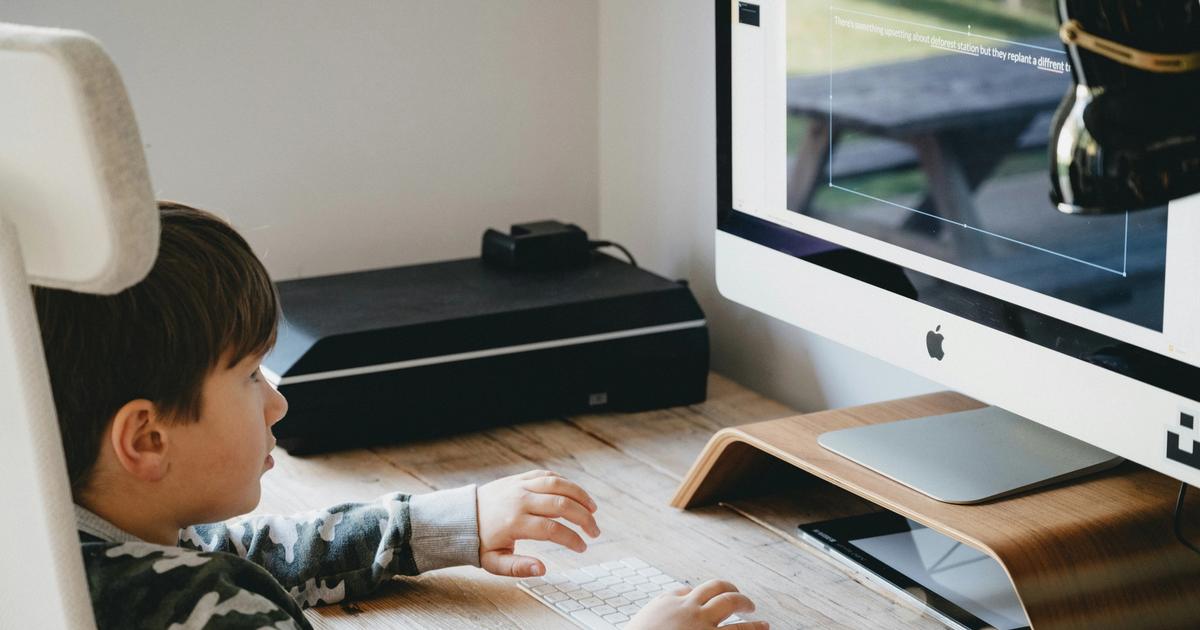
Because “I’m bored” is not a sentence that should send you into a spiral of guilt. The activities below are tested, researched, and genuinely work on kids who have decided that anything without a screen is officially unbearable.
My son was four when he first looked me dead in the eyes, handed back the box of Lego I had excitedly presented, and said “I don’t want to do that.” He wanted the tablet. He wanted YouTube. He wanted the specific video where a man opens surprise eggs. I had been awake since 5:47am and I did not have the energy to negotiate with a small person about the intellectual merits of building blocks versus egg-opening videos.
If you’re reading this, you know that feeling exactly.
The good news is that screen-free activities are not just a nice-to-have. The research on this is genuinely reassuring and I want to share it with you before the list, because understanding why these activities matter makes you so much more motivated to actually try them. Not out of guilt, but out of genuine excitement for what they do for your child’s brain.
Why screen-free time matters more than you think
Let’s start with the research, because this is not a screen-shaming post, it is a science-informed one.
The American Academy of Pediatrics (AAP) recommends no screen time at all for children under 18 months (except video calls), and no more than one hour per day of high-quality content for ages 2–5. For children over 6, the emphasis is on ensuring screens don’t replace sleep, movement, and face-to-face connection.
But here’s the thing that really struck me: a comprehensive 2025 review of studies published in Children (MDPI/NIH), covering research on children aged 0–18, found that excessive screen time is consistently linked to disrupted sleep, reduced physical activity, and impacts on social development and attention. These aren’t minor concerns. This is what’s being replaced when kids spend hours passively staring at screens.
And a separate 2025 study published in JAMA Pediatrics, following 976 children, found that higher screen time in late childhood was associated with more depressive symptoms in early adolescence. That one stopped me in my tracks.
But here is the other side the part that makes me genuinely excited, not just anxious: the research on what screen-free, unstructured play does for kids is extraordinary. The AAP published a landmark clinical report, “The Power of Play,” which found that free, unstructured play “enhances brain structure and function, promotes executive function, and builds the prosocial brain.” Not a little. Fundamentally.
And Scientific American summarises decades of developmental research by calling unstructured play “critical to normal social, emotional and cognitive development.” As developmental psychologist David Elkind puts it: “Curiosity, imagination and creativity are like muscles. If you don’t use them, you lose them.”
None of this means screens are poison. It means the activities below are not just a nice way to fill time they are some of the most developmentally powerful things your child can do all day. And that framing genuinely changes how you approach them.
The American Psychological Association describes unstructured play as “a fundamental necessity for children to thrive physically, emotionally, mentally, and socially.” It builds resilience, teaches empathy and cooperation, manages stress, and develops the executive function children will use for the rest of their lives. The UN Convention on the Rights of the Child recognises free play as a basic human right of every child.
The one thing to do before you try any of these
Before we get to the list, there is one thing every child development expert agrees on, and I want to pass it straight to you: when your child says “I’m bored,” resist the urge to immediately fix it.
This sounds counterintuitive. But as Harvard pediatrician Dr. Michael Rich explains, “Boredom is the space in which creativity and imagination happen.” When we rush in with activities the moment our children feel even slightly understimulated, we rob them of the most creative developmental state they can be in.
The APA’s research on unstructured play backs this up: when children complain they are bored, allowing them to sit with that feeling just for a few minutes — is where the best play originates. The rule I try to follow: say “that sounds like a good moment to explore” and wait five minutes before intervening. More often than not, something begins on its own.
With that in mind, here are 20 activities that genuinely work not because they entertain your child for them, but because they create the conditions for children to entertain themselves.
Indoor creative play — activities 1 to 7
These are your weekday staples and rainy-day saviours. All of them use materials you almost certainly already have at home. None of them require you to be crafty, prepared, or particularly energetic.
Hand your child a large cardboard box, some crayons or stickers, and walk away. Research published by the UMass Memorial Health system specifically lists cardboard boxes as one of the most powerful open-ended play materials available — they become castles, cars, rockets, caves, and shops. The box does not have to become anything “good.” That is the whole point. Once they are in, they stay in.
Toddler 18m+ • Preschool • Big kids • Prep: zero
Pour dry pasta, rice, or lentils into a large mixing bowl with some small cups, spoons, and a funnel. Place a waterproof mat underneath. That’s it. Sensory play is not just a buzzword — the early childhood experts at Zero to Three confirm it supports cognitive development, fine motor skills, and emotional self-regulation in children under five. For babies and young toddlers, this is gold.
Baby 8m+ • Toddler • Prep: 5 mins
Build a basic fort with sofa cushions and a sheet (you do the building, they direct). Then give them one “mission” to complete inside it: draw a treasure map, protect a stuffed animal from dragons, or run a post office. The mission gives them just enough structure to spark independent play for a surprisingly long time. Bonus: fort-building itself counts as excellent physical and spatial problem-solving play.
Toddler 2y+ • Preschool • Big kids • Prep: 10 mins
Mix 2 cups flour, 1 cup salt, 2 tbsp oil, ¾ cup boiling water and a few drops of food colouring. That’s it. Making it together is half the activity. The actual playing — rolling, cutting, building — develops fine motor skills and is deeply calming for overstimulated children. It consistently keeps toddlers engaged for 30–45 minutes of genuinely independent play, which in toddler-parent time is approximately forever.
Toddler 18m+ • Preschool • Prep: 15 mins
Gather 10–15 random objects from around your home: bottle caps, pebbles, fabric scraps, corks, pasta shapes, ribbons, buttons (not for under-3s). Put them in a tray or on a large piece of paper. No instructions. This is a Montessori and Reggio Emilia staple for very good reason: it directly develops creative and divergent thinking. As the APA explains, “children don’t need expensive toys” — creative thinking thrives on open-ended materials that can become anything.
Toddler 2y+ • Preschool • Big kids • Prep: 5 mins
Write 15–20 drawing prompts on slips of paper and put them in a jar: “draw what you dream about,” “draw our house from a bird’s view,” “draw a new animal that doesn’t exist.” They pull one and draw. No feedback on the quality — only genuine curiosity. For older children who resist “just drawing,” the jar makes it feel like a game rather than a task, and it circumvents the “but I don’t know what to draw” problem entirely.
Preschool 4y+ • Big kids • Prep: 10 mins
Give your child four odd socks, some googly eyes (or drawn-on eyes), a felt-tip pen, and a chair tipped on its side as a stage. Leave them alone. The combination of creating the puppets and then performing with them engages imaginative, social, and narrative skills simultaneously — and is the kind of activity that older siblings can run with younger ones for surprising stretches of time. This is sociodramatic play, and its developmental value is enormous.
Toddler 2.5y+ • Preschool • Big kids • Prep: zero
Outdoor & nature play — activities 8 to 13
Outside time is not just nice, it is neurologically different from inside time. Research referenced in the 2025 clinical review on screen time in Clinical and Experimental Pediatrics found that proximity to green spaces was one of the strongest environmental factors in reducing children’s screen time. Getting outside, even briefly, naturally disrupts the pull of devices and resets attention. You do not need a garden. A doorstep, a local park, a short walk — it all counts.
Write a list of 10 things to find outside: something smooth, something yellow, something that has been rained on, something smaller than your thumbnail, a seed, a leaf with an unusual shape. Hand it over, grab a small bag, and go. This works for toddlers (picture version) and big kids (written) and genuinely extends outdoor time by 20–40 minutes because it gives kids a purpose. No countryside required — a city pavement or back garden has more than enough for a full list.
Toddler 2.5y+ • Preschool • Big kids • Prep: 5 mins
Give your child chunky pavement chalk and the instruction to “build a whole world” on the driveway, path, or patio. Roads, rivers, houses, shops, maps. For younger children, draw a simple road layout and provide toy cars. For older ones, the city-planning element keeps them engaged for a very long time. Chalk is one of the most underrated outdoor materials — cheap, washable, and endlessly open-ended.
Toddler 2y+ • Preschool • Big kids • Prep: zero
If you have any outdoor space at all, designate a corner as the digging patch. Old pots and pans, spoons, water in a jug, dirt or sand. Children who have access to “mud kitchens” play outdoors dramatically longer and more independently than those without them. Messy? Yes. Worth it? Completely. The sensory, physical, and imaginative engagement is some of the deepest play children can access.
Toddler 18m+ • Preschool • Big kids • Prep: one-time setup
A tub of water, cups, a turkey baster, funnels, and small floating objects. In summer this goes outside; in winter it goes in the kitchen sink or bath. Water play is universally calming, deeply engaging, and develops mathematical concepts (volume, capacity, pouring) through pure play. It also buys you 30–40 minutes of absorbed independent play on almost any day of the week, for almost any age. Dress them appropriately. Accept the wet.
Baby 8m+ • Toddler • Preschool • Prep: 5 mins
On any walk, give your child a small bag and challenge them to collect interesting sticks, stones, leaves, and seed pods. When you get home, give them a flat surface and some air-dry clay or blu-tack and invite them to build something. No instructions about what. This bridges the outdoors and indoors beautifully and is a wonderful example of what Scientific American calls “creative play in the animal kingdom” — materials from the natural world used imaginatively.
Preschool 3y+ • Big kids • Prep: zero (from a walk)
Let your child invent five “events” for a family or solo Olympics: the fastest skip across the garden, the longest jump, the most hops on one foot, a balancing challenge, a sprint to the fence. They run the event, they keep the scores. Older children become obsessed with the record-keeping, the ceremonies, and the commentating. This is active, independent, and completely absorbing once it gets going.
Preschool 4y+ • Big kids • Prep: zero
Independent & imaginative play — activities 14 to 18
This section is specifically designed to build your child’s ability to play without you. This is a skill, not a personality trait, and it is developed through practice. The activities below are set up in a way that invites independent play giving just enough structure to launch, then stepping back completely.
If your child struggles to play independently, try narrating what they are doing for 60 seconds without directing: “Oh, you’re putting the blue block on top of the red one. Interesting.” Then quietly walk away. This technique, used by play therapists, gets children absorbed in their own play without them even noticing you’ve left.
Set up a simple pretend shop using items from your pantry (tins, empty packets, fruit), a small table as the counter, and paper for price tags. Give them a wallet with coins or cut-out paper money. This is open-ended sociodramatic play — which research consistently identifies as one of the most developmentally rich forms of play available to preschool-aged children. Once set up, this genuinely runs itself for 30–60 minutes.
Toddler 2.5y+ • Preschool • Big kids • Prep: 10 mins
Fold five sheets of A4 paper in half and staple along the spine. That’s a book. Tell your child this is their book to fill however they want words, pictures, maps, stickers, pressed flowers, anything. For non-readers, they narrate and you write one sentence per page at the start. For readers and writers, this is a genuinely absorbing project that often extends across multiple sessions. The finished book becomes a treasured object, which is enormously motivating.
Preschool 3.5y+ • Big kids • Prep: 5 mins
Present a “problem” and ask your child to solve it using only materials in the recycling bin: “Can you build something that holds three apples off the ground?” “Can you make a bridge that a toy car can cross?” “Can you create a container for your favourite rock?” This is engineering thinking through play — and it is one of the highest-engagement, most independent activities for children aged 5 and up. The problem-solving instinct takes over completely.
Preschool 4y+ • Big kids • Prep: 2 mins
Create a dedicated reading spot: a corner with cushions, a small lamp, a blanket. Stock it with library books at the right level. Then create a ritual around it: “after lunch is reading corner time” — no screens, no interruptions. The ritual matters more than the corner setup. Children who have a consistent, cosy reading time genuinely come to choose books independently, especially if the books are chosen by them at the library (not assigned by you).
Toddler 18m+ (picture books) • Preschool • Big kids • Prep: one-time setup
Ask your child to curate a museum of their five most interesting possessions. They write the labels (or dictate them to you for younger children), arrange the display, and then give you a guided tour. This is an activity that builds narrative skills, pride in their own knowledge, and creative presentation — all wrapped in something that feels important and grown-up to them. Children who are resistant to craft or drawing often love this because it is about their things.
Preschool 4y+ • Big kids • Prep: zero
Family together time without a screen — activities 19 & 20
These two are for the times when you want to genuinely connect with your children without a screen mediating the experience. Both are low-prep, flexible in length, and genuinely enjoyable for adults too.
Write six words on six pieces of paper (a character, a place, a problem, a colour, an object, an emotion). Take turns rolling the papers face-down and picking one to add to a story you build together out loud. No writing required. This is oral storytelling, and it is one of the most ancient and cognitively rich activities humans do. The sillier the results, the more everyone laughs, and the more engaged children stay. Works brilliantly for mixed ages because younger ones contribute characters and older ones manage the plot.
Toddler 2.5y+ • Preschool • Big kids • Prep: 5 mins
Not “helping” (which often means stirring once and leaving), but giving your child an actual, age-appropriate job for a real meal: pouring, measuring, tearing herbs, spreading, peeling (with supervision), cracking eggs, kneading dough. Research from the APA on playful learning notes that “incorporating playfulness into everyday tasks like cooking is teaching children math, collaboration, and a sense of contributing to the household.” Children who cook with parents consistently eat better too bonus.
Toddler 2y+ (simple tasks) • Preschool • Big kids • Prep: zero extra
What to actually say when they say “I’m bored”
We’ve established that boredom is actually productive. But that doesn’t mean it’s comfortable to sit with for you or for them. Here is a simple script I use, built around what child development research actually recommends.
Not every activity works every time for every child. Some of these will land brilliantly. Some will last four minutes. That is completely normal and does not mean you or your child are doing anything wrong. Independent play is a skill that develops over time with consistency, not something that switches on immediately after a screen is turned off. Be patient with the transition. It gets easier — genuinely.
Play is not something you do because you have nothing else to do. It is one of the most important things your child’s brain does all day. And when you protect time for it, you are giving them something screens fundamentally cannot.— Adapted from child psychologist and play researcher Norbert Cabrera, cited by the APA
The honest bottom line
None of these activities require you to be a creative, Pinterest-worthy parent. They require you to set something up, step back, and trust your child with a little space. That last part the trusting is honestly the hardest bit for most of us.
But the science is on your side. When children have the space and the materials to play freely and imaginatively, their brains are doing some of the most important developmental work they will ever do. More important, in many ways, than anything structured and scheduled you could offer them.
Start with one activity from this list this week. Just one. See what happens when you put the materials out and walk away. And come back and tell me how it went in the comments — I really do read every single one.
Which one are you trying first? I’d love to know.
Save this for later you will need it. Pin it to your “kids activities” board, share it in your parent WhatsApp group, or bookmark it for the next rainy Saturday morning when the tablet has been confiscated and everyone is cross. That is exactly when this list comes into its own.
Save this for later — you will need it. Pin it to your “kids activities” board, share it in your parent WhatsApp group, or bookmark it for the next rainy Saturday morning when the tablet has been confiscated and everyone is cross. That is exactly when this list comes into its own.
Community Discussion
Join 0 parents sharing their thoughts
Loading conversation...
Save this article for later?
We'll send a beautiful copy straight to your inbox so you never lose it.

Avery Hayes
Mom Of Two
Avery Hayes is a mother of two and a parenting writer passionate about helping families through honest, relatable content.
Related Articles

A $100 Phone for Kids With No Apps Has 100,000 Parents on a Waiting List. Here's What's Going On.
The Tin Can phone has no screen, no apps, no internet, no texting, and no games. It is, quite literally, just a phone. It costs $100. The waiting list is over 100,000. It has gone viral on TikTok, been profiled by Bloomberg and WIRED, and is now appearing in homes from California to Connecticut.

Australia Removed 4.7 Million Teen Accounts in 30 Days. Here's What Every Parent Needs to Know Now.
On 10 December 2025, Australia became the first country in the world to ban social media for everyone under 16. In the first month, 4.7 million teen accounts were removed. France, the UK, Denmark and Malaysia are watching.
Everyone's Suddenly Carrying an "Analogue Bag" Instead of Scrolling. Here's What's Actually Inside.
A physical tote bag full of screen-free activities you reach for instead of your phone. The "analogue bag" trend is Pinterest's biggest 2026 movement, part of the bigger backlash to doomscrolling. Here is exactly what people are putting in theirs, and how to build yours this weekend.