Parenting Burnout Is Not Just Being Tired — Here’s How to Actually Recognise and Recover From It
The American Psychological Association notes that parenting burnout is distinct from both job burnout and depression

Avery Hayes
Mom Of Two
April 15, 2026 · 14 min read
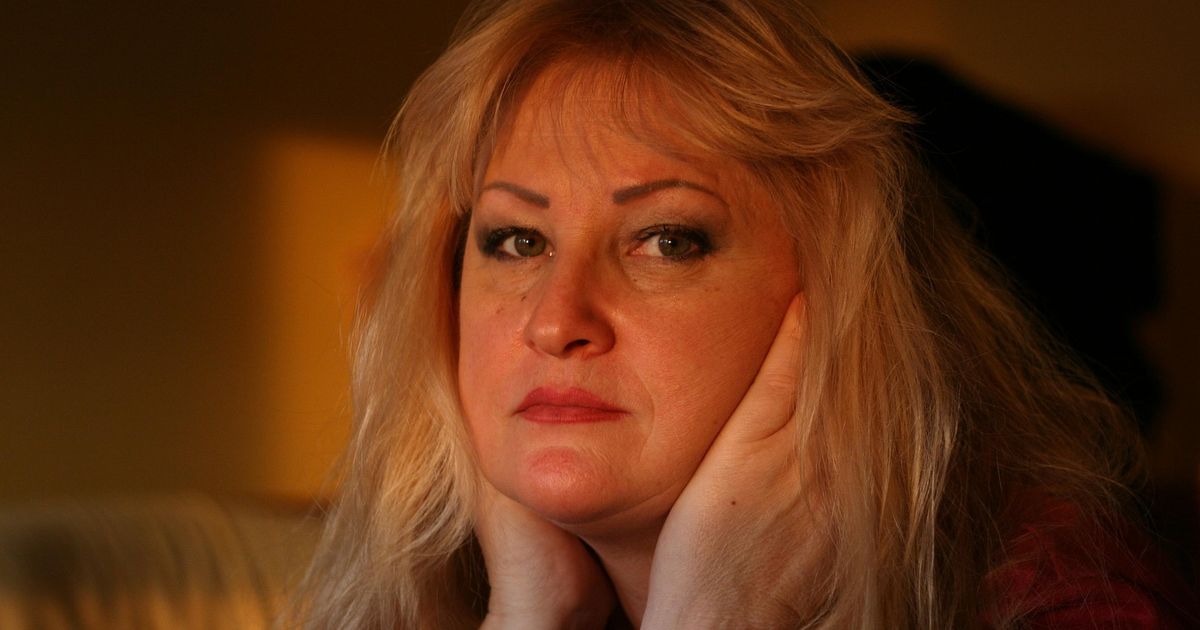
If you feel exhausted even after a full night’s sleep, emotionally distant from your children, quietly resentful of the role you genuinely love, and so hollowed-out that the thought of another bedtime routine makes something in you recoil — this post is for you. What you’re describing is not weakness. It has a name.
There was a Tuesday night, about eight months into my second child’s life, when I was reading a bedtime story to my four-year-old and I felt completely nothing. Not tired, exactly. Not sad. Just absent. Like I was operating my body from somewhere outside of it, going through motions that used to feel like love and now just felt like tasks on a list that never ends.
I remember thinking: something is wrong with me. I love my children. I know I love my children. So why does everything about being their mother feel like it is slowly grinding me into dust?
I did not know then that what I was describing is a clinically recognised condition, distinct from depression, distinct from stress, distinct from normal parental tiredness. It has been studied by psychologists for decades. It has four measurable dimensions. And it affects, according to recent research, well over half of all parents.
What I had what many of you reading this right now have was parenting burnout. And understanding what it actually is was the first step in finding my way out of it.
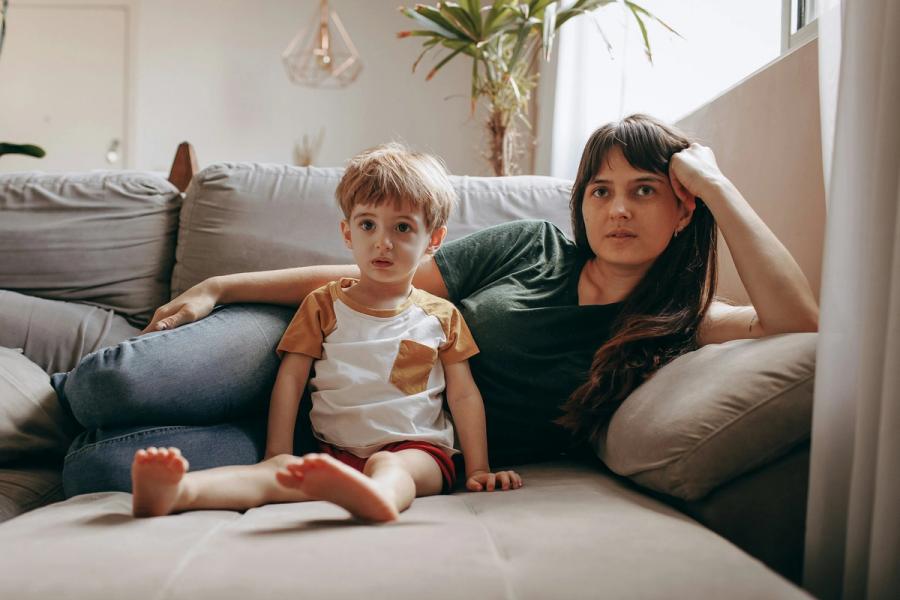
1. What parenting burnout actually is — and why it’s not just tiredness
Parenting burnout was first formally identified and studied by Belgian psychologists Isabelle Roskam and Moïra Mikolajczak, who developed the Parental Burnout Assessment after surveying more than 900 parents, as covered by the American Psychological Association. Their research defined it not as a mood or a bad week, but as a progressive exhaustion disorder specific to the parenting role and one that is meaningfully different from job burnout, depression, or ordinary tiredness.
The distinction matters. Because when we confuse burnout with tiredness, we try to solve it with rest and it does not work. A weekend off does not fix burnout. A good night’s sleep does not fix burnout. If it did, you would not be reading this at midnight feeling empty despite having slept last night.
According to the research, parenting burnout has four clinically defined dimensions: overwhelming exhaustion in the parenting role; a painful contrast with the parent you used to be; feeling chronically fed up with your children; and emotional distancing going through the physical motions of parenting while feeling mentally and emotionally absent.
If you have felt all four of those things even quietly, even without naming them you are not failing. You are experiencing a recognised psychological condition that is more common than most parenting conversations acknowledge. A 2024 study published in the Journal of Pediatric Health Care found that 65% of working parents reported burnout. Nearly two thirds.
You are not alone. You are not a bad mother. You are burnt out. And those are very different things.
The American Psychological Association notes that parenting burnout is distinct from both job burnout and depression because parents cannot leave their role the way someone with occupational burnout can find a new job. This creates a specific type of feeling “trapped” that makes parental burnout, in the researchers’ words, particularly serious — and particularly in need of its own treatment approach.
2. The signs of parenting burnout nobody talks about
Most posts about burnout list the obvious: you’re tired, you’re irritable, you snap at your kids. Those are real signs. But there are quieter ones that I think matter more the ones that sit inside you without announcing themselves, the ones that feel like shame rather than symptoms.
The love is unquestionable. The joy has gone missing. You can say “I love my kids” and mean it absolutely while simultaneously dreading the moment they wake up. Both things are true. This is one of the most distressing and most misunderstood hallmarks of burnout.
You are in the room. You are making the snacks, reading the book, doing the bath. But you are watching yourself do it from a distance, like a screen you can’t quite focus on. Parents describe this as “on autopilot” and it is one of the four clinically defined signs.
You remember a version of yourself that was patient, engaged, joyful in this role — and you mourn her. The contrast between who you were as a parent and who you feel you are now is not just uncomfortable. It is one of the defining features of burnout as the research describes it.
Thoughts of just driving and not coming back. Of a hospital stay that isn’t serious but means someone else takes over for a week. Of a world where you are not responsible for other humans. These thoughts are not signs of being a bad person. They are signs of a person who is out of resources.
You had a night away. You slept late. You had the hour to yourself you begged for, and came back feeling exactly the same, or worse. This is the clearest diagnostic signal. Tiredness responds to rest. Burnout does not, because rest alone does not address the underlying resource depletion.
The rage that rises out of proportion to the trigger. Screaming about spilled milk, genuinely and with real fury. Then the tsunami of guilt and shame afterwards and the resolution to do better tomorrow, which lasts until the next small thing and the next reaction. The cycle itself is exhausting.
Parenting burnout is more like erosion than a storm. It builds over time, especially when stress is constant and resources for recovery are scarce. Even after moments of rest, the exhaustion lingers.— Calm’s mental health research team, on the nature of parental burnout
3. Why mums are more vulnerable — what the research says
I want to spend time on this section because I think it is important, and because it is the section most likely to make you feel less alone and less personally responsible for your own depletion.
Research is clear that mothers experience parenting burnout at significantly higher rates than fathers, even in households where parental involvement is equal. A 2024 study cited in a comprehensive narrative review published in Healthcare (MDPI) found that women scored significantly higher on burnout measurement questionnaires across the board and crucially, this gap persisted even in families where fathers contributed equally to childcare tasks.
Why? The researchers point to several converging factors.
The invisible labour gap
Even when physical tasks are shared, the mental load the planning, anticipating, scheduling, remembering, worrying, and managing still falls predominantly to mothers. Researchers call this “gendered mental labour,” and it is a documented, measurable phenomenon that creates a chronic cognitive burden that does not show up on any task list.
The perfectionism trap
A 2024 systematic review in BMC Public Health identified parental perfectionism as one of the strongest predictors of burnout. Mothers are statistically more likely to internalise impossible standards for what “good parenting” looks like amplified dramatically by social media and to measure themselves relentlessly against those standards and find themselves failing.
The isolation factor
Research consistently finds that burnout rates are significantly higher in individualistic societies where parents operate without extended family networks. Many modern mothers particularly those who have moved cities, whose parents live far away, who are raising children without their village are parenting in structural isolation that previous generations simply did not face. For most mums: the gradual loss of the intergenerational household and the extended family support system is a real and under-discussed contributor to maternal burnout.
Self-compassion as the shield
Here is the genuinely hopeful part of the research: a large-scale study published in PMC found that self-compassion acts as a measurable protective buffer against parental burnout. Mothers with higher levels of self-compassion were significantly less likely to experience burnout — and this held true even when the objective stressors were high. This is not about toxic positivity. This is about the evidence that how you talk to yourself about your own struggling genuinely affects your nervous system’s ability to recover from it.
The self-care conversation in parenting spaces is often deeply unhelpful because it focuses on individual treats — bubble baths, candles, a glass of wine — as solutions to what is fundamentally a systemic resource deficit. You do not have burnout because you haven’t had enough baths. You have burnout because the demands placed on you have chronically exceeded the support and resources available to you. Real recovery has to address that gap — not paper over it.
The self-care conversation in parenting spaces is often deeply unhelpful because it focuses on individual treats bubble baths, candles, a glass of wine as solutions to what is fundamentally a systemic resource deficit. You do not have burnout because you haven’t had enough baths. You have burnout because the demands placed on you have chronically exceeded the support and resources available to you. Real recovery has to address that gap not paper over it.
4. How to actually recover not just “take a bath”
Recovery from parenting burnout is not a weekend. It is not a single conversation with your partner. It is a genuine, deliberate process of rebuilding the balance between demands and resources and it takes weeks, sometimes months. That is not discouraging. That is just honest.
The research on what actually helps is encouraging. A clinical study published in PMC testing an 8-week mindfulness and self-compassion programme for parental burnout found large effect sizes for improvements in burnout, parental neglect and violence risk, and self-compassion. Meaningful, measurable recovery is genuinely possible. Here is what it looks like in practice.
Name it clearly and without shame
Audit and reduce demands before adding self-care
Have the specific conversation with your partner
Practice micro-restoration, not macro-escapes
Practice self-compassion as a daily discipline
Seek professional support if you need it — and it is okay to need it
If you are experiencing persistent thoughts of escape, harming yourself, or harming your children, please reach out to a mental health professional or crisis service now. Parenting burnout in its most severe form is a genuine mental health emergency. You do not have to reach that point to deserve support — but if you are there, getting help is the most important thing you can do for your family.
5. What I do now to stay out of the dark place
I want to end this post practically, because I know that when you are in burnout the last thing you need is more aspirational advice. Here are the specific, small, undramatic things I do now that I did not do when I was at my worst — and that I genuinely believe have kept me from going back there.
1. I say “I’m struggling today” out loud to someone who is not my children. My husband, my mum on the phone, a friend on WhatsApp. Saying it breaks the silence that makes burnout worse.
2. I have one non-negotiable thing that is mine every day. Not an hour. One thing. A specific podcast I listen to while washing up. Ten minutes reading before the house wakes. It is tiny. It matters enormously.
3. I track the invisible labour and ask for help with it explicitly. Not vaguely “I need more help” but “Can you own the school-bag-packing and the remembering of PE days?” Specific asks get specific results.
4. I have a self-compassion practice that takes 60 seconds. When I snap at my children and feel the shame spiral begin, I say to myself: “You are struggling. That’s a human experience. What do you need right now?” It sounds small. Its effect is not.
5. I have lowered my parenting standards deliberately and without apology. Some nights dinner is toast. Some weekends I watch more television with my children than I would like. The bar for “good enough mothering” in our house is set at “are they loved and safe?” Everything above that is a bonus.
6. I read about parenting burnout. I stay informed. I keep the language for what I am feeling accessible to me, so that when it creeps back I can name it quickly rather than spending weeks in confusion and self-blame before I recognise what is happening.
The BMC Public Health systematic review on parental burnout found that social support is one of the strongest protective factors across every study they analysed. Not rest. Not individual self-care. Connection. Being known and supported by other adults. The most powerful thing you can do for your long-term resilience as a parent is not find more time alone — it is to find your people and let them know how you are actually doing.
You are not a bad mother. You are a depleted one.
There is a profound difference between those two things, and it matters. A bad mother would not be reading this at whatever hour you are reading it, caring this much about understanding what is happening to her, looking for a way back to herself. Depleted mothers do exactly this.
Parenting burnout is real, it is common, it is clinically recognised, and it is recoverable. It requires not willpower but honesty with yourself, with the people around you, and with the standards you have been holding yourself to in a world that asks far too much of parents and gives back far too little.
You do not have to be fine. You do not have to perform fine. You just have to start being honest about where you actually are, and from there, the way back is clearer than it feels right now.
I would so love to hear from you in the comments. Not to fix anything or perform insight just: how are you actually doing? This is one of those conversations that matters more when it is honest than when it is tidy.
Read More
Community Discussion
Join 0 parents sharing their thoughts
Loading conversation...
Save this article for later?
We'll send a beautiful copy straight to your inbox so you never lose it.

Avery Hayes
Mom Of Two
Avery Hayes is a mother of two and a parenting writer passionate about helping families through honest, relatable content.
Related Articles
Every Platform Your Kid Wants to Join Has a Minimum Age. Here's Why Every Single One Is Ignored.
Instagram, TikTok, Snapchat, YouTube, Discord. Every major platform your kid is begging to join has a minimum age of 13. Most kids join at 9 or 10. The companies know. The parents know.

"Dad Rage" Is Real, It's Everywhere on Reddit, and It's Quietly Breaking Modern Marriages in Half.
Reddit's dad-focused subreddits are flooded with fathers admitting they are losing their tempers in ways that frighten them. Paternal burnout is real. It looks different from mum burnout. And ignoring it is breaking a growing number of modern marriages.

What Looks Like "She Has It All Together" Is Often Just Anxiety Nobody's Diagnosing. Here's 9 Signs.
She is the mum who remembers every birthday. Whose lunchboxes are themed. Whose house is clean. Who never missed a deadline. Who is also, quietly, drowning. High-functioning anxiety in mothers is one of the most under-diagnosed mental health patterns we have. Here is how to spot it.